Keep driving roof-load limits separate from parked tent loads and follow the exact vehicle, rack, and tent instructions.
On this page
Dynamic and Static Load Limits for Rooftop Tents
Driving and camping place different demands on a rooftop-tent system. A dynamic limit applies while the vehicle is moving; a static or parked limit applies only to the stationary setup when the relevant instructions define one. Never use a parked figure as the driving allowance, and do not infer parked occupant permission from a tent or rack rating.
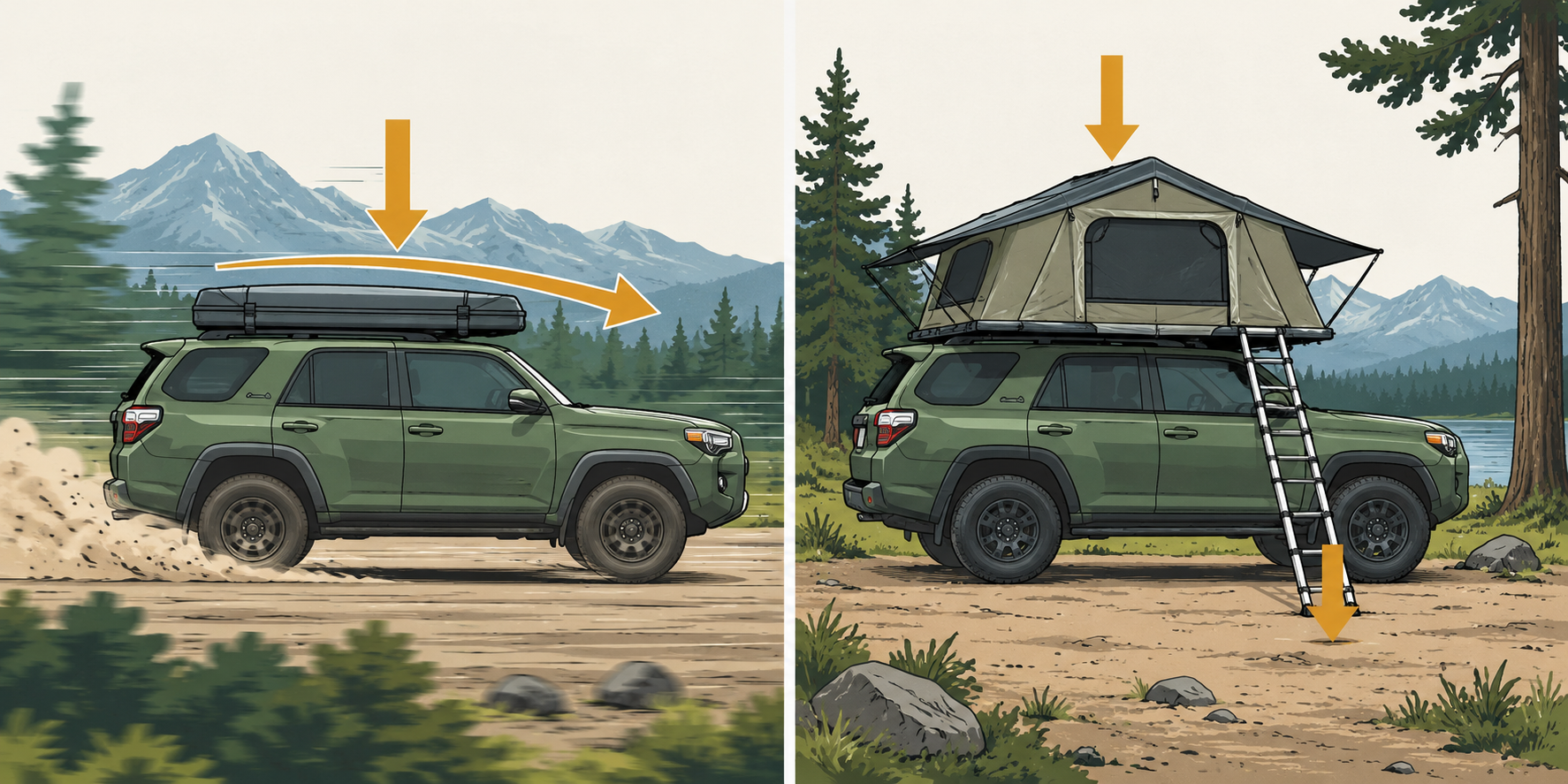
Calculate the driving case from the vehicle outwards
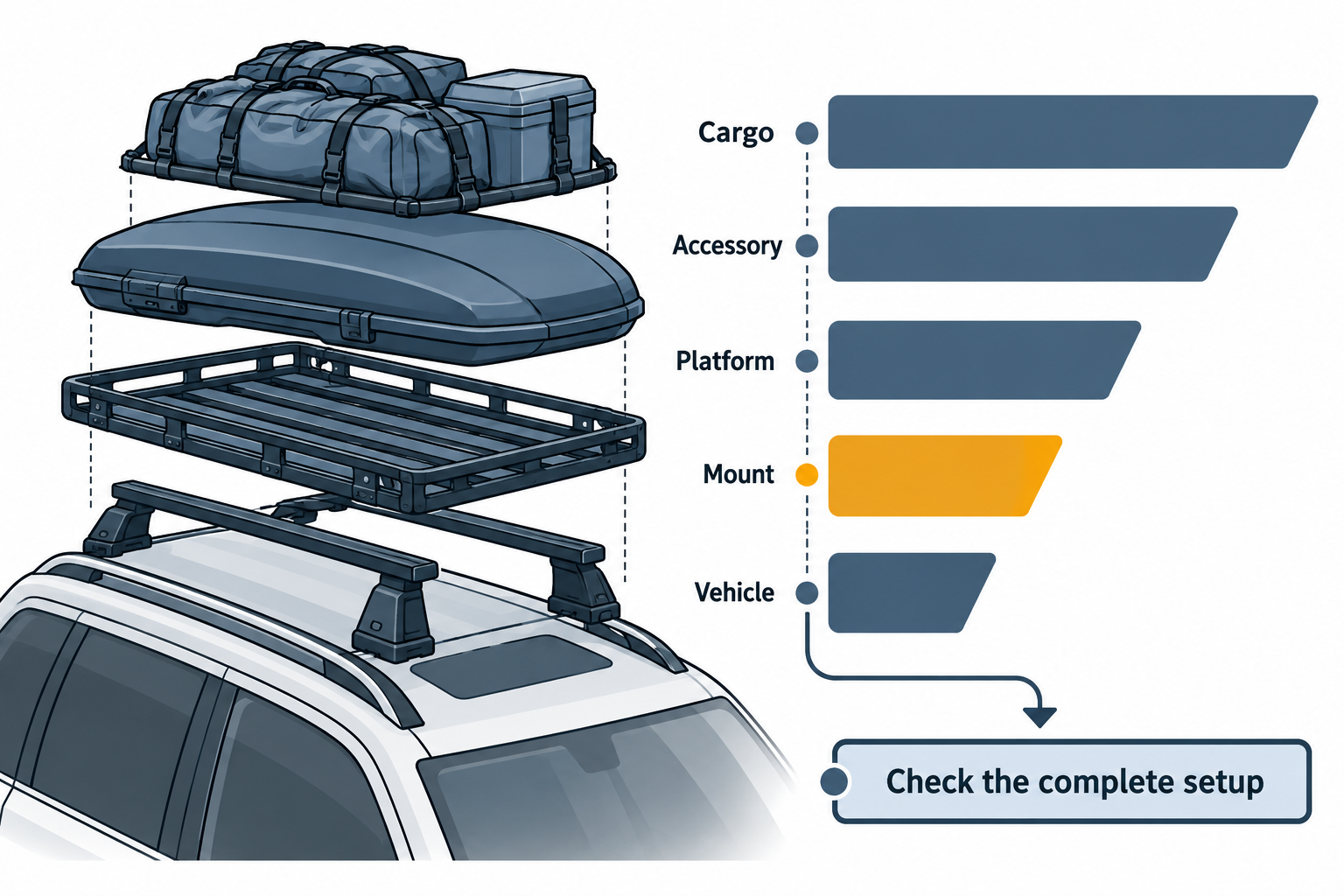
Start with the exact vehicle manual and identify how it defines roof load. Then follow the rack and tent manuals. The driving calculation may include the bars or platform, feet and fit kit, tent and brackets, plus other roof-mounted cargo or accessories. Some manufacturers say explicitly to subtract the rack system’s own weight from the vehicle’s maximum to find the remaining cargo allowance. Others define a component rating differently.
List every relevant rating separately:
- vehicle roof or roof-rack limit for the selected roof and vehicle;
- installed rack, feet, fit kit, platform, or bed-rack limit;
- tent maker’s minimum vehicle/rack requirement and any component limit;
- accessory and cargo weights, plus any road or off-road qualification.
Use the most restrictive applicable limit after following each source’s own calculation. Do not combine ratings that describe different components or operating conditions. A tent that weighs less than the vehicle’s published number may still leave too little allowance after the rack and other equipment are counted.
Treat parked use as a separate approval
Some vehicle manuals state a parked roof-rack limit; many do not. A tent’s structural capacity, ladder limit, or rack maker’s static guidance answers a different question from whether a particular vehicle may support an occupied tent. Check whether the vehicle manual addresses roof tents, occupants, parked capacity, and the exact rack equipment. Follow every stated condition, including the requirement not to move the vehicle with people inside the tent.
Two 2025 Kia manuals illustrate why source scope matters. The US Seltos and Canadian Sportage manuals each list 100 kg (220 lb) while driving and 400 kg (880 lb) while parked for the described equipped rack. Both include tent-specific wording about occupant load and securing the tent, and prohibit moving the vehicle while it is occupied. Those figures are not a general 4:1 formula and do not approve an aftermarket tent or rack. The Kia manuals also warn against a running engine or fuel-burning appliance near an occupied tent because of carbon monoxide.
Subaru’s 2025 Forester quick-start guide shows a different distinction: both listed variants have a 150 lb crossbar dynamic rating, while the roof-rail table separately gives 176 lb dynamic / 700 lb static for the non-Wilderness variant and 220 lb dynamic / 800 lb static for Wilderness. Those are component ratings for the named US Forester configurations, not tent approvals or occupant permissions. Check the full vehicle and rack instructions for the specific setup.
Do not use a generic multiplier
Thule says its roof racks have a static capacity three times their dynamic capacity as a guideline for Thule racks. That does not establish the vehicle’s static rating or transfer to another rack. Use the exact source for the selected vehicle, rack, and tent instead of multiplying a moving limit.
Autohome also gives typical dynamic and stationary ranges in its roof-rack guidance, while directing owners to check the vehicle’s exact manufacturer’s limit. Treat those ranges as context for its guidance, not as a limit for an individual vehicle, rack, tent, or occupied parked setup. For manufacturer-specific tent thresholds, see the iKamper rack load and bar spacing lookup.
A tent’s own weight rating is another separate limit. It may cover the tent structure and a defined combination of occupants or gear, while the vehicle and rack have their own limits. Keep each number attached to the component and condition the manufacturer assigned to it.
A load-check sequence
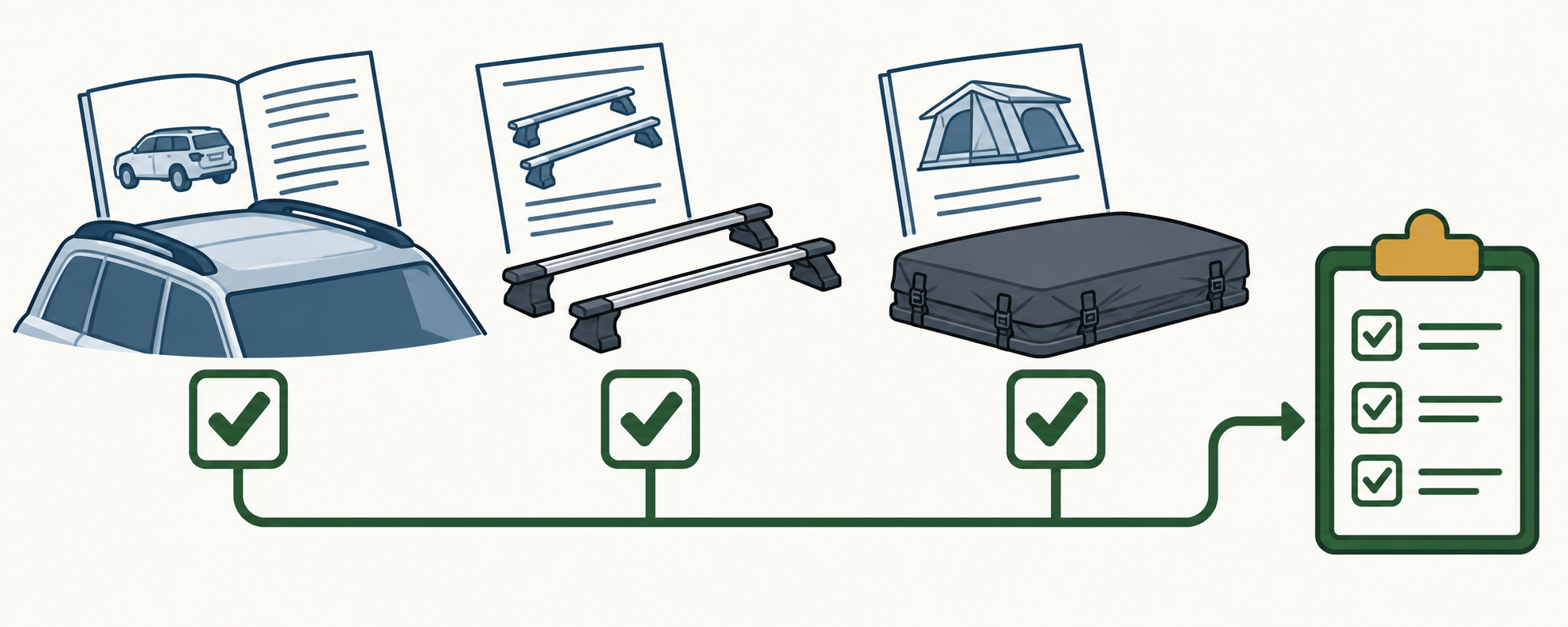
- Confirm the exact vehicle market, model year, trim, roof option, and rack equipment.
- Find the vehicle’s moving roof limit and read what it counts.
- Add the rack, tent, brackets, and other roof loads as the manuals direct; account for rack-system mass when required.
- Compare the result with rack, platform, and tent requirements, including any lower accessory or off-road limit.
- Separately locate a vehicle-approved parked limit and tent occupant rules. If they are missing or unclear, do not infer them from a static multiplier.
- Keep the written source and exact setup details with the equipment, then inspect the installation at the intervals in the applicable manuals.
For crossbar dimensions and bar spacing, see the measurement guide. For the full vehicle and rack decision, start with the eligibility guide.
Sources and product references
Use these references to check the current instructions and fit information for your market and exact setup.