Choose between an open ski rack and a roof box by comparing gear protection, loading, usable space, vehicle fit, roof load, and driving tradeoffs.
On this page
Ski Rack or Roof Box: Choosing a Winter Gear Carrier
An open ski rack and a roof box solve different problems. An open rack gives quick access and keeps the setup compact; a box encloses equipment and can make room for other light, bulky gear. Both need a confirmed vehicle-and-bar fit, enough room for your equipment, and a roof-load calculation. Choose by the trip and gear you actually carry.
Choose an open rack for quick access
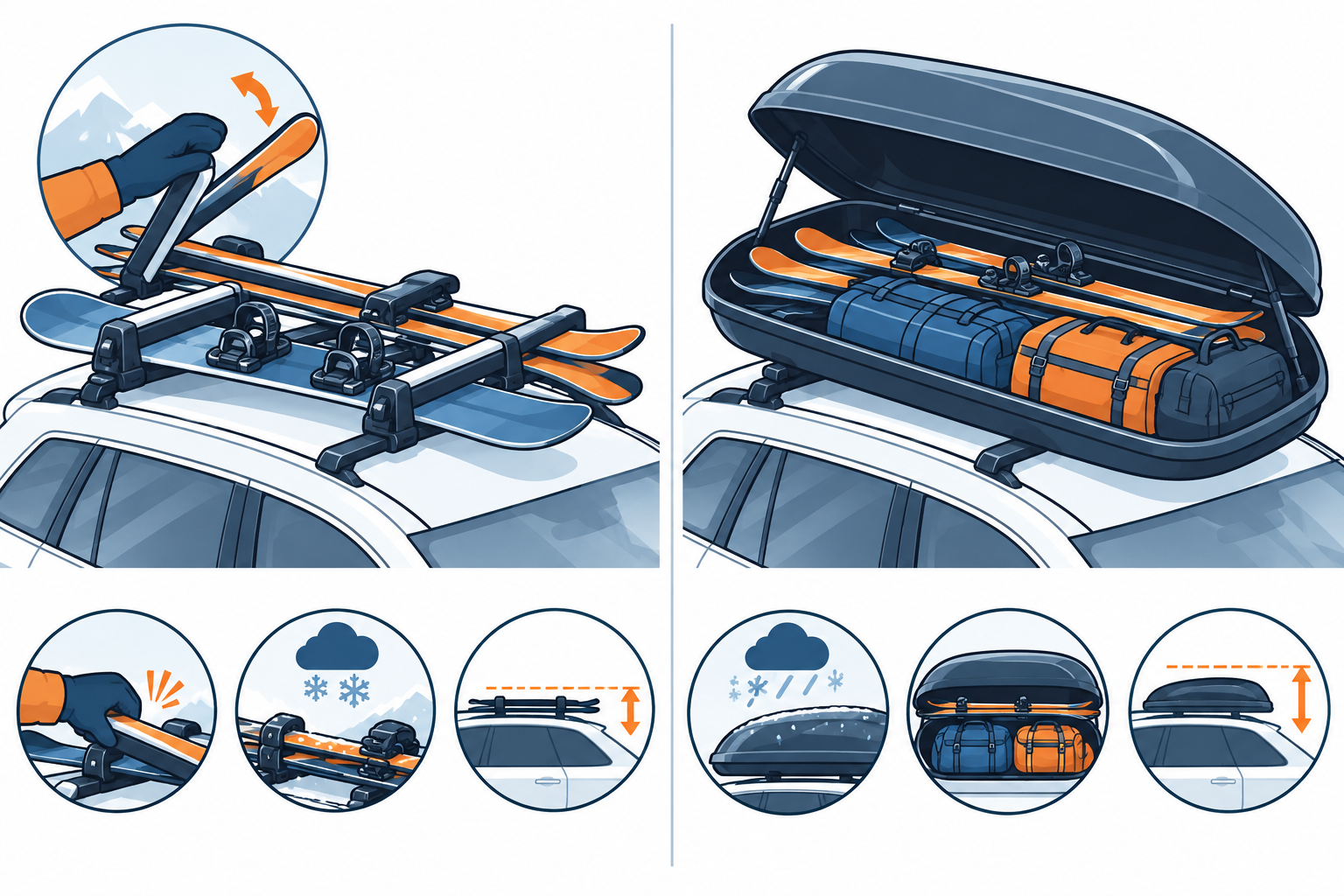
An open clamp carrier can be practical when the main cargo is skis or snowboards and you want to load and unload them without opening a large enclosure. Compare the carrier’s stated pair or board capacity with your actual equipment dimensions and binding arrangement. A capacity such as four pairs or two boards is model-specific and does not confirm that every combination of wide boards, tall bindings, and bars will fit.
Open racks vary in loading width, opening mechanism, and mounting hardware. A slide-out model can bring the jaws toward you, which may help when reaching over a tall vehicle, but it needs enough extension clearance. A compact carrier designed for cross-country skis is not automatically suitable for downhill skis or boards. Verify the model number and instructions for your market. The carrier-types guide compares those loading and mounting differences.
Gear remains exposed to weather and road grime, so consider how you will dry it and protect it between trips. Also consider where the rack will be stored in the off-season and whether you will remove it when unused. The rack, bars, and load can add aerodynamic drag and vehicle height even when little cargo is carried.
Choose a roof box for enclosed space
A roof box can shield skis and boards and carry additional light, bulky items such as clothing or helmets. It may suit a family trip when the cargo mix matters as much as access to the skis. Check the box’s usable internal length, opening location, mounting system, and vehicle-specific fit. Thule’s fit guide uses skis up to 215 cm as an example; measure your longest equipment and compare it with the selected box’s interior rather than relying on a general example.
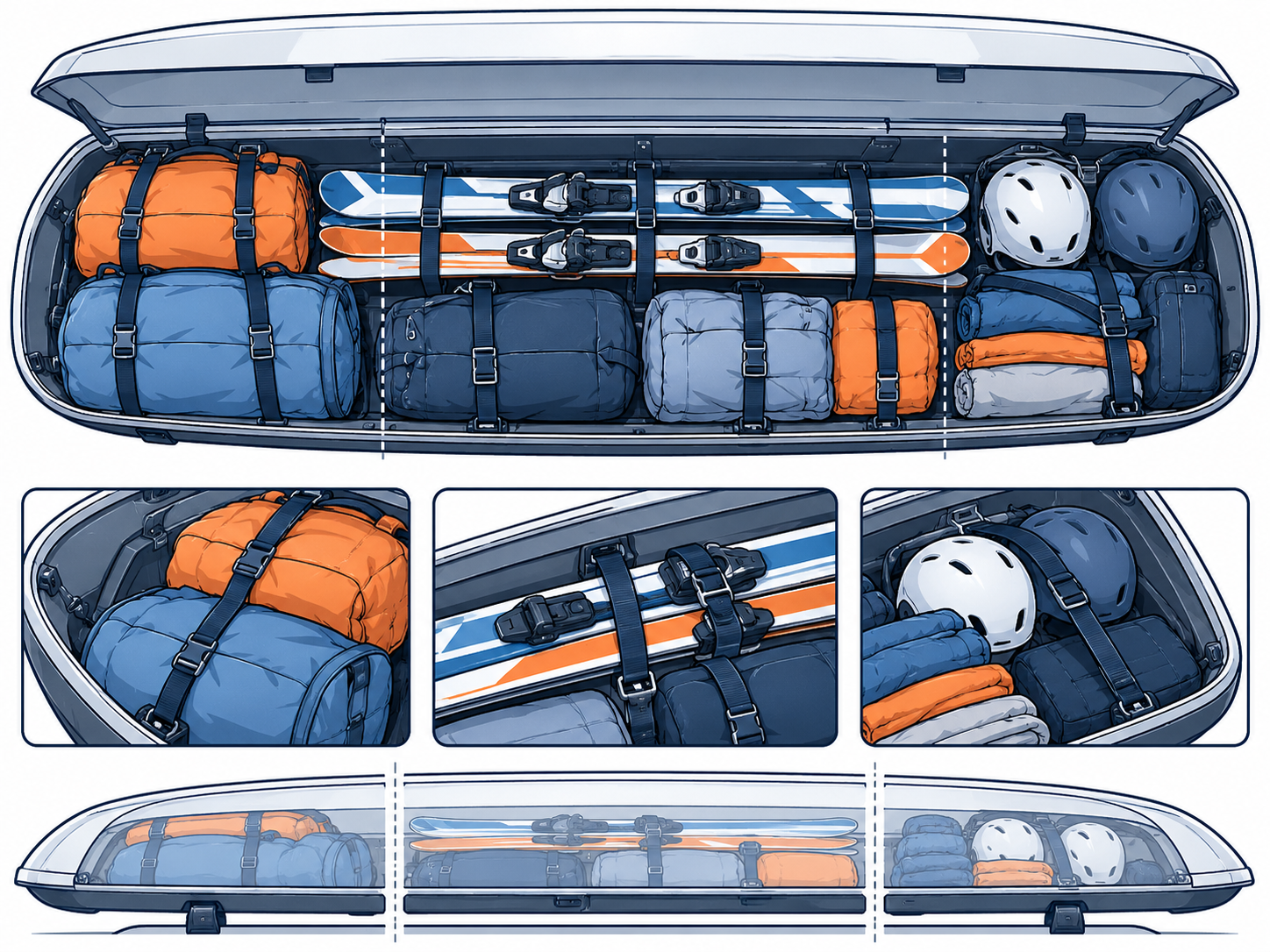
Packing shape matters. Place long items where the box instructions allow, distribute cargo as directed, and secure everything so it cannot shift. Thule gives a one-quarter, one-half, one-quarter distribution example for the front, middle, and rear of a box. Follow the instructions for your specific box and vehicle rather than treating that example as a fixed rule for every design.
A box takes more vertical space and may limit garage access, parking structures, or hatch operation. Check the installed height and opening path before travel. It can also increase aerodynamic drag. The UK Vehicle Certification Agency gives examples of roof boxes typically adding around 22% to fuel consumption at 62 mph and 39% at 75 mph; even empty roof bars can add around 7% at motorway speeds. These are the agency’s examples, not results tied to a tested product or a prediction for every car, speed, box, or trip. The agency recommends removing roof equipment when it is not in use.
Compare the full load, not just the cargo
The vehicle roof limit includes the rack hardware and carrier as well as the skis, boards, and other cargo. For a box, count the crossbars and feet, box, mounting parts, and contents. For an open rack, count the rack and its mounting parts plus the equipment. Then compare the sum with the vehicle, rack, and carrier instructions, using the lowest applicable limit.
Do not assume a product’s maximum cargo or carrier load overrides a lower vehicle limit. Roof-load specifications can differ by vehicle, roof type, model year, and market. Use the owner’s manual and the rack maker’s instructions for the exact setup. Keep cargo within the box’s instructions and secure it so it cannot move or press against the lid.
Verify attachment and clearance for either choice
For both options, identify your vehicle year and market, roof type, crossbars, feet, and exact carrier or box model. Confirm that the vehicle maker permits the rack setup, that the bar system fits the car, and that the carrier attaches to those bars using the included or required adapters. A product listing that supports a bar family does not prove that the full setup fits your vehicle.
Check clearance with equipment loaded: roof, sunroof, antenna, hatch, spoiler, and other accessories. Use the maker’s diagrams for bar spread, clamp positions, opening, and any slide-out action. Confirm that the loaded gear or box does not contact the roof or interfere with the hatch. If a fit lookup says “no confirmed fit,” follow the product maker’s explanation and ask for a specific determination rather than assuming the answer.
Match the choice to your trip
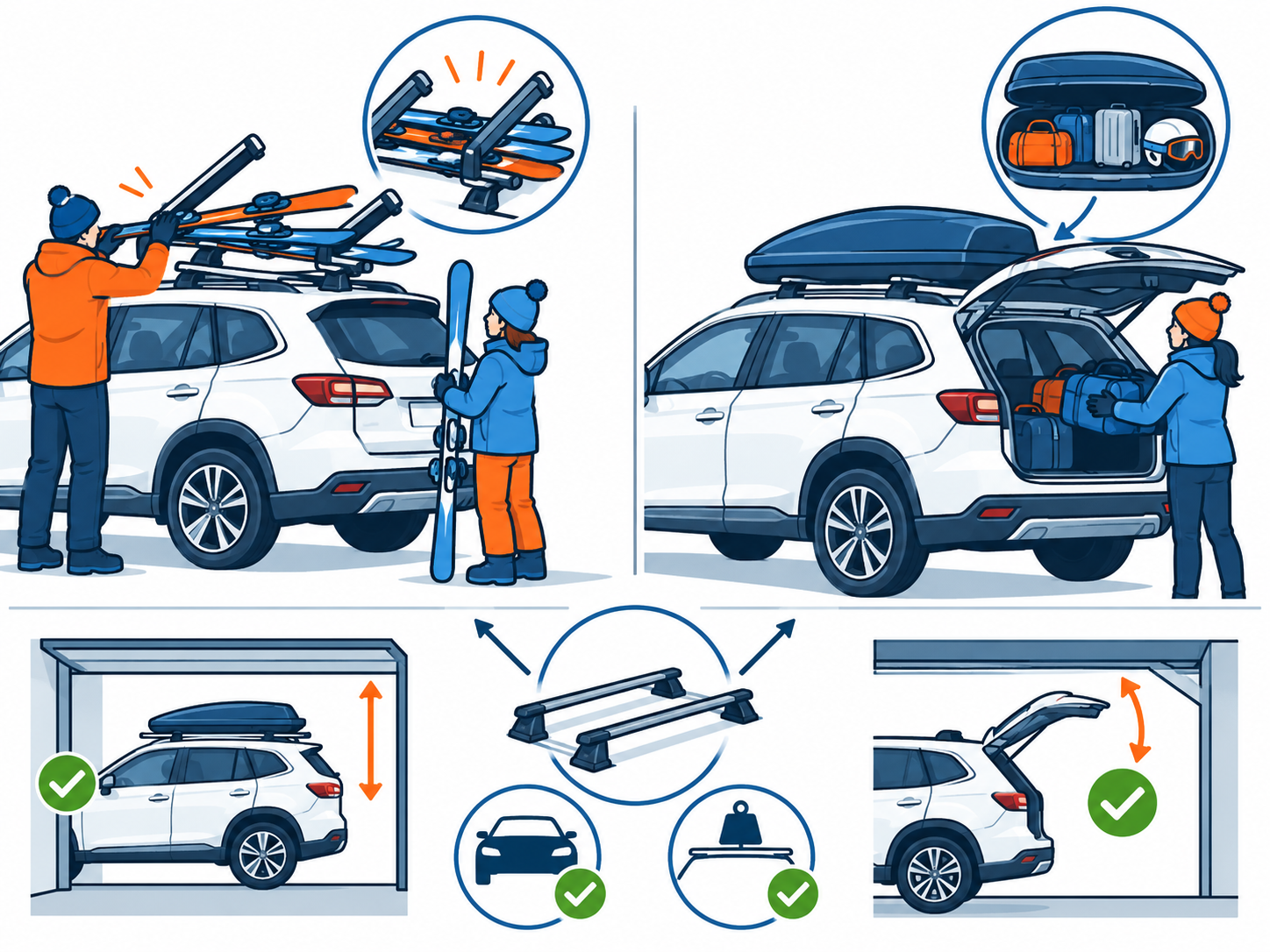
Choose an open carrier when quick ski access and a smaller cargo footprint matter most, and the exposed gear and limited extra storage work for you. Choose a box when enclosure and room for other bulky items matter enough to accept more loading steps, added height, and the box’s fit and load requirements. In either case, measure your longest and widest equipment, check binding clearance, confirm the exact mounting parts, and calculate the complete roof load before purchase.
If you are undecided, compare a real packing list and route against both options. Include the garage or parking height at home and the destination, how often you need to reach the gear, and whether passengers will need the hatch open while the carrier is installed. A careful fit check is required whichever design you prefer. Use the vehicle-fit guide to confirm the exact mounting chain before buying.
Sources and product references
Use these references to check the current instructions and fit information for your market and exact setup.
- Thule ski and snowboard racksprimary
- Thule roof box fit guideprimary
- Thule roof box packing guideprimary
- Vehicle Certification Agency: Fuel-efficient driving tipsprimary
- Thule SnowPack Mprimary