Check each rack component against the new vehicle’s exact roof configuration and current manufacturer fit guidance before reusing it.
On this page
Can Your Existing Roof Rack Transfer to a New Vehicle?
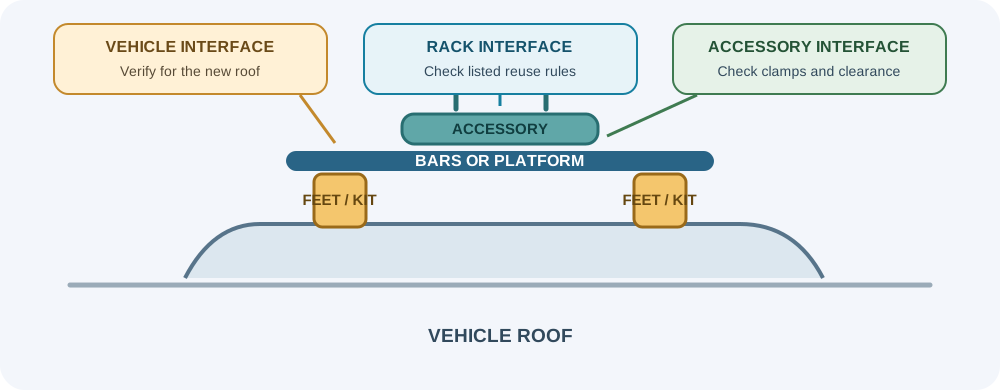
An existing roof rack may transfer in part, but a change of vehicle creates a new fitment question. Roof width, attachment points, roof type, model year, and mounting position can change. Do not assume that bars, feet, vehicle-specific kits, a platform, or an accessory will fit because the new vehicle is the same brand or looks similar to the old one.
1. Identify the old system
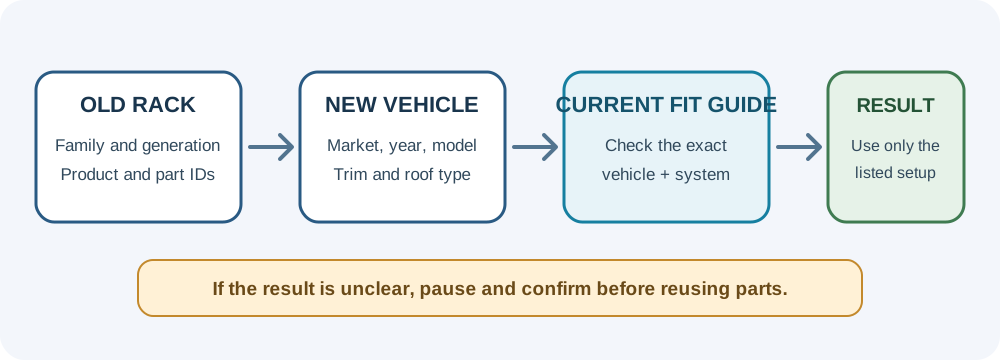
Before removing or selling anything, record the manufacturer, rack family, generation, product or serial number, bar length, foot or tower model, vehicle-specific kit, and accessory interface. Photograph labels and every attachment point. Keep the old vehicle’s year, make, model, trim, market, and roof type with the record.
This list helps the manufacturer compare the system as a complete set. It also prevents a common mix-up: a crossbar that can be retained does not prove the old feet, fit kit, platform mounts, locks, or cargo carrier are suitable for the new vehicle.
2. Identify the new vehicle exactly
Use the market where the vehicle and rack will be used. Enter the new vehicle’s model year, make, model, body or trim, and roof configuration in the manufacturer’s current fit guide. Distinguish bare roofs, raised or flush rails, fixed points, tracks, factory crossbars, and special roof features when the selector asks.
Use the manufacturer’s vehicle result to identify the complete required system, including any new feet, pads, clamps, fit kit, bar length, platform mount, or installation instructions. A general product page or an online seller’s broad “fits many vehicles” statement is not a confirmed fitment.
3. Compare components one by one
| Component | What to verify for the new vehicle |
|---|---|
| Feet, towers, pads, clamps, and fit kit | Exact vehicle year, roof type, kit or product code, and current instructions. These parts commonly define how the rack attaches to the vehicle. |
| Crossbars or platform | The current fit tool must say whether this exact bar or platform can be reused with the new feet or mounts. Check length, spread, interface, and the product’s own limits. |
| Locks and small hardware | Match the lock core, key, fastener, or adapter to the installed product family and instructions. These items do not establish vehicle fit. |
| Cargo box or other accessory | Check the accessory’s own connection to the bar or platform, required clamps or adapters, and clearance for the new roof, hatch, doors, and movable roof features. |
Thule’s transfer guide asks owners to compare both vehicles in its current fit assistant. It describes generation-specific reuse rules for its Evo and Edge systems: for example, old feet packs cannot be combined with new kits, and some older Edge systems allow only the kit to change. Those guide statements do not determine an individual setup; use the live result for the exact system and vehicle. If the fit assistant does not resolve reuse, Thule asks for the rack serial number, both vehicles’ make, model, year and roof type, and photos of the system when contacting support.
Rhino-Rack’s US guidance says an old rack is most likely not to fit a new car because roof designs vary. It directs owners to cross-reference the current system’s product codes with the product breakdown for the new vehicle and contact a dealer if uncertain. Treat that as a verification path, not an approval for a particular transfer.
4. Recheck limits and installation
After identifying an approved component path, read the vehicle and rack instructions for the new installation. Use the lower applicable roof-load limit. The load on the roof includes the rack, fitted accessories, and cargo; changing vehicles can change the governing vehicle limit even if a bar or carrier is reused. Check any stated sunroof, hatch, door, bar-spread, and clearance conditions before loading.
Install the complete system using the current instructions for that vehicle and product generation. Do not carry over a torque value, mounting position, or recheck procedure from the old vehicle’s manual. If the mounting parts are missing, the component combination is not shown, or the rack moves after installation, stop and ask the manufacturer or a qualified dealer to resolve the fit.
Find local parts or service help
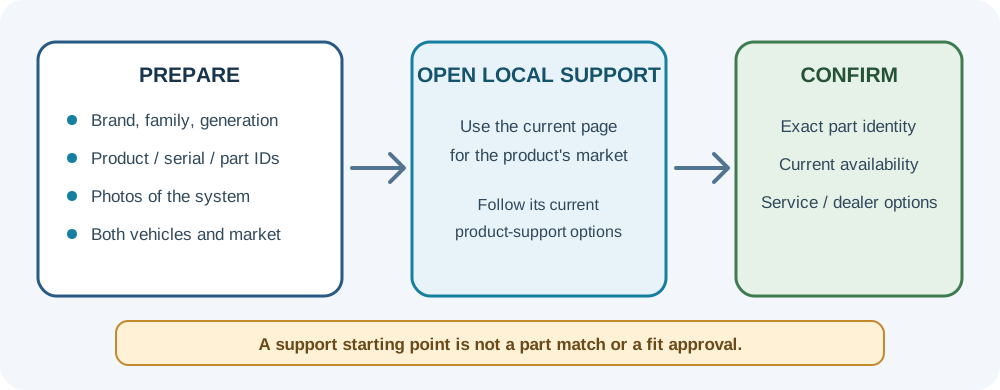
If the new fit result calls for different parts, or the transfer remains unclear, start with the manufacturer’s current support page for the product and market. The rack family, generation, product or serial number, system photos, and both vehicle configurations collected above help the support team identify the question. Confirm the current parts, service, dealer, and repair options for that exact product; a support page does not identify a replacement or approve a transfer by itself.
| Market | Current support starting points |
|---|---|
| United States | Thule’s US spare-parts and instructions page searches by product name or serial number and lists Thule repair centers and trained, certified distributors or dealers for service-part repairs. Rhino-Rack’s US FAQ directs spare-part, specific-fitment, and product-fault questions to a local dealer; it routes parts missing from a new kit to Rhino-Rack customer service. |
| Canada | Start with Thule’s Canada product-support page and follow its current support options for the exact product. Confirm directly which channel handles the part or service question. |
| United Kingdom | Start with Thule’s UK product-support page and follow its current support options for the exact product. For Yakima, its UK FAQ routes replacement parts through retailers; some parts may need to be sourced from overseas. For a Yakima warranty claim, it directs the owner to the place of purchase with the receipt. |
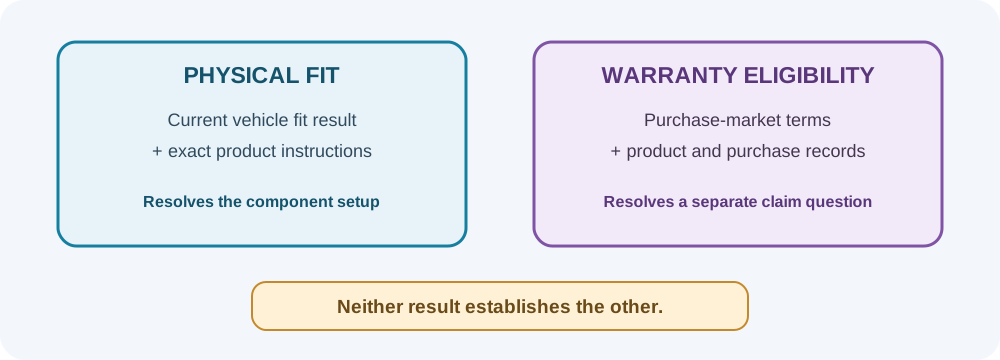
For a warranty question, use the terms and claim route for the product’s purchase market. Thule’s US and Canadian warranty pages describe local claim processes, but do not clearly resolve eligibility after a rack is transferred. Yakima’s UK FAQ gives a claim route but no UK warranty duration or transfer rule. Ask the manufacturer or seller about the specific product and purchase; physical fit does not establish warranty eligibility.
Physical fit and warranty are separate
A rack can fit the new vehicle even when a warranty or support route does not cover a transferred product; the reverse is also true. Service guidance helps identify whom to ask, but only the current vehicle-specific fit result and instructions can resolve the system’s use on the new vehicle.
Sources and product references
Use these references to check the current instructions and fit information for your market and exact setup.
- How to Reuse Your Roof Rack With a New Carprimary
- FAQs and Fitting Timesprimary
- Roof Racks and Roof Accessories Instructionsprimary
- Spare Parts & Instructions | Thule | United Statesprimary
- Spare Parts & Instructions | Thule | Canadaprimary
- Spare Parts & Instructions | Thule | United Kingdomprimary
- FAQs | Rhino-Rack USprimary
- Thule Warranty | United Statesprimary
- Thule Warranty | Canadaprimary
- Frequently Asked Questions | Yakima UKprimary