Check a Thule or Yakima result against the exact vehicle, roof type, rack components, and accessory before buying. The brands use different fit-guide steps and status wording, so read each maker's current result on its own terms.
On this page
How to Verify Thule or Yakima Roof-Rack Compatibility by Vehicle
A search such as “Thule rack for a 2023 Honda CR-V” or “Yakima crossbars for a Ford Bronco Sport” names a brand and vehicle, but not yet a complete fit. The year, market, body or trim, roof hardware, product family, and any accessory can change the answer. Treat those phrases as a prompt to check the current manufacturer guide, not as an approval.
Use each brand’s own fit guide
Thule’s fit guide lets you begin with a product category and enter vehicle details or an existing roof rack. For a roof-rack system, Thule’s system guide describes the usual parts as load bars, feet, and a fit kit, while noting that some systems do not need a kit. Its vehicle tool supplies the selected system and routes shoppers to vehicle-specific installation instructions.
Yakima’s Infolookup separates its selection into Year, Make, Model, and Fit. It can show a base rack, compatible product groups, required or optional accessories, fit notes, measurements, and load-rating fields. Read the result for the exact selected fit rather than relying on a broad match for the vehicle name.
The tools do not have one shared status vocabulary. Yakima distinguishes results such as still being evaluated, in development, in production but not yet available, reference-only, and custom-installation guidance. Thule uses its own product and category messaging; for example, its kayak category says “No confirmed fits” may mean a combination is unsupported or simply has not been measured. Read how to interpret a fit-guide result before turning any status into a yes or no.
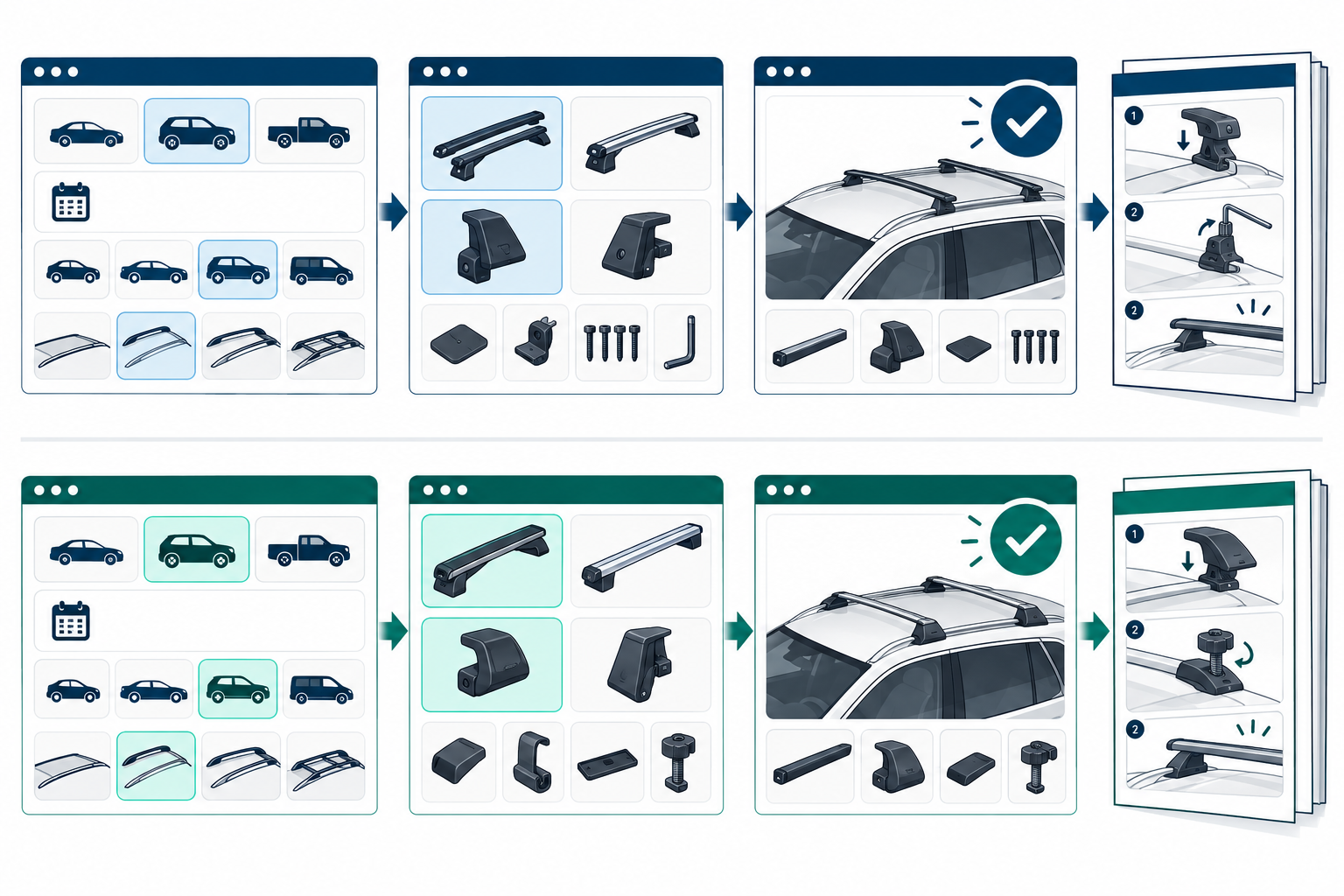
Follow the fit from roof to accessory
For either brand, confirm the vehicle’s country or market, model year, body, trim, and roof type. Identify whether the vehicle has a bare roof, raised or flush rails, fixed points, tracks, or factory crossbars. A single model name can cover more than one roof configuration, so match the hardware on your actual vehicle.
Next, write down the complete base-rack parts and their identifiers. Check whether a foot, tower, fit kit, adapter, or installation supplement is required. Then select the accessory separately and confirm that it is approved for the exact bar or platform. A carrier that fits one brand’s bar family is not automatically a fit for another bar or vehicle.
Verify the vehicle instructions and limits
Open the vehicle and product instructions for the selected result. Check the crossbar spread, usable width, attachment locations, hatch and roof-feature clearance, and any installation notes the specific system requires. If the tool does not expose one of these details, ask the manufacturer rather than borrowing a measurement from a similar model.
Read the exact vehicle manual for roof-load limits and restrictions. Compare those instructions with the base rack and accessory ratings, including how the maker counts the bars, carrier, and cargo. A rack-system or accessory rating is not a vehicle roof-load approval; the vehicle’s limit may be lower. Do not transfer a value from one model year or market to another.
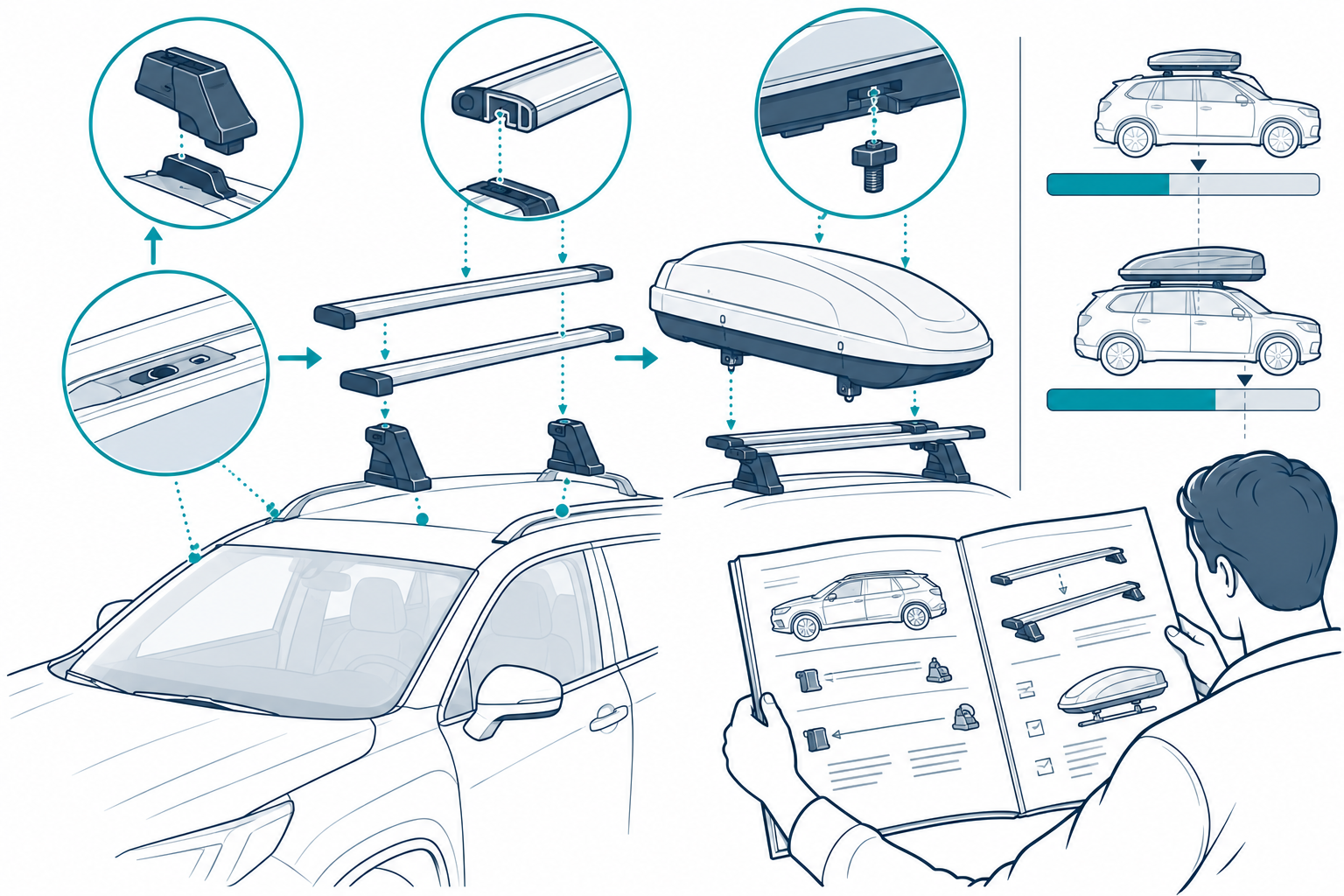
Keep examples in their proper scope
The 2023 Honda CR-V and Ford Bronco Sport are useful search examples, but the vehicle name alone does not confirm a Thule or Yakima product. Run the exact year and roof configuration in the current regional guide, then check the corresponding instructions and vehicle manual. The same rule applies when moving from one brand to another or adding a cargo box, bike rack, or kayak carrier.
Before you purchase, keep a short record of the selected vehicle details, result status, part numbers, required hardware, accessory match, instructions, and applicable load limit. If the result is custom, unmeasured, obsolete, or missing a required field, pause and use that brand’s support or a qualified fitter. The exact-vehicle fitment workflow shows the same checks from the vehicle owner’s point of view.
Sources and product references
Use these references to check the current instructions and fit information for your market and exact setup.