Compare loading height, access, vehicle interfaces, and bike constraints before choosing a roof, hitch, or trunk carrier.
On this page
Roof, Hitch, or Trunk Bike Rack: Which Setup Fits the Trip?
Choose a mounting position by checking the vehicle interface, how you will lift and load the bikes, what access you need, and the exact limits for the complete setup. A comparison can narrow the choice, but it cannot confirm fit to a particular vehicle.
| Mounting position | What the vehicle needs | Loading and access trade-offs |
|---|---|---|
| Roof | An approved roof-rack system with bars that fit the selected carrier. | Leaves the rear area accessible, but requires an overhead lift and increases total vehicle height. |
| Hitch or towbar | A compatible receiver or towbar and a carrier approved for that vehicle interface. | Loads closer to the ground and can suit heavier bikes, but the carrier may affect rear access; check the exact design and vehicle. |
| Trunk or tailgate | A carrier listed for the exact vehicle and attachment points. | Can avoid a roof system and overhead lifting, but the vehicle-specific installation may affect hatch access and clearances. |
Match the position to the bikes and the trip
If you already have approved roof bars, want the rear area clear, and can lift each bike safely, a roof carrier may suit the trip. Check roof height before driving into garages or low entrances. The carrier adds weight even before the bikes are loaded, and the vehicle and base-rack limits may be lower than the carrier’s rating.
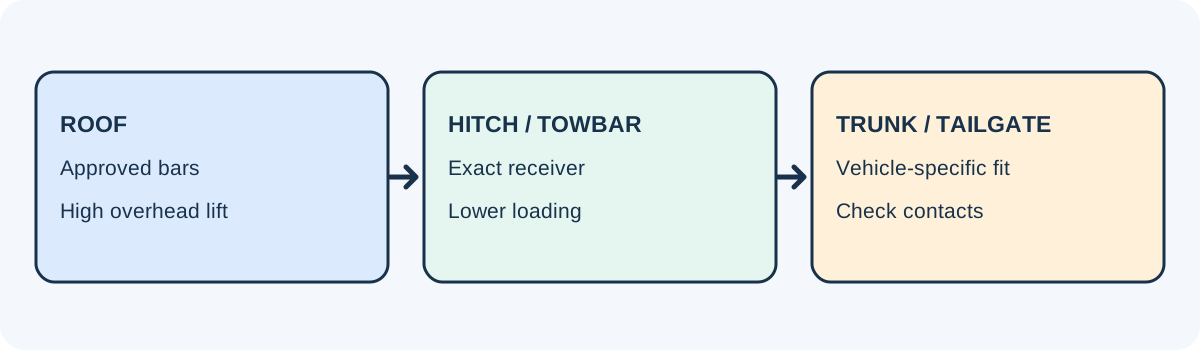
A hitch or towbar setup moves the loading point down and can be worth investigating for a heavier bike or several bikes. It also requires an exact receiver, towbar, and carrier match. Do not assume that a hitch receiver is present, that its permitted load is sufficient, or that a hitch carrier’s own bike rating is the vehicle’s allowance.
A trunk or tailgate option may avoid fitting roof bars or a towbar. Its straps, contact points, vehicle compatibility, hatch operation, and visibility clearances depend on the carrier and exact car. Check the maker’s vehicle selector and instructions before treating it as a universal alternative.
Use bike count as a decision input
Thule’s US selection guide describes two roof carriers as an option when both bikes are light and easy to lift. It points readers carrying three bikes toward hitch/towbar or trunk products, and recommends a four-bike hitch/towbar carrier. These are Thule’s selection examples, not universal capacity rules. Each carrier, vehicle, bar system, and bike still needs an exact fit and load check.
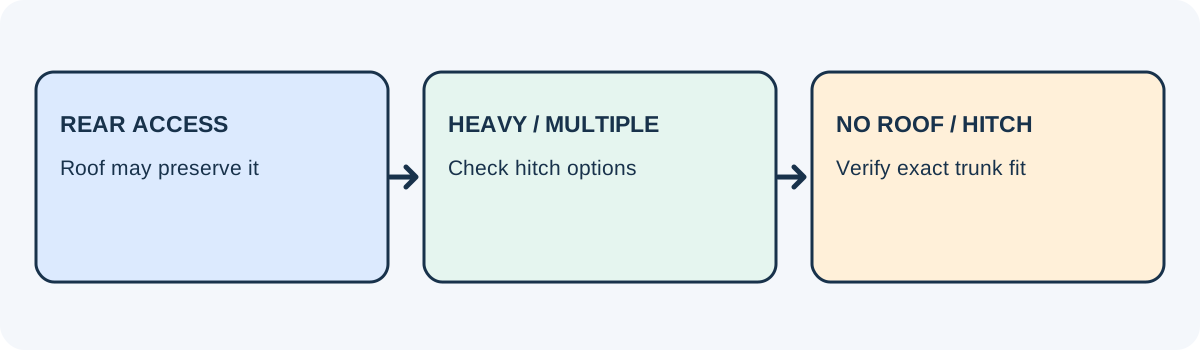
If the bike is an e-bike, compare the carrier’s named e-bike compatibility and per-bike limits with the complete bike weight and the vehicle limit. Also consider whether you can control the overhead lift. The e-bike roof guide covers battery-specific instructions and examples where a product is rated for one mounting position but not another.
Treat test results as one configuration
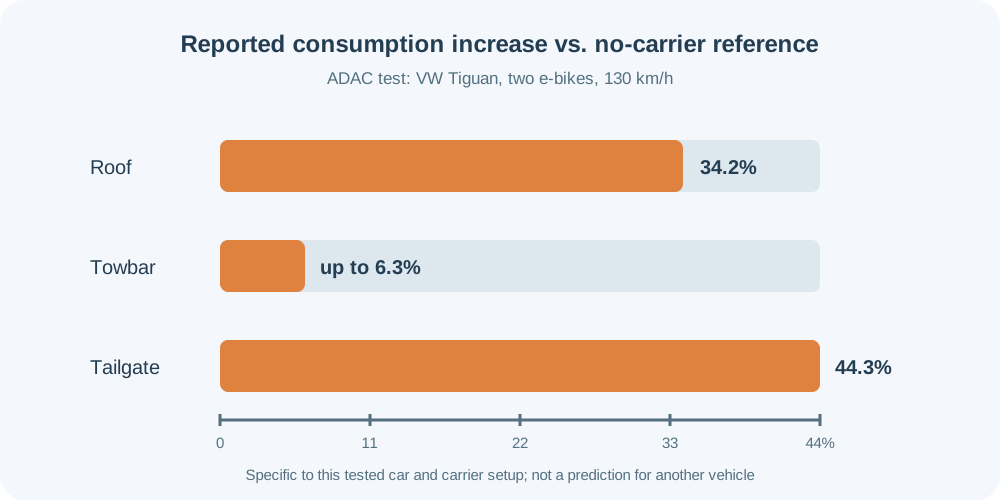
ADAC compared roof, towbar, and tailgate systems carrying two e-bikes on a VW Tiguan. Its reported consumption results at 130 km/h were 34.2% above the no-carrier reference for the roof setup, up to 6.3% for the towbar setup, and 44.3% for the tailgate setup. The vehicles, bike orientation, and carrier systems were those in that test. ADAC did not report a repeat count or uncertainty interval for those consumption runs, so these percentages are not a prediction for another car, rack, speed, or bike.
Make the choice with the full fit path
Compare mounting positions only after recording the vehicle, market, bike count and weight, access needs, and loading constraints. Then verify the selected base system and carrier with the vehicle and carrier makers. If the roof remains a candidate, follow the vehicle-and-bar fit process and the carrier style guide. For any position, confirm the exact product instructions and applicable load limits before travel.
Sources and product references
Use these references to check the current instructions and fit information for your market and exact setup.