Compare the main roof bike-carrier styles by bike contact, loading steps, and the fit checks each one requires.
On this page
Roof Bike-Carriers Explained: Tray, Fork, Wheel, and Frame Mounts
Roof carriers differ in where they hold the bicycle and what you must remove or measure before loading. That choice affects bike contact, adapters, and the loading routine. It does not establish whether a vehicle, base rack, or particular bicycle fits.
Compare the three mounting styles
| Style | What it holds | Main checks |
|---|---|---|
| Wheel-mounted or tray | The front and rear wheels remain attached and are secured at the wheels. | Wheel diameter, tire width, wheelbase, carrier spread, and contact with the tire. |
| Fork-mounted | The front wheel is removed and the fork attaches to the carrier. | Exact axle and dropout shape, the correct adapter, fork clearance, and a place to stow the front wheel. |
| Frame-mounted | The carrier contacts the bicycle frame while supporting the wheels. | Frame shape and dimensions, clamp position, frame material, and any protector or adapter required by the exact model. |
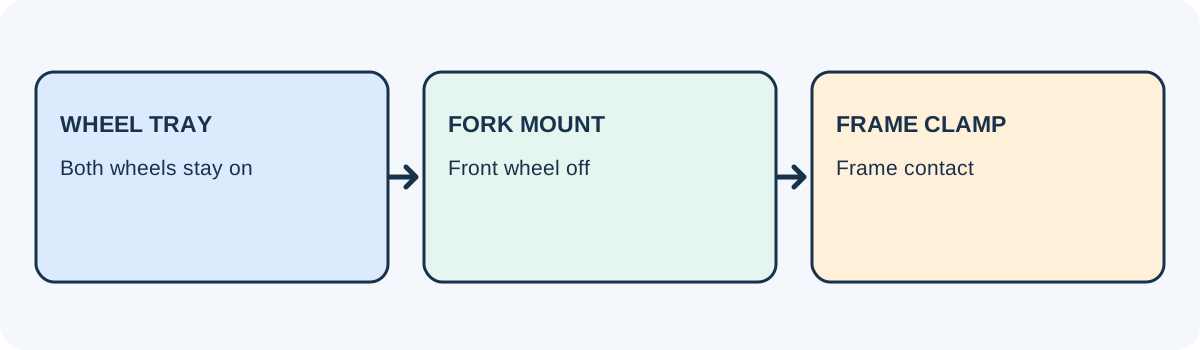
Wheel-mounted carriers avoid frame contact, but the wheel still has to fall within the carrier’s tire and diameter limits. For example, Yakima’s current US listing gives HighRoad (SKU 8002139) a 26–29 inch wheel range, tires from 23 mm to 4.0 inches, and wheelbases up to 52 inches. Its current US listing also gives different road and off-road bike ratings, so use the rating for the planned use. The exact 8002139 manual has a narrower mountain-bike table: it lists 1.5–4.0 inch tires for 26 and 27.5 inch wheels, and 1.5–3.5 inch tires for 29 inch wheels. Use the row for your wheel size and bike type; the listing’s broader 4.0 inch maximum does not apply to every configuration.
A fork mount can be a useful choice when you want to avoid a frame clamp. It adds a front-wheel removal step and depends on the fork and axle interface. Product pages may list several axle families, but an adapter is not a universal substitute: match the exact axle, fork, adapter, and carrier instructions.
A frame mount keeps the front wheel on the bike, which may simplify loading. The clamp does touch the frame, so check where it sits and whether the bicycle and carrier makers allow that contact. An accessory described as frame protection is not approval for every frame material, tube shape, or clamp position.
Choose by the bike and the loading situation
Write down the bicycle’s weight, wheel size, tire width, wheelbase, axle type, and frame constraints before comparing carriers. An unusual fork, wide tire, fender, or frame shape can rule out a style even when the bike’s weight is below a headline carrier rating. The bike constraint checklist explains which measurements to compare.
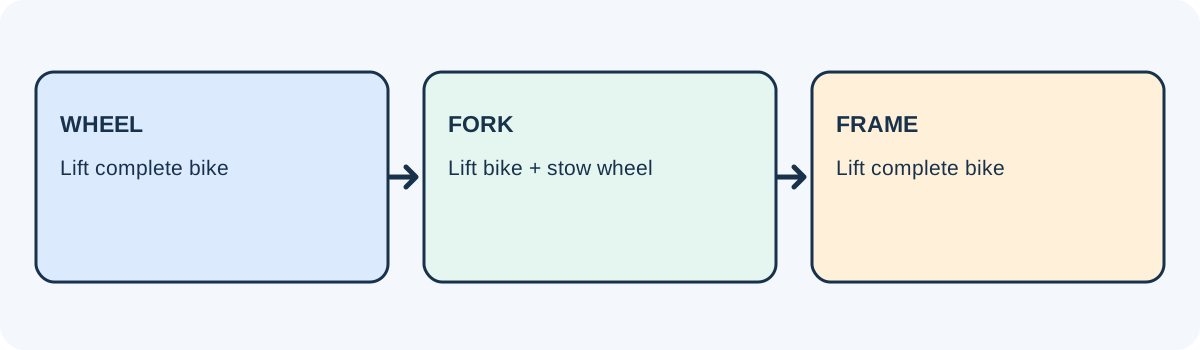
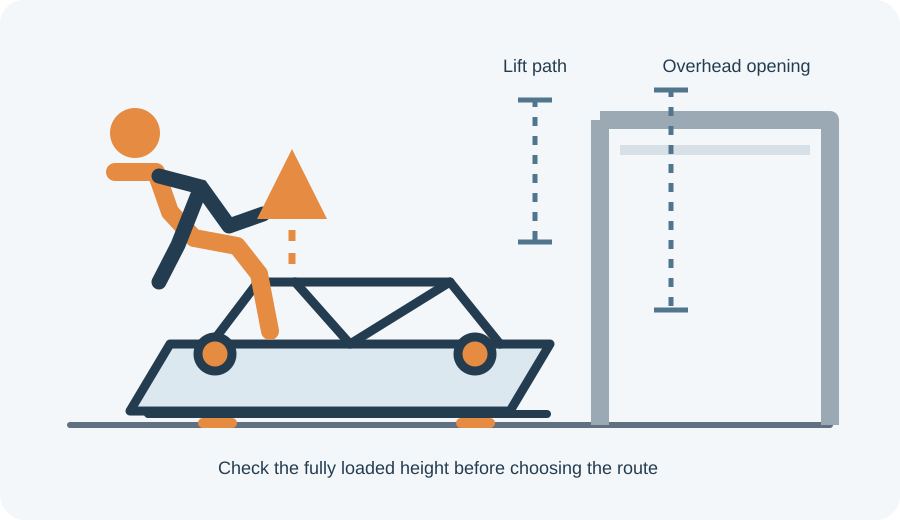
Also consider how high you must lift the bicycle and where the front wheel will go if you choose a fork mount. A roof may leave the rear hatch accessible, but the loaded vehicle is taller and needs overhead clearance. Test the full route, including garages and low entrances, using the loaded height rather than the vehicle’s normal height.
Verify the rest of the system
Every roof style requires a compatible roof-rack system. Confirm the vehicle and roof configuration first, then the bar shape, channel, width, thickness, and installed spacing for the carrier. Check the vehicle-to-bars fit process before relying on a product description such as “fits most roof racks.”
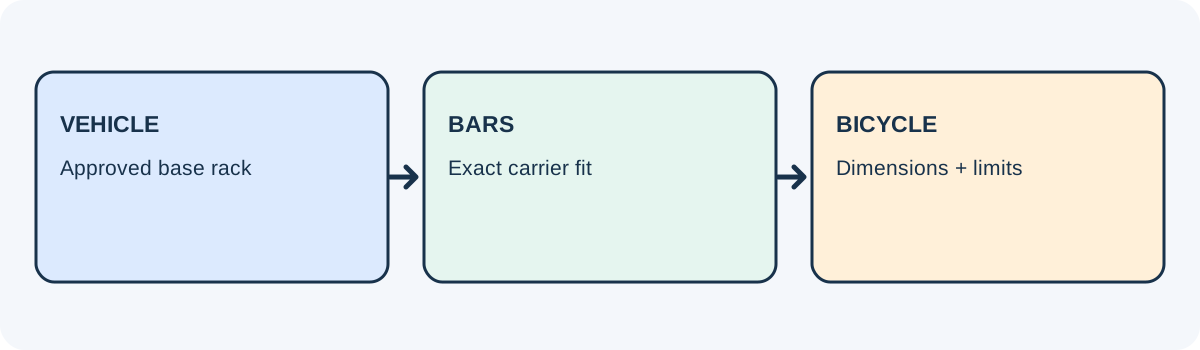
Next, compare the bicycle and carrier instructions. Confirm the carrier’s per-bike limit, whether it permits the intended riding conditions, the required adapters, and the exact loading and securement steps. Then include the rack, carrier, and bicycles in the vehicle and base-rack load calculation. The lowest applicable limit governs.
Key points
- Wheel, fork, and frame mounts solve different interface problems; none is a universal fit.
- Measure the exact bike and follow the exact carrier instructions.
- A carrier’s bar compatibility statement does not confirm vehicle fit or vehicle load capacity.
- If lifting the bike overhead is difficult, compare a verified hitch or trunk option in the mounting-position guide.
Sources and product references
Use these references to check the current instructions and fit information for your market and exact setup.