No crossbars does not mean every soft cargo bag fits. Check the exact bag manual, roof and door interface, airbag path, vehicle load and local rules before installing.
On this page
Can You Use a Roof Cargo Bag Without Crossbars? Check the Bag and Roof
Sometimes, but “no crossbars” is not enough information to answer safely. A bag may attach to crossbars, approved raised side rails, or a specific vehicle through a door-strap method. Those are different mounting paths. The exact bag manual must allow the path, the vehicle must permit the contact points, and the complete load must stay within the vehicle and product limits. A soft bag is not automatically a safe substitute for a roof box or rack.
Identify the roof and the bag first
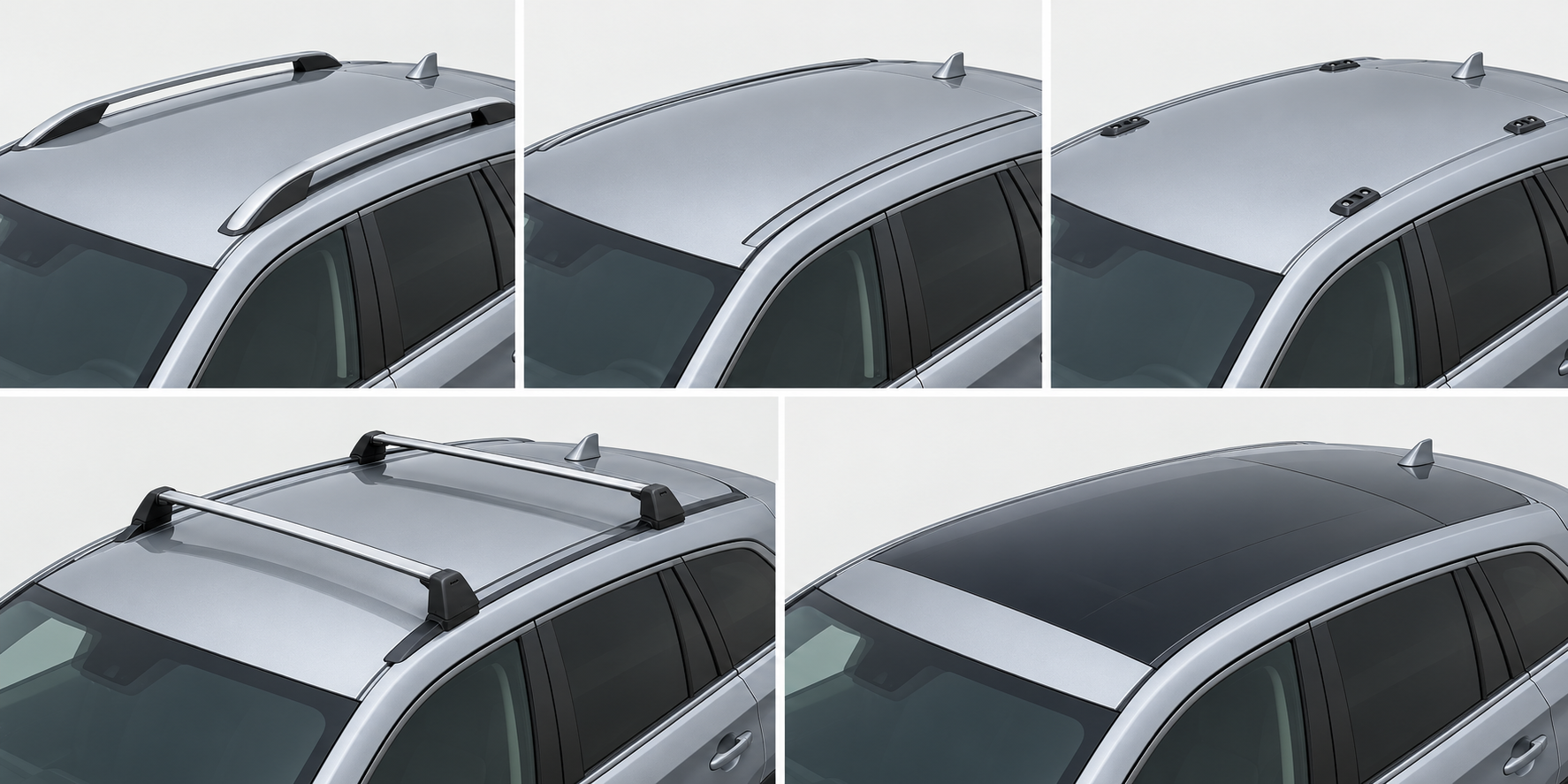
Check whether the vehicle has crossbars, raised side rails, flush rails, fixed mounting points, or a bare roof. A side rail is not the same as a crossbar, and a strap through a door is not the same as either. Also identify a glass, sunroof, or panoramic roof. Do not assume that a protective blanket or pad turns an unapproved roof surface into an approved attachment point.
Then find the exact make, model and generation of the bag. Read its current instructions from beginning to end, including diagrams and warnings. Confirm which vehicle surfaces and attachment points it permits, how straps route, whether any hardware is required, and whether the instructions address the vehicle’s doors, trim and roof. A retailer’s “rack-free” label or another model’s instructions do not confirm your installation.
The examples show why the model matters
Thule’s Interstate 869 instructions limit use to vehicles with raised crossbars or side rails and say not to use the bag when neither is present. The manual also does not recommend use on glass, sun or panoramic roofs. It gives a 100 lb maximum for that bag, but that is only the product limit; it does not establish the vehicle’s allowable roof load. The instructions describe the bag as weather-resistant rather than waterproof, so protect moisture-sensitive cargo separately.
An older Yakima manual for the named CargoPack, DryTop and SoftTop family describes a strap-through-open-doors method for certain vehicles without a rack. It also warns about interference with side-curtain airbags. That method belongs to those exact products and manual; it is not permission to route straps through the doors of another vehicle or bag. The manual does not prove those models are currently sold or that they fit your vehicle today. Ask the manufacturer for current instructions and availability before treating this as a purchase option.
Resolve door, airbag and glass-roof questions
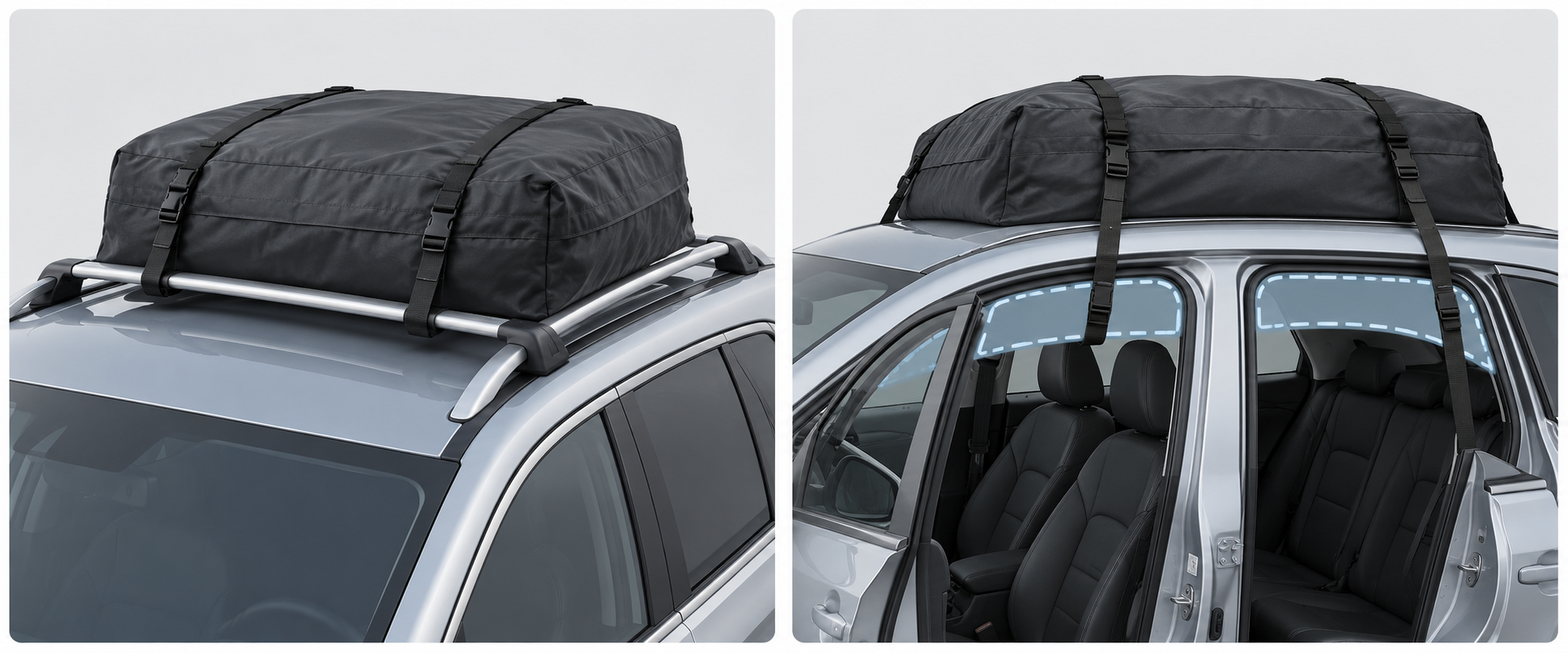
If the exact instructions allow a door-strap method, check the path against the vehicle manual and the actual vehicle. Straps must not obstruct or press on an airbag, trim, wiring, door seal, window, or an area the vehicle manual excludes. A door that closes over a strap does not prove the route is safe or approved. Stop if the bag and vehicle instructions do not clearly resolve the fit, sealing and airbag clearance.
Do not place a bag on glass or a panoramic roof unless both the vehicle and bag makers explicitly approve that exact arrangement. A “soft” load can still press on or abrade the roof, and a pad does not establish a load rating. If the glass-roof restriction or the attachment route is unclear, use another mounting option and ask the vehicle or bag maker.
Rules also differ by location. UK Driver and Vehicle Standards Agency load guidance says not to place items directly on a car roof. That guidance raises a specific question for a strap-on bag whose load or bag rests on the roof. Do not assume that an older product method settles current UK requirements. Check the current rules for the country where you will drive; the UK example does not determine the law in the United States or Canada.
Check the load and packing instructions
Find the vehicle’s driving roof limit in the owner’s manual and check what it includes. Account for the rack or rails, bag and cargo as directed; a bag’s headline weight rating never increases the vehicle or rack allowance. Use the lowest applicable vehicle, rack and bag limit. If the manual’s limit or weight-counting method is unclear, ask the vehicle or rack maker before loading.
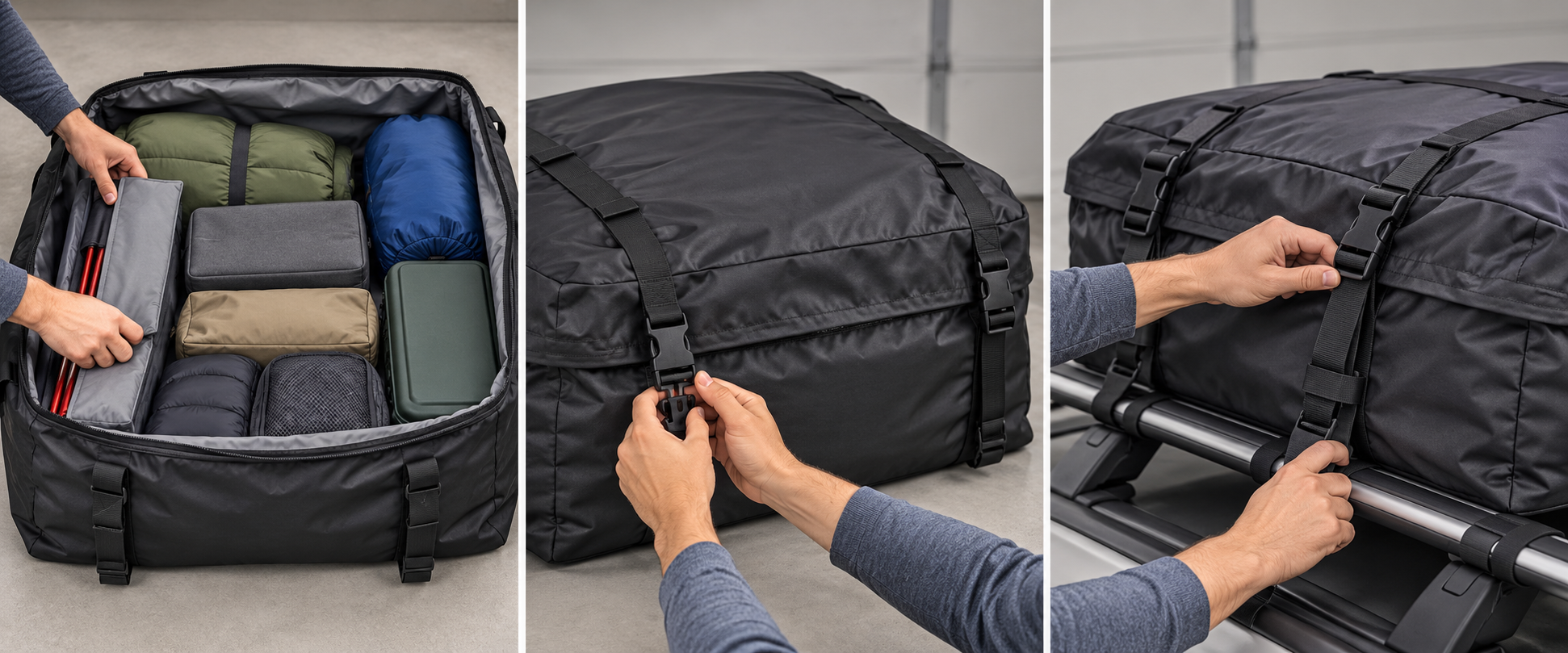
Pack only within the bag’s instructions. Keep the load balanced, protect the bag from sharp edges, close every fastener and secure all straps as shown. Do not overfill a soft bag until it cannot close, and do not improvise a strap path or use elastic cords as a replacement for a specified restraint. Check the attachment before moving and recheck at the intervals required by the bag instructions. Stop if a strap shifts, a door seal changes, the bag moves or cargo becomes exposed.
A practical stop-or-go check
Proceed only when all of these answers are clear:
- The current manual identifies this exact bag and allows the roof or attachment arrangement.
- The vehicle maker permits the contact points, with no unresolved door, airbag, trim or glass-roof conflict.
- The rules for the country of use allow the method.
- The complete installed load fits within the vehicle, rack and bag limits.
- The bag can be closed, restrained and inspected exactly as instructed.
If any answer is unknown, do not infer a fit from “universal,” “no rack,” or “fits most vehicles” wording. Choose an approved rack-and-bag path or another cargo option, or obtain confirmation from the vehicle and bag manufacturers. For a roof-box base-system path, see the Crosstrek guide to roof boxes without crossbars. To compare bags with other storage forms, see the cargo-form comparison and roof-load and securement guide.
Sources and product references
Use these references to check the current instructions and fit information for your market and exact setup.