Check the driving roof limit, rack and carrier ratings before loading. Pack and secure cargo according to the exact manuals, then inspect the installation before and during the trip.
On this page
How to Load and Secure a Roof Cargo Carrier
Before loading a roof box, basket or other roof carrier, confirm that the vehicle, rack and product are approved for the exact setup. Follow their current instructions as a set. A carrier’s product limit is not the vehicle’s roof limit, and a roof rating does not prove that a particular rack or carrier fits.
Calculate the driving load first
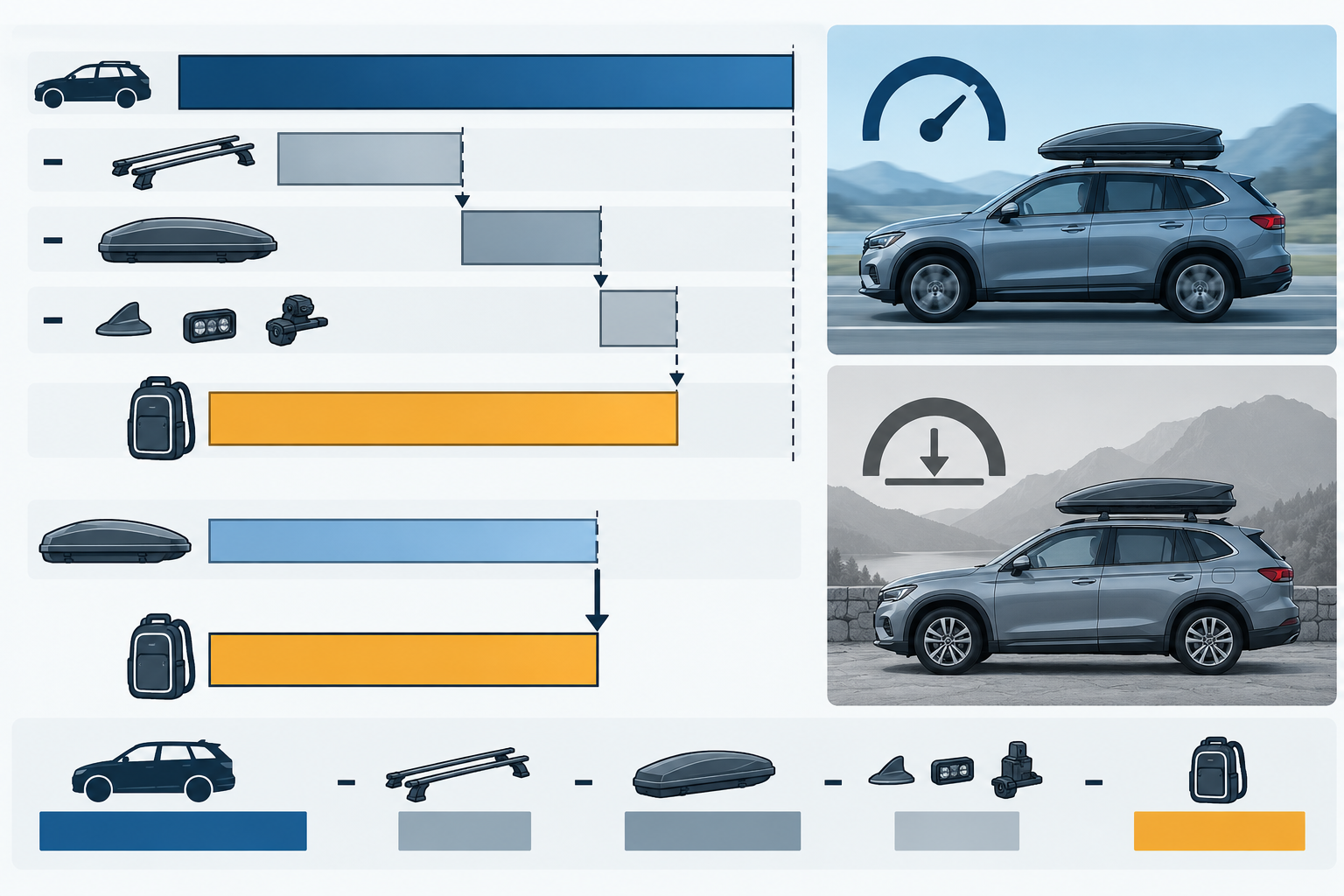
Find the vehicle’s maximum roof load for driving in its owner’s manual. Then subtract the installed rack, empty carrier and any other roof-mounted accessories that count against that limit. The remainder is the cargo weight available before applying the rack and carrier ratings. The lower applicable rating controls.
Use the driving or dynamic limit. A static or parked roof figure does not authorize the same load while moving. Do not borrow a weight limit from a different trim, model year or market, or treat a product’s headline capacity as the vehicle’s allowance. If a manual does not clearly state the relevant limit or what weight it includes, ask the vehicle or rack manufacturer before loading.
Pack for stability and closure
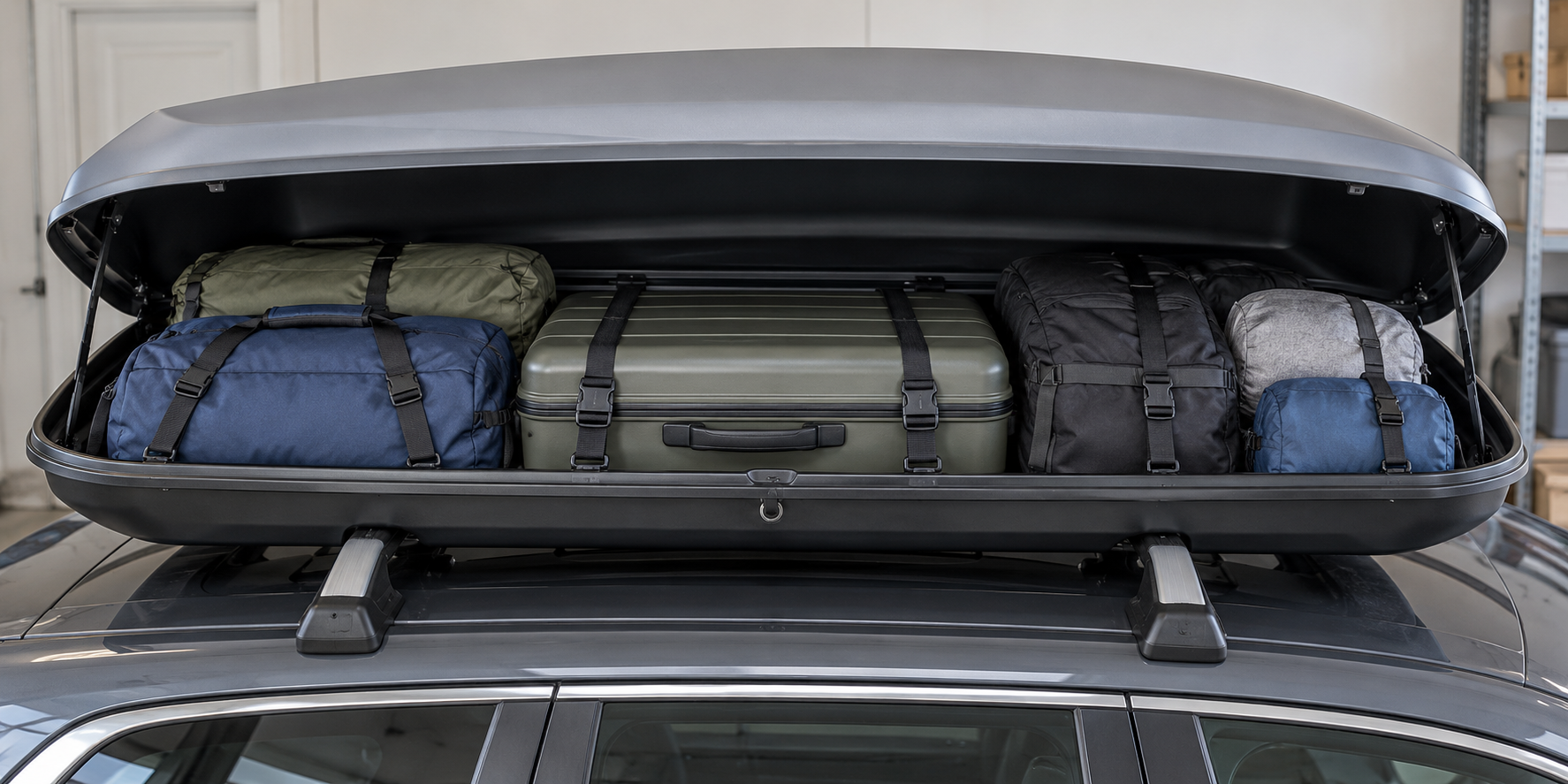
Put dense or heavy items inside the vehicle when practical. In the carrier, follow its loading diagram and place the heavier items where its manual specifies. Keep the load balanced and below the product’s own limit. Do not force the lid closed over an overfilled box.
Use the box’s internal tie-downs or the basket’s specified anchors as directed. Close and lock the lid, stow loose strap ends, and make sure no piece can slide out or work free. Do not improvise an attachment to the car body or pass straps through doors unless the exact product and vehicle instructions explicitly allow that method.
For roof-rack loads in the UK, DVSA guidance says to stay within the rack manufacturer’s maximum and secure cargo with ratchet straps or effective clamping. It warns against using rope, bungee cords or other cords as the main restraint. The page allows strong rope as a supplementary tie-down for a long load projecting ahead of the rack; that does not replace the rack restraint. DVSA also says not to place items directly on a car roof.
For the United States, NHTSA’s public guidance stresses that loads must be secured and checked before driving, and that all 50 states and the District of Columbia have unsecured-load laws. Its page gives general advice, not a roof-rack installation method or a state-by-state legal guide. For Canada, check the rules that apply where you will drive; US and UK examples do not substitute for local requirements.
A 12- or 15-passenger large van needs a vehicle-class-specific cargo decision. Transport Canada’s 2013 large-van guidance advises keeping cargo inside the van to the greatest extent possible and explains that rooftop cargo can lower stability and increase rollover risk. It also warns that heavy rear-mounted boxes or racks may affect handling. This is Canadian guidance for that van class, not a roof-load formula or a general rule for passenger cars; follow the exact van manual and applicable local guidance.
Inspect before moving
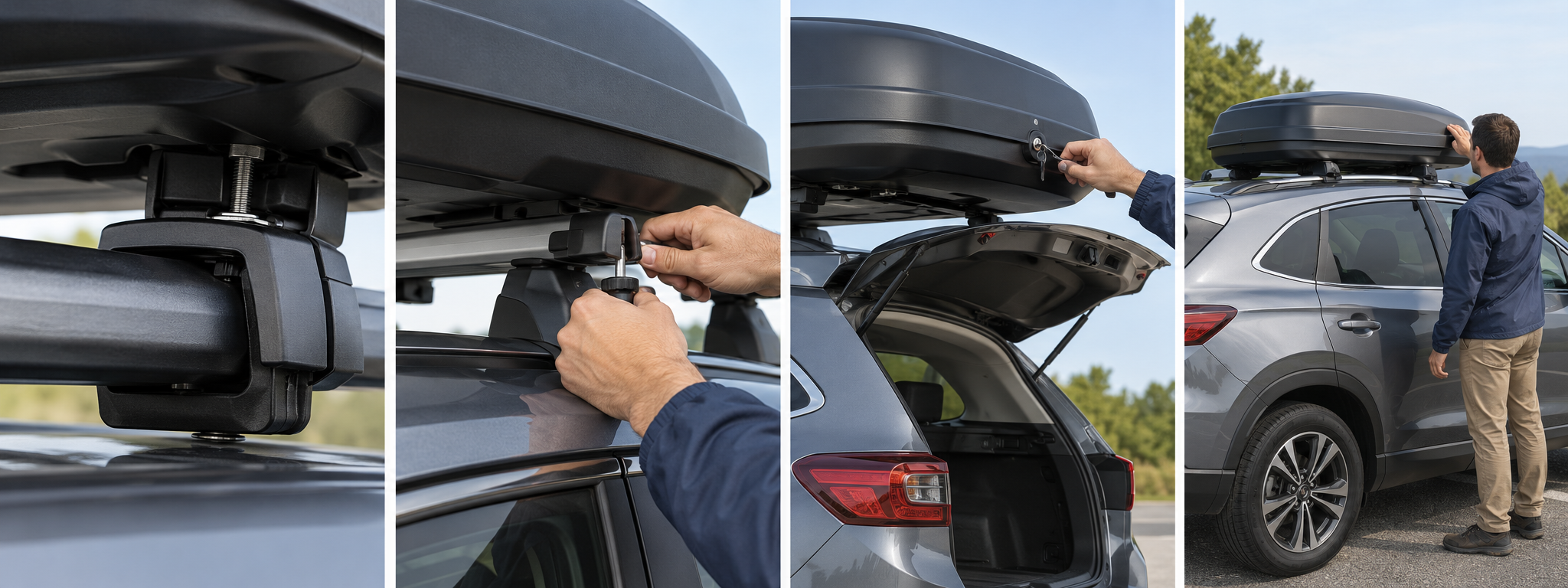
Use the exact rack and carrier checklist. Confirm that every clamp engages the crossbar, mounting hardware is tightened as instructed, and the lid is fully closed and locked. Push or tug only as the product manual directs; do not use a test that could damage the rack or vehicle.
Check that the hatch opens without hitting the carrier, the load does not block the driver’s view, and the vehicle’s total height is known. Consider low garages, car parks and other height restrictions. External cargo can change wind noise and vehicle handling, so allow more stopping distance and drive to the conditions.
Recheck the attachment after starting the trip and at the intervals required by the product manual, especially after a rough road or a long stop. Stop if the box shifts, a clamp loosens, a strap moves or the lid does not remain secure. Do not continue until the setup is corrected.
For hatch distance and bar spacing, use the roof-box measurement guide. To compare a roof box with bags, baskets and rear carriers, see the cargo-form comparison.
Sources and product references
Use these references to check the current instructions and fit information for your market and exact setup.