Compare factory and third-party roof-rack systems by exact vehicle fit, included parts, interfaces, limits, installation, warranty responsibility, and transfer.
On this page
OEM vs. Aftermarket Roof-Rack Systems: What Should You Compare?
An original equipment manufacturer (OEM) rack is sold as a vehicle maker’s accessory; an aftermarket rack comes from a rack or accessory maker. Those labels do not decide fit, capacity, installation quality, warranty outcome, or value. Compare the documented system for your exact vehicle and market, including every piece needed to attach the load you actually plan to carry.
Start with the vehicle’s roof and accessory path
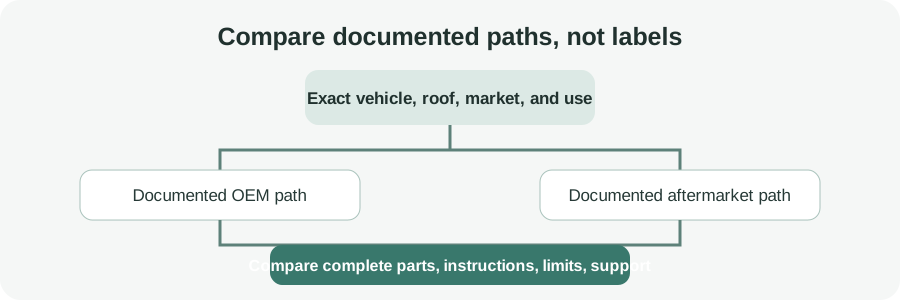
Record the model year, trim, roof design, factory rails or mounting points, and country. Check the vehicle maker’s owner manual and accessory catalog for the intended roof configuration, then use the rack maker’s current fit tool for any aftermarket candidate. A compatible bar family is not enough if the selected feet, clips, fit kit, or adapter do not match the vehicle. Confirm the complete part numbers and the instructions for installation.
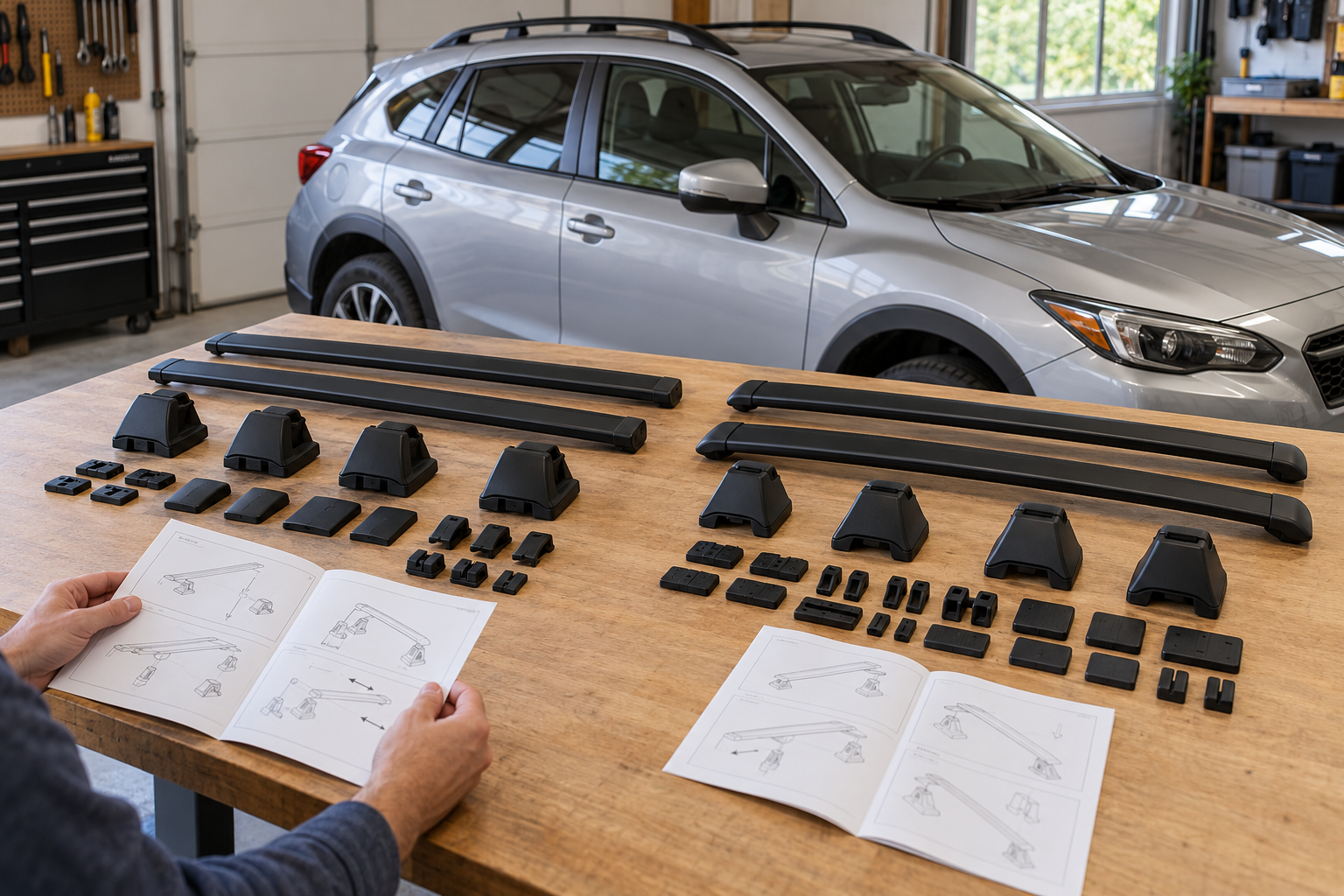
The 2026 US Subaru Crosstrek accessory brochure shows why the exact path matters: it lists Aero and Fixed crossbar sets with different roof and rooftop-tent suitability, and names a Thule Aero Extended crossbar set for its stated tent path. Subaru’s 2025 Ascent brochure is more explicit: Aero set SOA843X040 is not tent-approved, while the named Aero Extended sets are listed for tent use by trim. These are model- and market-specific examples, not rules for other years or vehicles. Compare the accessory documents for your own vehicle rather than assuming that all factory crossbars share the same use approval.
Normalize what each price includes
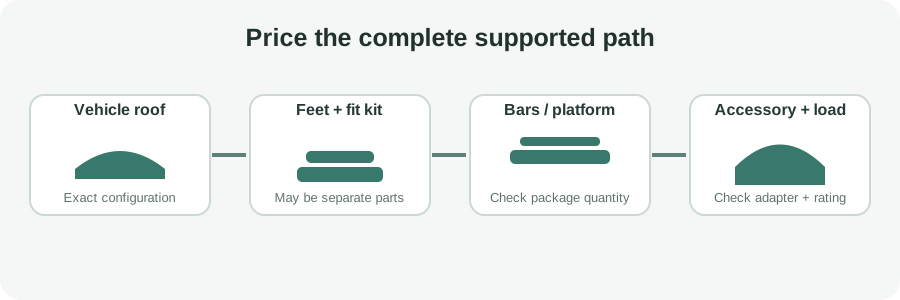
Build a parts list for both candidates before comparing cost. Include the bars or platform, feet or towers, vehicle-specific fit kit, locks, adapters, and cargo carrier. Note whether the package includes installation, and whether professional fitting or replacement hardware adds cost. Check accessory compatibility: a system that carries a box may not use the same interface as a bike mount, platform accessory, or rooftop tent.
Then compare the finished setup’s height, usable width, hatch clearance, accessory position, and removal effort. Look for the system’s current instructions and replacement-part path. A lower initial price may be offset by adapters or separately sold components; a factory-branded kit may still need careful inspection of its included parts and limitations.
Package details can change the comparison. Thule’s US listing for WingBar Edge model 721600 is a single 113 cm bar intended for Edge feet; its listed 75 kg maximum is product-page information, not proof that one bar is a complete rack or fits a selected vehicle. WingBar Evo model 711400 is listed as a two-bar pack, while its Evo feet and vehicle-specific fitting kit are separate. Its 100 kg product-page maximum also does not replace the vehicle or installed-system limit. Compare like with like: count the parts needed for a complete supported setup, then verify the exact accessories and any adapters.
Apply limits to the complete loaded system
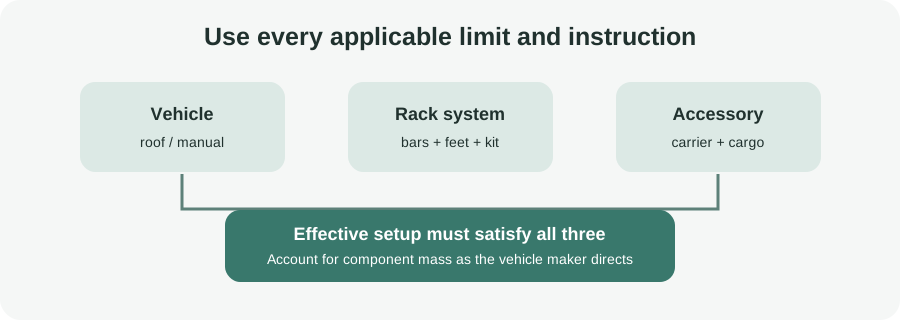
The vehicle manual, rack instructions, and accessory instructions each may state relevant limits. Account for the rack and accessory weights as required by the vehicle maker, and apply the lowest applicable rating. Do not transfer a number from another trim, roof, bar, or market.
For example, the 2025 Ford Bronco Sport manual states a 100 lb (45 kg) maximum recommended roof load for vehicles with a glass roof and 150 lb (68 kg) for vehicles without one, with even distribution on the crossbars. It also requires subtracting rack-system weight when using the system. These are Bronco Sport instructions only; they do not establish fit or a tent rating for another vehicle.
An OEM instruction can also specify how to assemble and maintain a system. Audi’s fitting instruction for the A8 (4H0) with roof-bar set 4H0.071.126 gives a 100 kg combined roof-load limit including bars, add-on components, and cargo. It directs installers to mount the bars before add-ons and to check connections before travel and periodically. This is a 2010-onward application in that named instruction; it is not a value or procedure for another Audi or rack.
Separate product warranty from vehicle warranty
Ask which company warrants the rack and each accessory, what purchase channel qualifies, who can make a claim, and whether coverage continues after a transfer. Terms can differ by brand, product category, country, and purchaser. Read the current policy for the exact item and retain the receipt and installation records. A rack warranty does not confirm that the product fits your roof, and it does not decide how a vehicle warranty applies to a separate repair.
Vehicle warranty language also needs careful reading. Subaru’s US support guidance says damage caused by an aftermarket part may not be covered as damage to a warrantable part; it does not say that installing any aftermarket rack automatically cancels all vehicle coverage. The actual cause, warranty booklet, local law, and facts of a claim matter. OEM, licensed, and third-party accessory warranties can also be different categories, so verify the label and written terms instead of relying on the badge alone.
Regional examples from manufacturer policy pages
The following examples were checked on 26 September 2026 to show why warranty comparisons need an exact market and product category. They summarize what the linked manufacturer pages list, not a warranty outcome for a particular product or claim.
| Market | Roof-rack policy examples shown on manufacturer pages | Conditions to check |
|---|---|---|
| United States | Thule’s US page lists “Limited Lifetime” coverage for Thule carriers, racks, and accessories. Yakima’s US policy lists “Lifetime” coverage for Yakima roof racks, mounts, and accessories. | Yakima says the policy is for the original purchaser, ends if the product is sold or transferred, and applies to purchases from Yakima or an authorized US seller. Confirm the exact Thule product and terms rather than inferring transfer rules from the coverage label. |
| Canada | Thule Canada’s page lists “Limited Lifetime” coverage for Thule carriers, racks, and accessories. | This is a Thule policy example, not a Canadian brand-to-brand comparison. Verify the exact product and purchase-market terms with the maker or seller; do not substitute US or EU policy terms. |
| United Kingdom | Thule’s UK page lists a two-year guarantee for its products and an additional three-year extended warranty for listed categories that include roof racks; registration is required for the extension. The Yakima page hosted on its UK domain displays its EU policy, which lists limited five-year coverage for rack systems, platforms, carriers, and accessories. | Yakima’s displayed policy covers the original retail purchaser and ends on sale or transfer. Check its eligibility for the exact product and purchase market, Thule’s product and registration conditions, and the applicable statutory rights. |
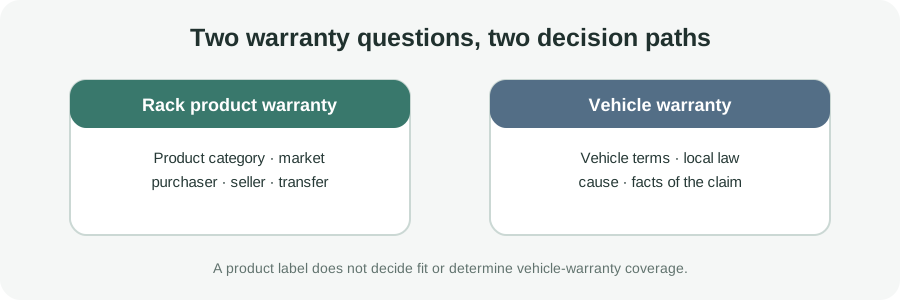
These policy labels are not a like-for-like test of product quality, fit, or total ownership value. Coverage conditions differ by product, purchaser, seller, purchase market, and policy version. If a system may be bought used, confirm whether the product warranty remains available to a second owner. Keep that question separate from vehicle fit and vehicle-maker warranty responsibility.
Consider reuse and future support
If you expect to change vehicles, check whether bars, towers, and accessories can be reused with a new roof. A previous fit does not carry over automatically: roof design, generation, bar length, fit kit, and product generation can change. Confirm a current fit result and the availability of any required replacement kit. Also compare where you can get service and parts in the country where you will use the system.
A fair decision checklist
- Match exact vehicle, trim, roof, market, and intended load.
- Confirm the documented fit path and complete component list for both choices.
- Compare included hardware, installation, interface, clearance, and replacement parts.
- Apply the vehicle, rack, and accessory limits to the complete loaded setup.
- Read product and vehicle warranty terms separately for your country.
- If the system may move to another vehicle or owner, check both its new-vehicle fit and whether product-warranty coverage can transfer.
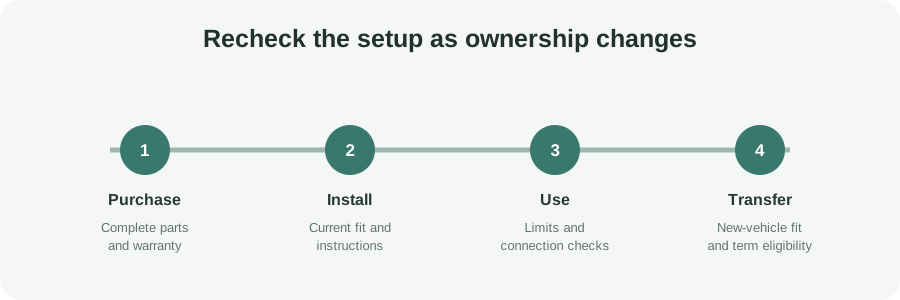
Choose the option with a current documented path and acceptable ownership support. If the parts list, limit, or local warranty term cannot be confirmed, treat it as an open question to resolve with the vehicle maker, rack maker, or seller before purchase.
Sources and product references
Use these references to check the current instructions and fit information for your market and exact setup.
- Crosstrek Accessories 2026primary
- 2025 Ford Bronco Sport Owner's Manualprimary
- Aftermarket accessory and vehicle warranty guidanceprimary
- How to Reuse Your Roof Rack With a New Carprimary
- Thule warranty | United Statesprimary
- Yakima warranty | United Statesprimary
- Thule warranty | Canadaprimary
- Thule warranty | United Kingdomprimary
- Yakima warranty | UK-domain policy pageprimary
- 2024 Highlander Accessory eBrochureprimary
- 2025 Ascent Accessories Brochureprimary
- Audi A8 (4H0) roof-bar fitting instructionprimary
- Thule WingBar Edge 113primary
- Thule WingBar Evo 135primary