Check model-specific glass protection and roof operation, then read EV roof-cargo range figures with their limits intact.
On this page
Glass-Roof Protection, Clearance, and EV Range Checks for Roof Racks
After confirming that a rack is approved for the exact vehicle, check how it contacts the roof, whether a movable roof can operate, what must clear the hatch or vehicle sensors, and which load and installation rules apply. A protection method or measurement from one model is not a general glass-roof procedure.
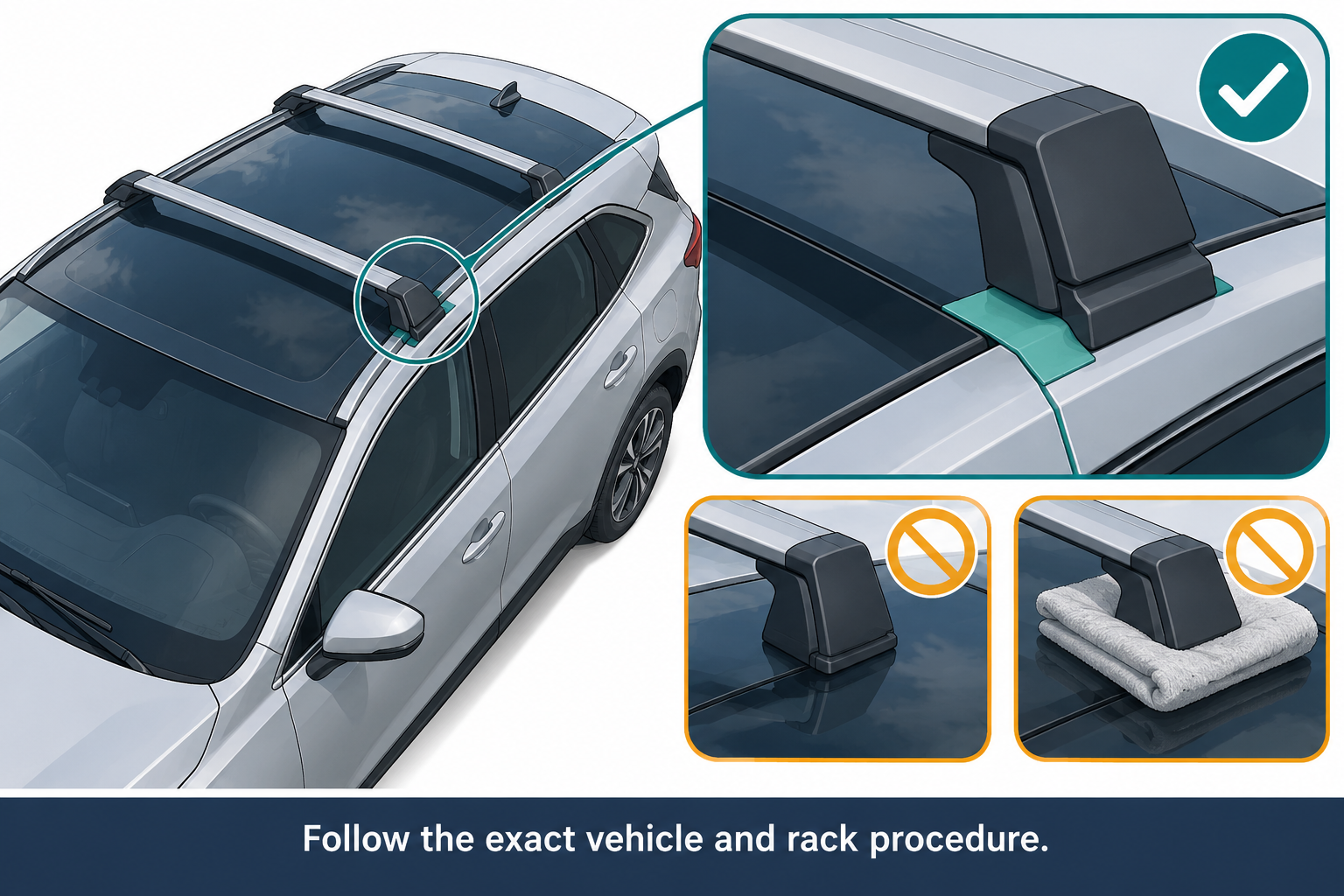
Follow the installation protection for the exact rack
Tesla’s 2025+ Model Y Service Manual gives a specific example. It calls for cleaning the installation areas and letting them dry, aligning anti-abrasion tape with marks at 227 mm from the front edge of the glass roof and 412 mm from the rear edge, placing rail clips under the glass, and using the specified pads and crossbars. It specifies 3.5 Nm for the wingnuts, warns against overtightening, and requires a final push-and-pull check after the bars are locked. The same procedure notes a Model Y Standard case where the glass arrow may not be visible.
Those steps apply to the Model Y procedure and rack it names. Use the full current instructions for the actual vehicle. Do not borrow Tesla’s tape, positions, clip method, or torque for another brand or roof. Follow another maker’s specified contact pads or protective material instead of adding a generic layer that may change fit or clamping.
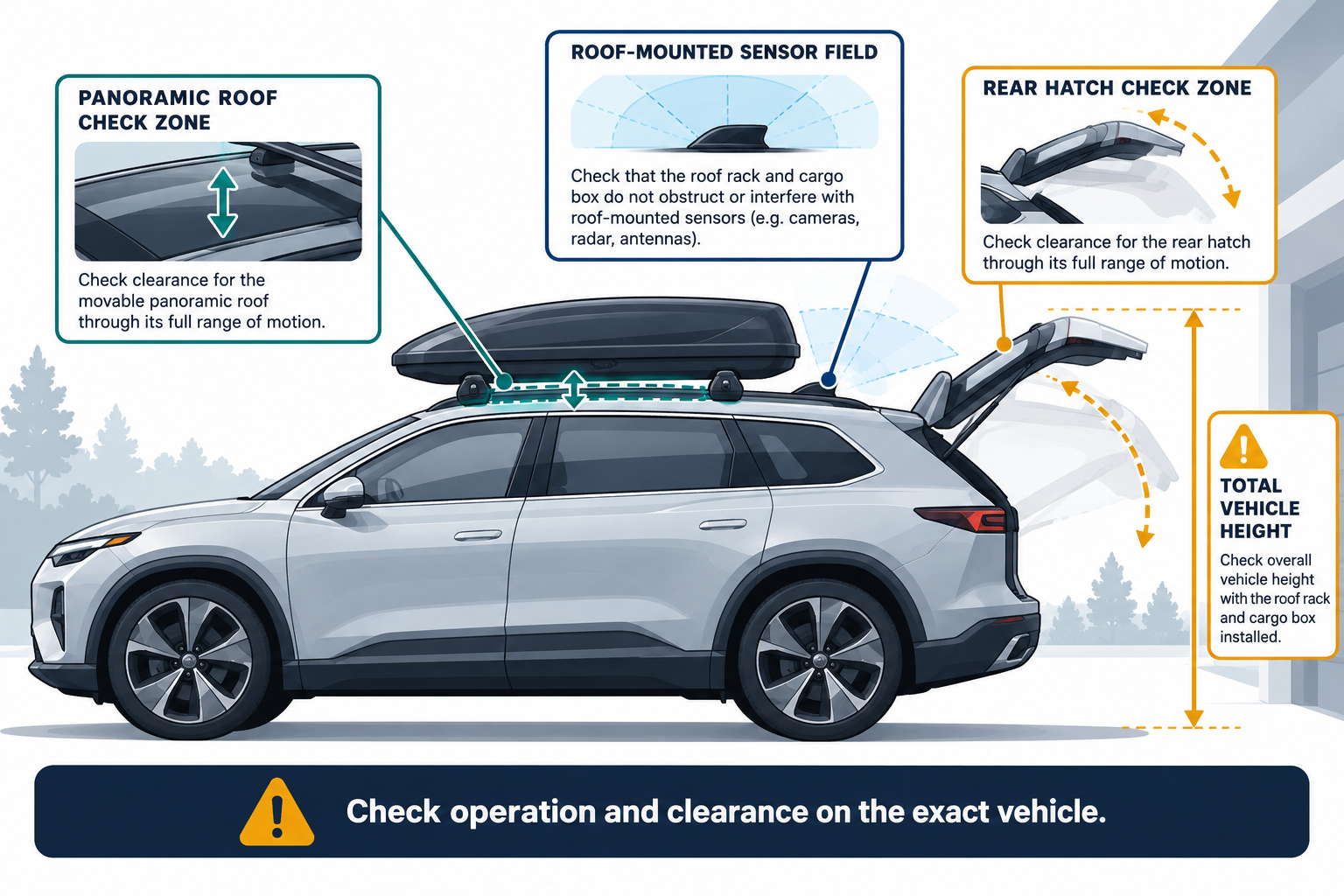
Check operation and clearance before loading
Vehicle manuals can limit roof operation. The cited Volvo EX40 2026 manual says not to open the panoramic roof when load carriers are fitted and not to place heavy objects on the panoramic roof. Kia’s 2025 UK EV9 manual says cargo must not interfere with an equipped sunroof and says not to operate it while cargo or roof accessories are fitted. These instructions belong to their named vehicles and manual scopes.
Check the complete installed geometry. The Canadian 2025 March Mercedes-Benz EQE SUV manual says not to open the powered panorama roof with a rack fitted, calls for a tailgate-clearance check where vehicle equipment makes it relevant, and says to account for the extra vehicle height. Volvo’s 2025 UK EX90 loading guidance says roof loads should not extend above the windscreen because they can interfere with vehicle sensors. That is an EX90-specific warning, not a universal clearance measurement. Use the exact vehicle instructions for roof movement, glass contact, tailgate, sensors, doors, and overhead clearance.
What EV range figures can tell you
Roof hardware changes aerodynamics, and vehicle makers describe effects on energy use and range. The UK Vehicle Certification Agency gives illustrative fuel-consumption examples: a roof box typically adds around 22% at 62 mph and 39% at 75 mph, while empty roof bars can add around 7% at motorway speeds. Those examples are not EV range predictions for a particular vehicle or carrier.
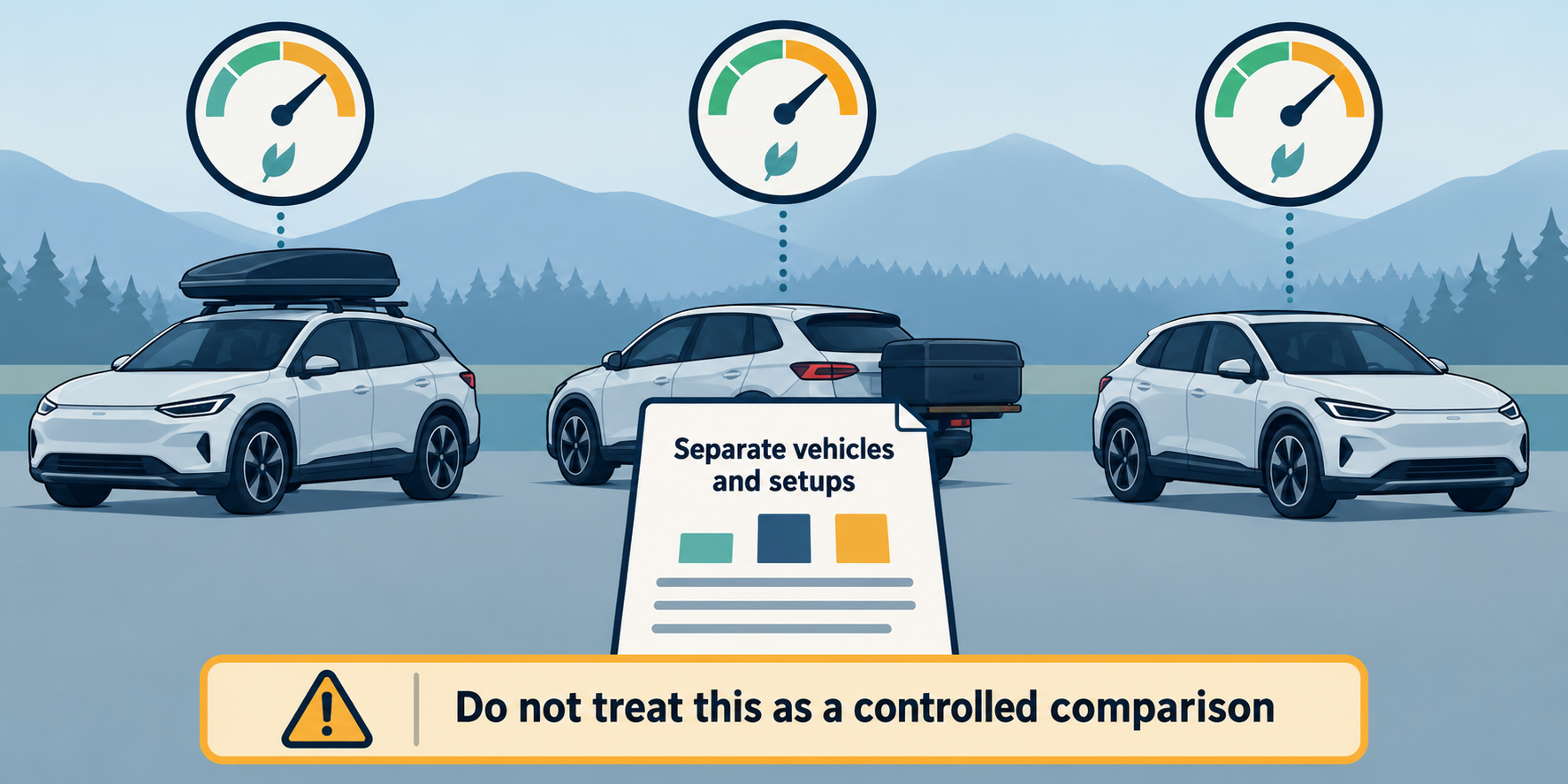
A 2026 specialist test compared three separate Hyundai Kona EVs: a white car with a roof box, a blue car with a rear-mounted box, and a red car without added equipment. The report does not establish that their model years, trims, battery configurations, or other vehicle specifications were matched. It lists highway consumption of 21.9, 17.6, and 18.4 kWh/100 km respectively; at 130 km/h it lists 24.3, 18.1, and 19.7 kWh/100 km. The report says route variables were not controlled and describes its range figures as theoretical projections. These are measurements reported for that test, not a controlled comparison isolating carrier type or expected results for another Kona, EV, box, route, or weather condition. The separate Elroq and ID.Buzz Arcos test used a rear-mounted box only, so it does not compare roof and rear systems.
For your own planning, use the exact product and vehicle limits first.
 Range
depends on the vehicle, rack and load shape, speed, route, weather, and other
conditions; the available tests do not establish a transferable percentage.
If you want to compare a setup with your usual consumption, use comparable
routes and driving conditions and keep a margin in the trip plan. Remove
carriers when they are not needed if the maker recommends doing so.
Before the first trip
- Confirm the rack and mounting hardware are approved for this vehicle and roof.
- Follow the exact glass-contact, pad, position, fastener, and torque steps.
- Check roof and sunroof operation, hatch travel, sensors, and height clearance.
- Apply the vehicle, rack, accessory, and cargo limits exactly as their instructions define them.
- Secure the load and repeat any manufacturer recheck after installation or early travel.
For model-specific approval and configuration details, start with the EV and glass-roof rack approval workflow.
Sources and product references
Use these references to check the current instructions and fit information for your market and exact setup.
- Model Y 2025+ Service Manual — Roof Rack (Install)primary
- Kia 2025 UK EV9 Owner's Manual — Roof rackprimary
- EX40 2026 Owner's Manual — Operating the panoramic roofprimary
- EQE SUV Operator's Manualprimary
- EX90 Recommendations for loadingprimary
- Fuel efficient driving tipsprimary
- Thule Arcos Box road test — Automobile Proprespecialist
- AP x La Chaîne EV: Roof box or towbar box comparisonspecialist