Separate driving roof loads from occupied parked use and verify the exact vehicle, glass-roof, rack, and tent combination.
On this page
Roof Tents on EVs and Glass Roofs: Approval and Load Checks
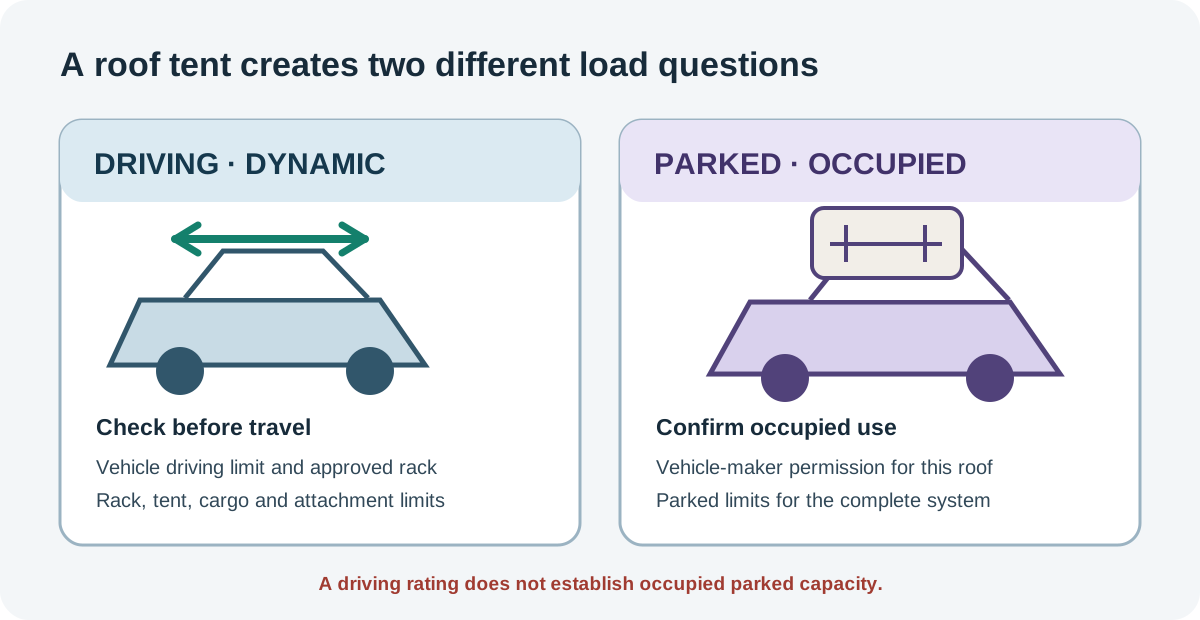
A roof tent creates two different load questions. Dynamic load is carried while the vehicle is moving. Static load applies when the vehicle is parked with the tent open and people inside. A driving roof-load figure, a rack’s static rating, or a glass-roof label alone does not confirm that an exact vehicle can support an occupied tent.
Get vehicle-maker confirmation for a glass roof
Thule’s rooftop-tent guidance says owners of vehicles with glass or large panoramic roofs should always check with the vehicle manufacturer that the roof can support a rooftop tent. That is a confirmation step, not approval of a named EV or roof option. Ask about the exact vehicle year, market, trim, roof configuration, rack, tent, and intended parked use.
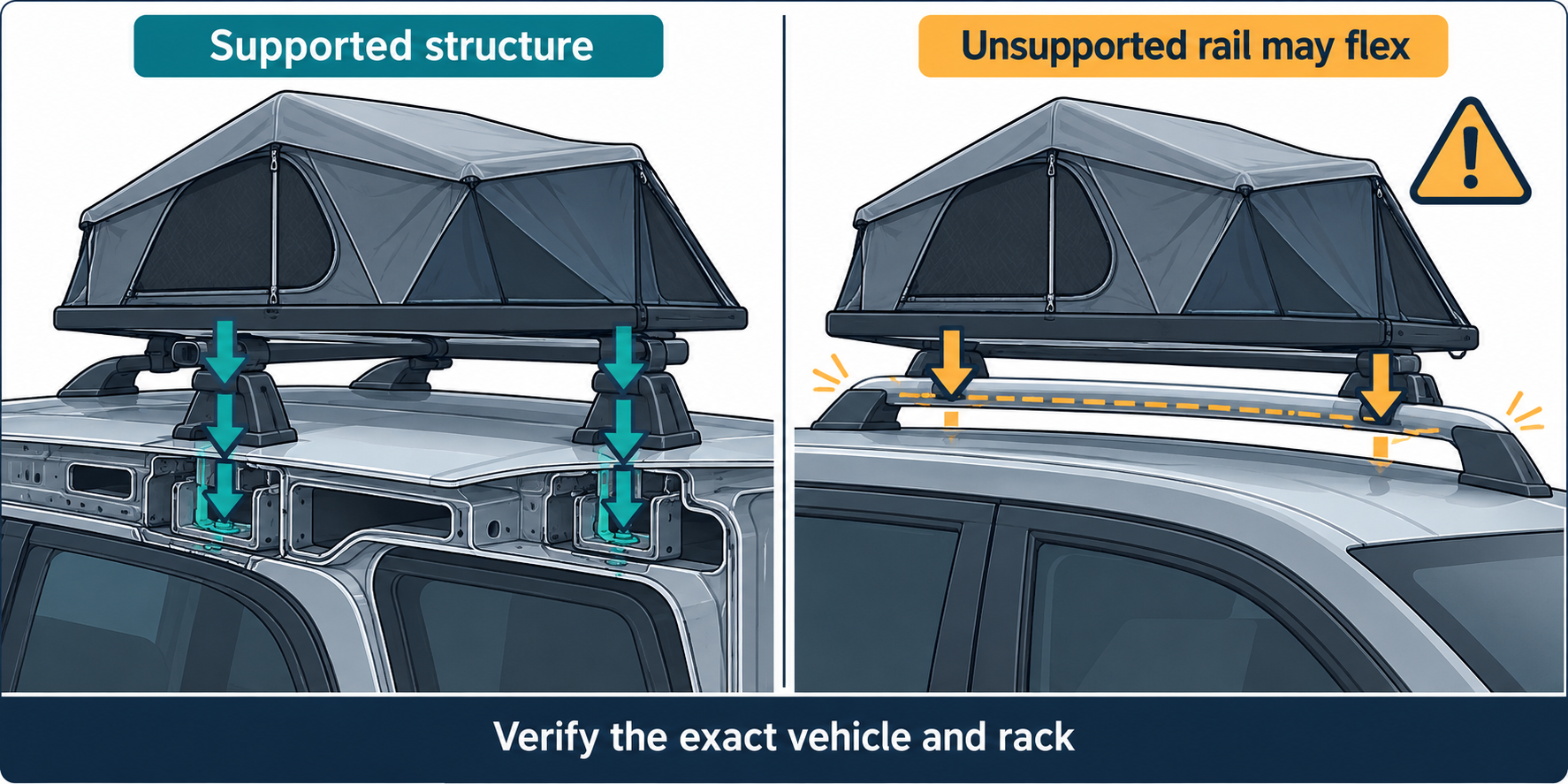
Check the exact rack and tent instructions as well. Thule’s guide distinguishes the vehicle’s dynamic capacity from a tent’s occupied static use. Its three-times-static-to-dynamic figure is a guideline for Thule roof racks only; it is not a vehicle roof rating or a rule for another rack brand. The guide also says to check that the rack components can carry the tent and that the bar shape and spread meet the tent’s own requirements. Supported rail structure matters because unsupported raised rails may flex under an occupied tent load.
Treat advertised static capacity as product guidance
Volvo’s UK roof-tent guidance gives up to 300 kg static as a general tent guideline, then directs owners to the exact model’s own dynamic and static limits and its approved load carriers. The same page notes that model values differ. That figure does not establish permission for every Volvo, EV, or glass-roof configuration.
The distinction is especially important where a manual gives a parked-only figure. Kia’s 25MY UK EV9 manual says its equipped roof rack can support up to 400 kg when the vehicle is parked and evenly loaded, and says not to drive with more than 100 kg of cargo and accessories on the rack. It separately requires users to confirm roof-tent compatibility, secure the tent to the crossbars and rails, and keep occupants within the rack’s load capacity. The manual does not say that its 400 kg parked figure is an occupied tent allowance, nor does it identify a tent or exact EV9 trim. Do not infer that permission from the number.
Volvo’s 2026 UK EX90 manual lists a 100 kg maximum roof-load value, but the cited entry does not specify an occupied static tent capacity or approve a tent. A vehicle’s model-specific instruction and the accessory maker’s instructions must explain how parked use is assessed before the setup is treated as suitable.
Check the crossbar and tent as one named setup
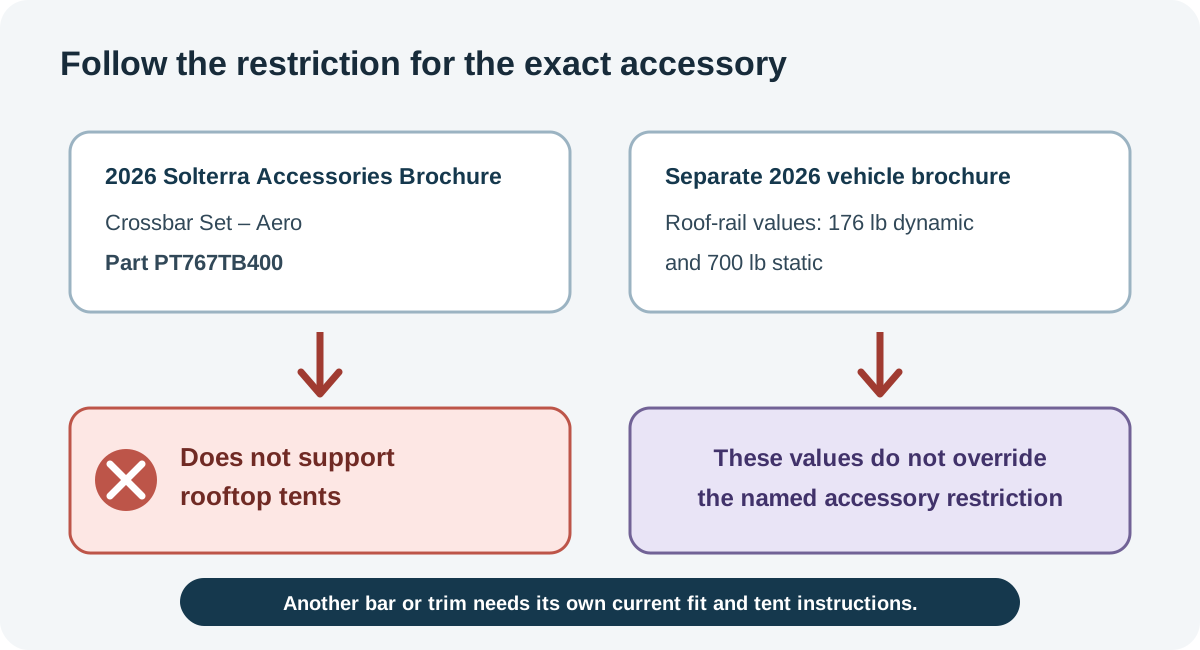
Subaru’s 2026 US Solterra accessories brochure says its Crossbar Set – Aero, part PT767TB400, does not support rooftop tents and directs owners to the vehicle manual for the total roof-load limit. A separate 2026 Solterra vehicle brochure lists 176 lb (80 kg) dynamic and 700 lb (318 kg) static roof-rail capacities. Those figures do not establish that the crossbar set is approved for a glass-roof trim or that the static value permits occupied tent use. The separate roof-rail figure does not override the accessory’s explicit tent restriction. The brochure addresses this named crossbar set only; it does not establish that another Solterra system supports a tent. Confirm any other vehicle, trim, and accessory combination from its own current instructions.
Rivian’s US 2025 R1S Owner’s Guide lists a maximum static capacity of 780 lb (353 kg) per pair of Cargo Crossbars. The current R1 Cargo Crossbars product page separately describes 600 lb (272 kg) with a full rooftop tent while parked. These are differently worded statements; their relationship is not explained by the cited sources. Do not select the higher figure or assume the two statements cover the same vehicle, bar revision, and tent setup. Confirm the exact combination with Rivian before occupied use, and see the R1S crossbar installation guide for the model-year-specific latch and glass-handling checks.
Check the whole system before use
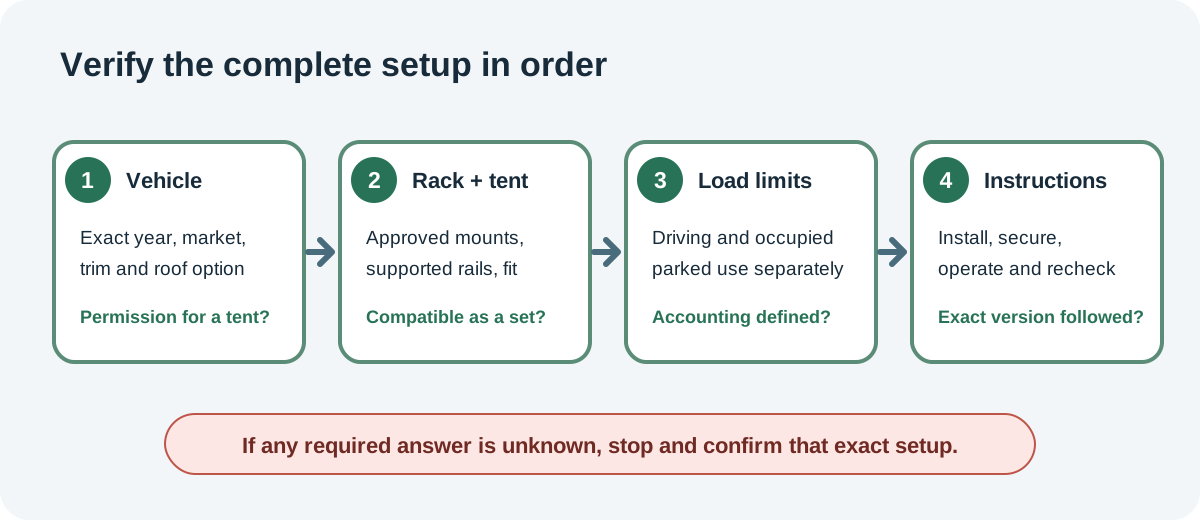
- Confirm that the vehicle maker permits a tent on the exact roof and glass option, in the intended market and model year.
- Confirm the approved rack, mounting hardware, and tent compatibility. Check bar shape, front-to-back and side-to-side spread, support structure, and each component’s limit.
- Use the vehicle’s own dynamic and static instructions. Confirm how rack, tent, accessories, cargo, and occupants are counted; do not calculate from separate ratings unless the maker defines the arithmetic.
- Follow the installation sequence, fastening, locking, securement, and recheck instructions. Do not load the roof panel directly.
- Set up only as the vehicle and tent makers direct. Kia’s cited EV9 manual says never to move the vehicle with people in the tent and warns against fuel-burning devices near an occupied tent or awning because of carbon monoxide.
If the vehicle maker has not confirmed the glass-roof support or the occupied parked-load limit, keep the combination unconfirmed and ask for vehicle-specific guidance. No source cited here establishes a universal EV or glass-roof tent fit.
Sources and product references
Use these references to check the current instructions and fit information for your market and exact setup.
- Thule Rooftop Tent Guidelinesprimary
- How to use the roof tentprimary
- Kia 2025 UK EV9 Owner's Manual — Roof rackprimary
- EX90 2026 UK User Manualprimary
- 2026 Subaru Solterra Accessories Brochureprimary
- 2026 Subaru Solterra Vehicle Brochureprimary
- R1S Owner's Guide, Model Year 2025, Version 2024.23primary
- R1 Cargo Crossbarsprimary