Follow Rivian's R1S crossbar procedure for careful glass-roof handling, accessory-port latching, and model-specific load checks.
On this page
Rivian R1S Roof Crossbars: Glass Handling and Latch Checks
Rivian’s 2025 R1S Owner’s Guide gives a specific installation sequence for Cargo Crossbars and warns that careless handling can damage the glass roof panels. Rivian’s current R1 Cargo Crossbars listing includes the R1S. The guide’s steps apply to those crossbars and accessory ports; they do not approve third-party bars or every attachment that can fit a crossbar.
Match the vehicle, guide, and crossbars
The detailed procedure below is in the US Model Year 2025 R1S Owner’s Guide, Version 2024.23. Check the current local manual and the exact crossbar product before installation. A store listing that names R1S does not establish that one manual version or product revision applies to every model year, configuration, or market.
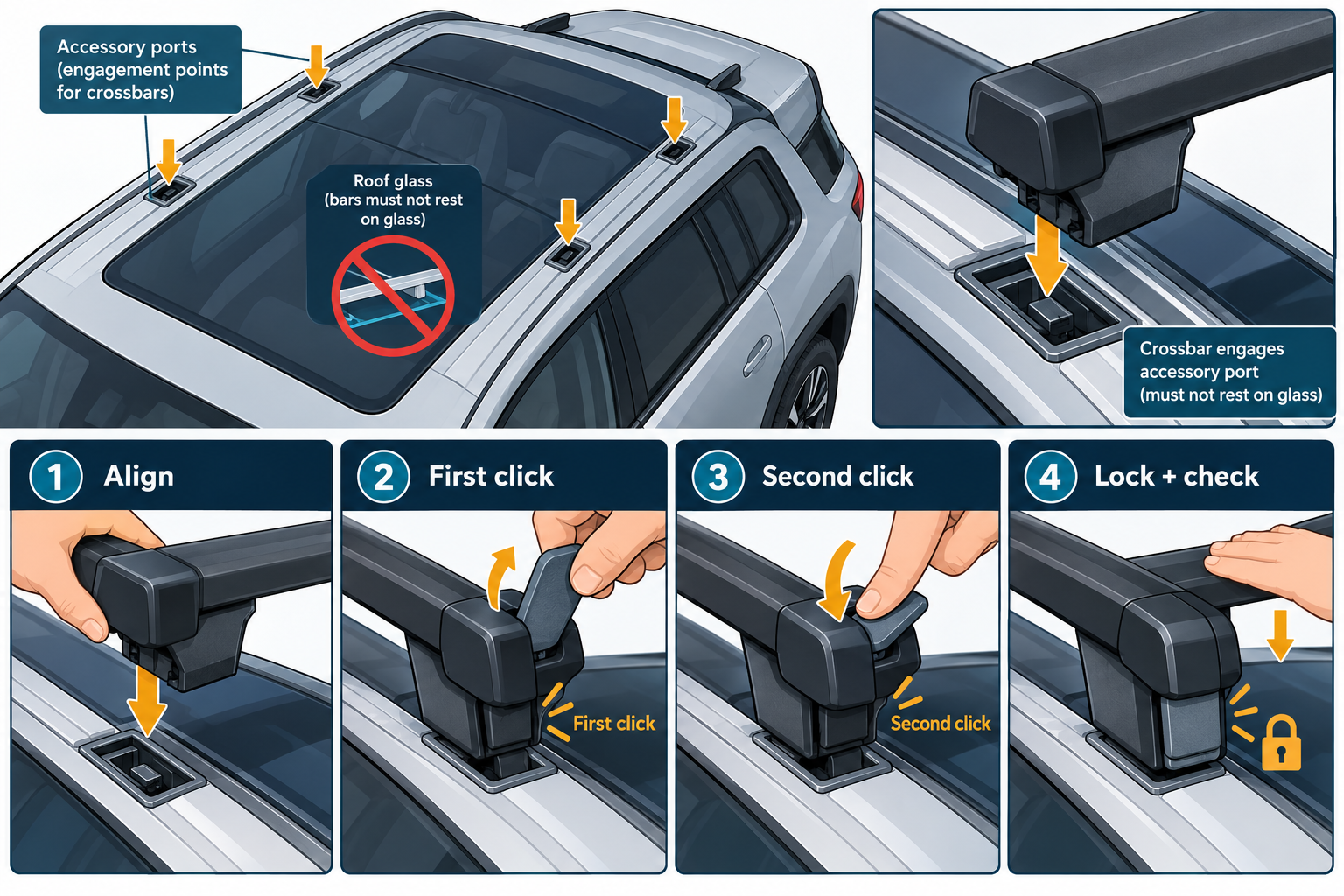
The manual describes roof accessory ports. The bars latch into those ports; they are not placed directly on the glass. Keep heavy equipment from striking or pressing against the roof while moving the bars into position.
Install and confirm each latch
Rivian’s guide calls for careful handling, a second person to help install the bars, and removing accessories from the crossbars before mounting them on the vehicle. Follow the supplied instructions for the exact bars. The MY2025 guide then specifies this latch sequence:
- Adjust a bar’s width so its ends align with the vehicle’s accessory ports.
- Lift the paddle while setting the bar into a port. Listen for the first click.
- Center the bar in the port and push the paddle down until it clicks again. Rivian says additional downward force may be needed to complete the latch.
- If both clicks are not heard, reinstall the bar rather than assuming it is secure. Repeat the sequence for the remaining bar ends.
After all ends latch, Rivian’s guide says to lock each bar with its key, turn the key clockwise, and push each paddle fully down over the lock cylinder. Secure the crossbars and cargo before and after driving, especially on rough terrain. The guide warns that loose bars or an unsecured load can cause a serious crash. Use only manufacturer-recommended parts and accessories.
Keep product and vehicle load limits separate
Rivian’s 2025 US guide lists a 250 lb (113 kg) maximum dynamic load and a 780 lb (353 kg) maximum static load per crossbar pair. The current product listing also states 250 lb while driving, but describes 600 lb with a full rooftop tent while parked. These statements describe different limits; do not treat the guide’s static roof figure as permission to exceed the crossbar product limit. Check the current manual, exact crossbar instructions, and the vehicle’s payload labels together. For occupied rooftop-tent use, verify that the vehicle maker approves the exact vehicle and setup; the roof-tent guide explains the separate parked-use checks.
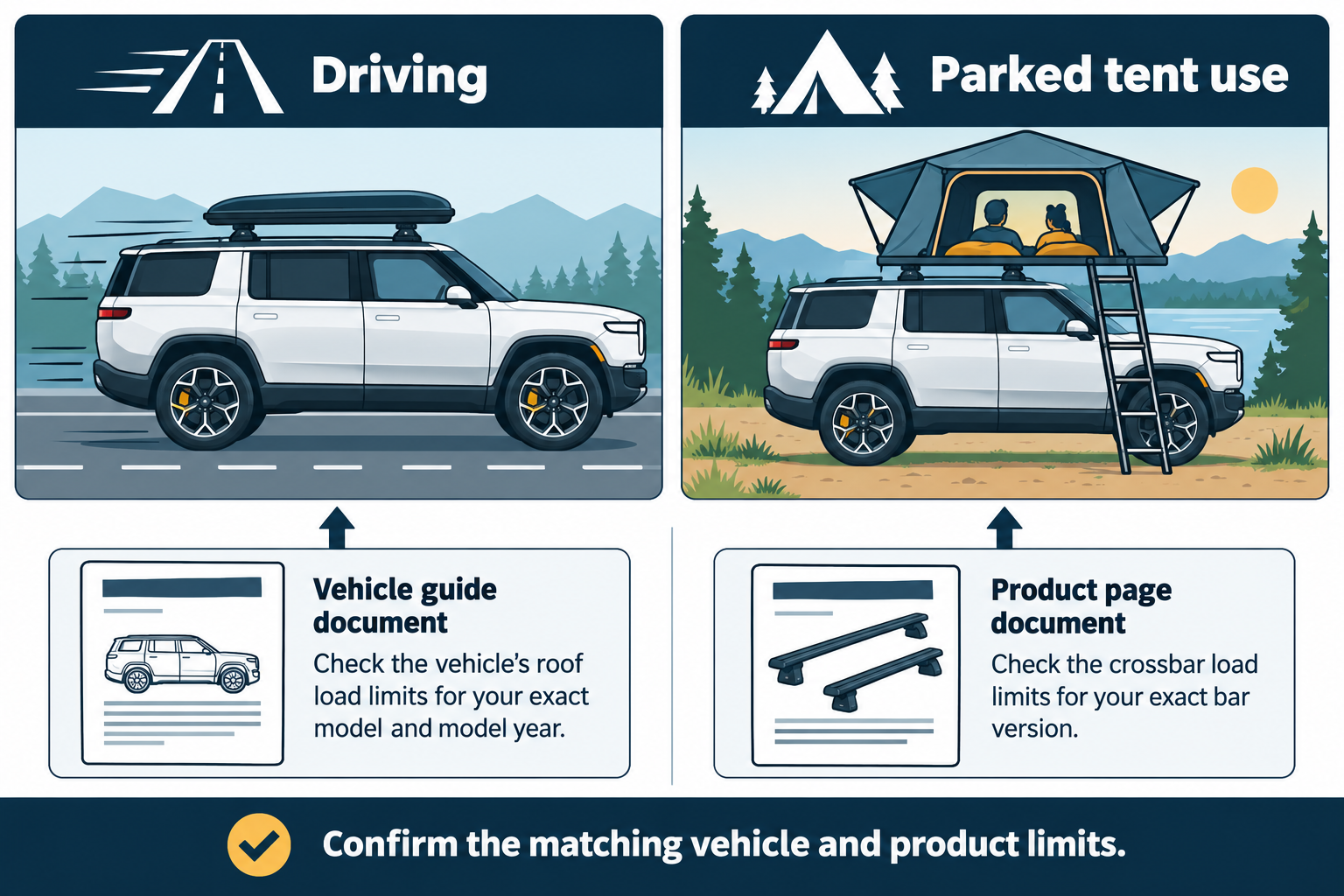
If the applicable documents do not resolve which limits cover your vehicle and bar version, ask Rivian before loading. An R1S listing or a completed latch check does not confirm the remaining vehicle, attachment, or tent limits.
Sources and product references
Use these references to check the current instructions and fit information for your market and exact setup.