Check roof, rack, and box limits, distribute cargo as the box maker directs, secure the lid, and account for added height before driving.
On this page
How to Pack a Roof Box Safely
Packing a roof box safely starts with the vehicle and rack limits, not the box’s advertised capacity. The empty box and rack add weight before any luggage goes inside. Check the exact vehicle manual, rack instructions, and box instructions for your setup and market.
Find the cargo allowance
Check the vehicle’s driving or dynamic roof limit, the rack’s capacity, and the box’s own limit. Read what each number includes. Thule’s roof-box guide calculates available cargo by subtracting the rack and empty box weight from the vehicle roof-load limit. Another system may define its total differently, so follow the instructions for your equipment and count every item those instructions include.
Use the driving limit when planning cargo for a trip. A parked or static value is not permission to drive with that amount. If the vehicle manual, rack, or box gives a lower limit, the lower one controls. If you cannot identify the correct manual, accessory rating, or weight of installed parts, stop and confirm them before loading.
Distribute and secure the contents
Thule’s current US roof-box guide offers a ¼–½–¼ distribution example: half of the cargo weight centered between the bars, with one quarter toward the front and one quarter toward the rear. Treat this as Thule guidance, not a universal placement rule. Follow the box maker’s own arrangement and avoid placing cargo where it presses on the lid, mounting hardware, or moving parts.
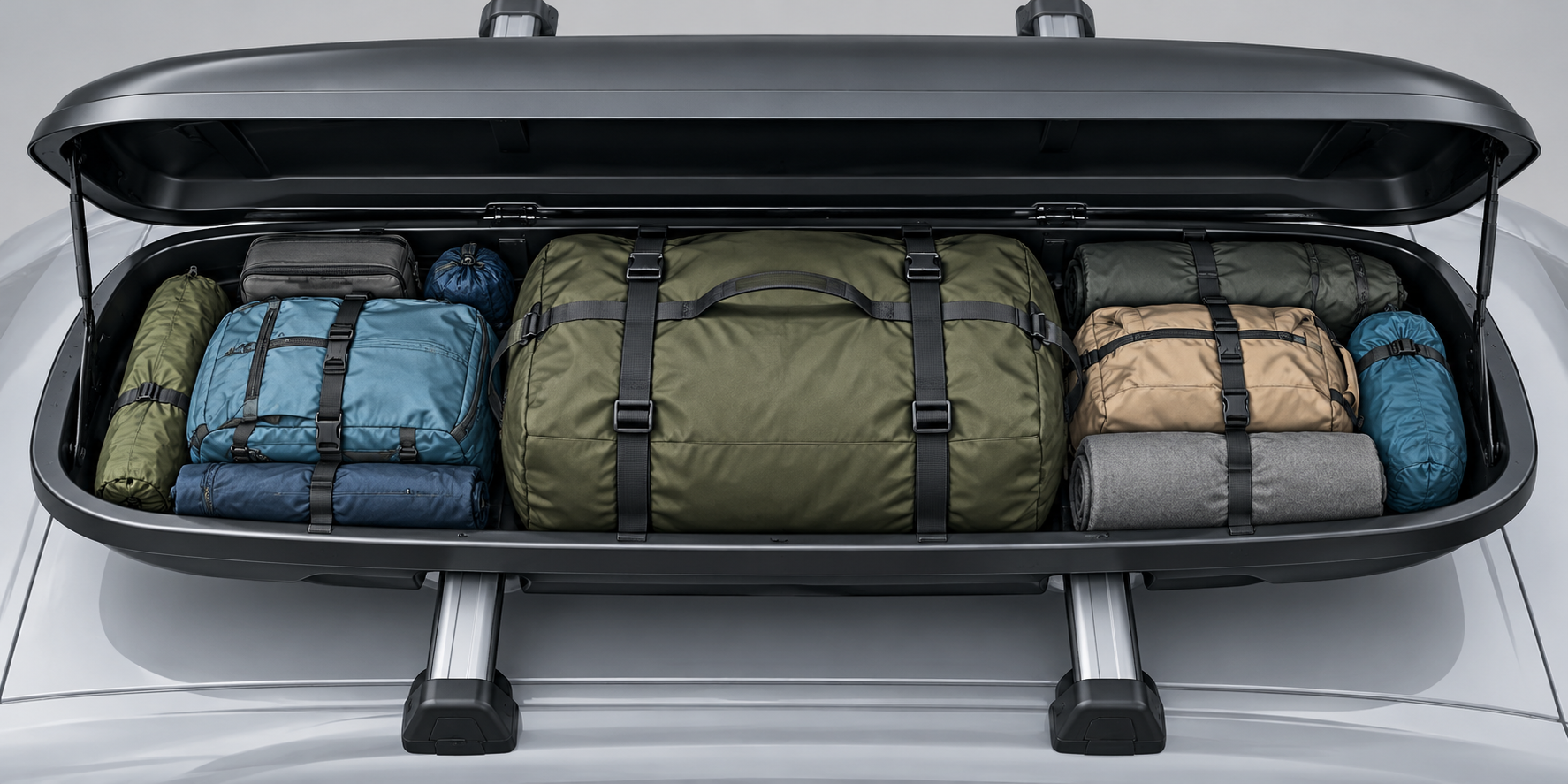
Bulky, lighter items are generally easier to manage in a roof box than dense heavy cargo. Keep the load within the box and rack dimensions, secure loose contents so they cannot shift, and keep the closure clear so every latch can close as the box instructions specify.
Before departure, check that the box is correctly mounted in the instructed direction and parallel to the road where its maker specifies, that clamps are secured, and that the lid is closed and locked. Recheck the attachment after the interval in the product instructions and during a long journey.
Measure height and drive for the load
A roof box increases the vehicle’s overall height. Measure the actual installed setup and keep that value available when approaching parking garages, car washes, height barriers, and low branches. Do not rely on the vehicle’s original height or on a different box model.
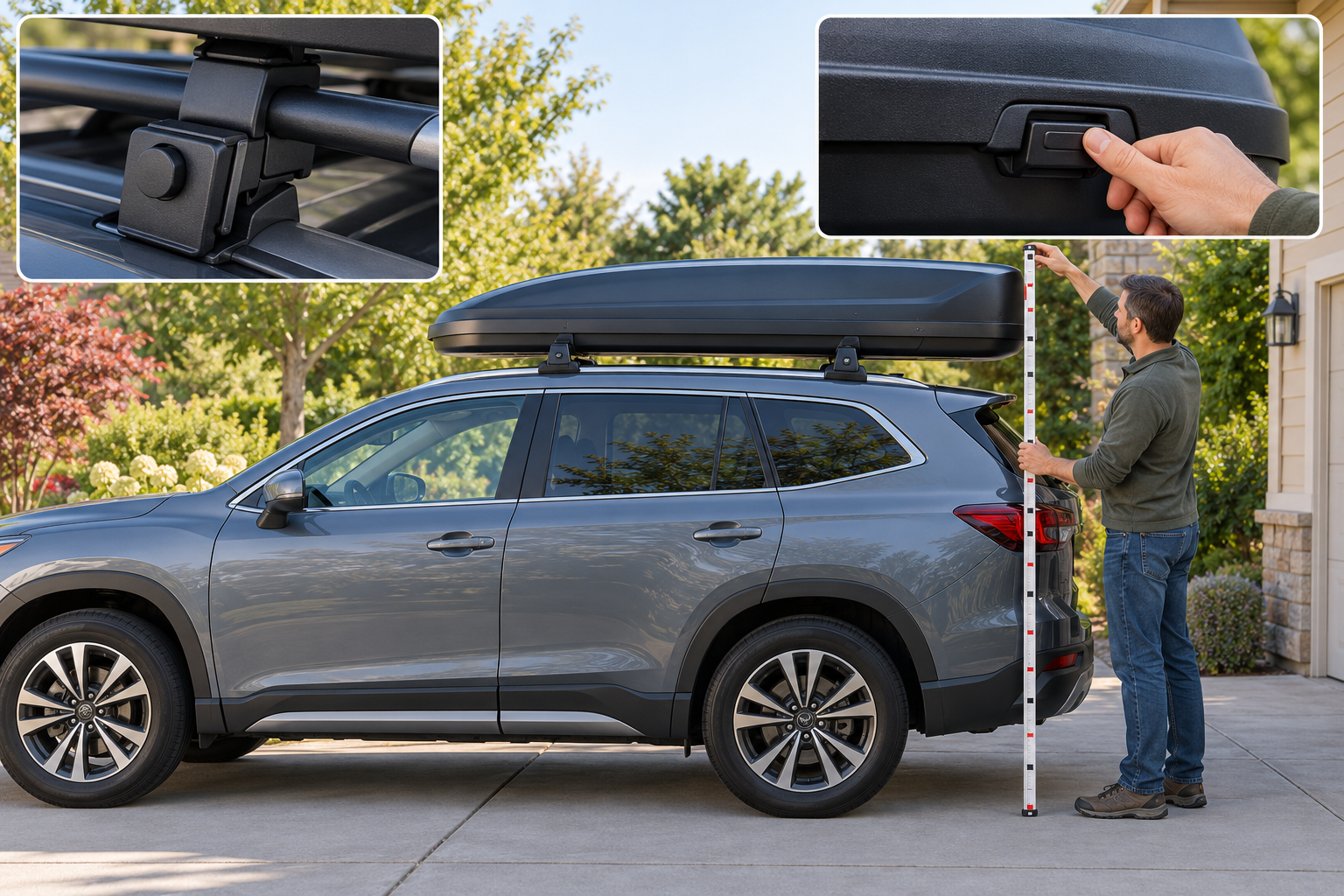
Roof cargo can affect handling and sensitivity to crosswinds. Adjust speed and driving style to the load, weather, road surface, traffic, and local limits. Do not treat a product maker’s speed recommendation as a replacement for local law or the instructions for your vehicle and box.
If the box moves, a latch opens, cargo shifts, or a clearance is uncertain, stop somewhere safe and correct the issue before continuing. See how to secure a roof load and adjust your driving for checks that apply to other roof cargo too.
Sources and product references
Use these references to check the current instructions and fit information for your market and exact setup.