Work out the cargo allowance from the exact vehicle, rack, and accessory instructions, and keep driving limits separate from parked capacity.
On this page
How to Calculate the Effective Roof Load for a Rack and Cargo
The cargo amount you can carry is often lower than the number printed beside a vehicle’s roof-load table. The vehicle, base rack, accessory, and cargo each have a limit or weight that can affect the result. Use the instructions for the exact vehicle and installed equipment; a limit from another model, roof type, or market is not a substitute.
Gather the limits for your exact setup
Before calculating, identify the vehicle’s market, model year, body and trim, roof type, and required mounting points. Confirm the exact crossbars or rack system and the accessory you plan to carry. Read the current vehicle manual and every rack and accessory instruction.
Record:
- The vehicle’s roof-load limit and what the manual says it includes.
- The rack or crossbar system’s capacity and the weights it counts.
- The accessory’s capacity, such as a box, basket, or carrier.
- The weight of every installed component and the cargo.
- Any separate condition for driving, parking, a particular roof, or a vehicle configuration.
Do not assume all manuals define “roof load” the same way. Some vehicle manuals explicitly tell you to subtract the roof-rack system’s weight to get the cargo allowance. Product instructions may count the rack, accessory, and cargo together. Follow each limit’s own definition, and do not count the same component twice.
Find the controlling limit
The setup has to satisfy every applicable limit at once. A higher accessory rating cannot increase a lower vehicle or base-rack rating. A lower accessory rating can reduce the usable capacity even when the vehicle has room remaining.
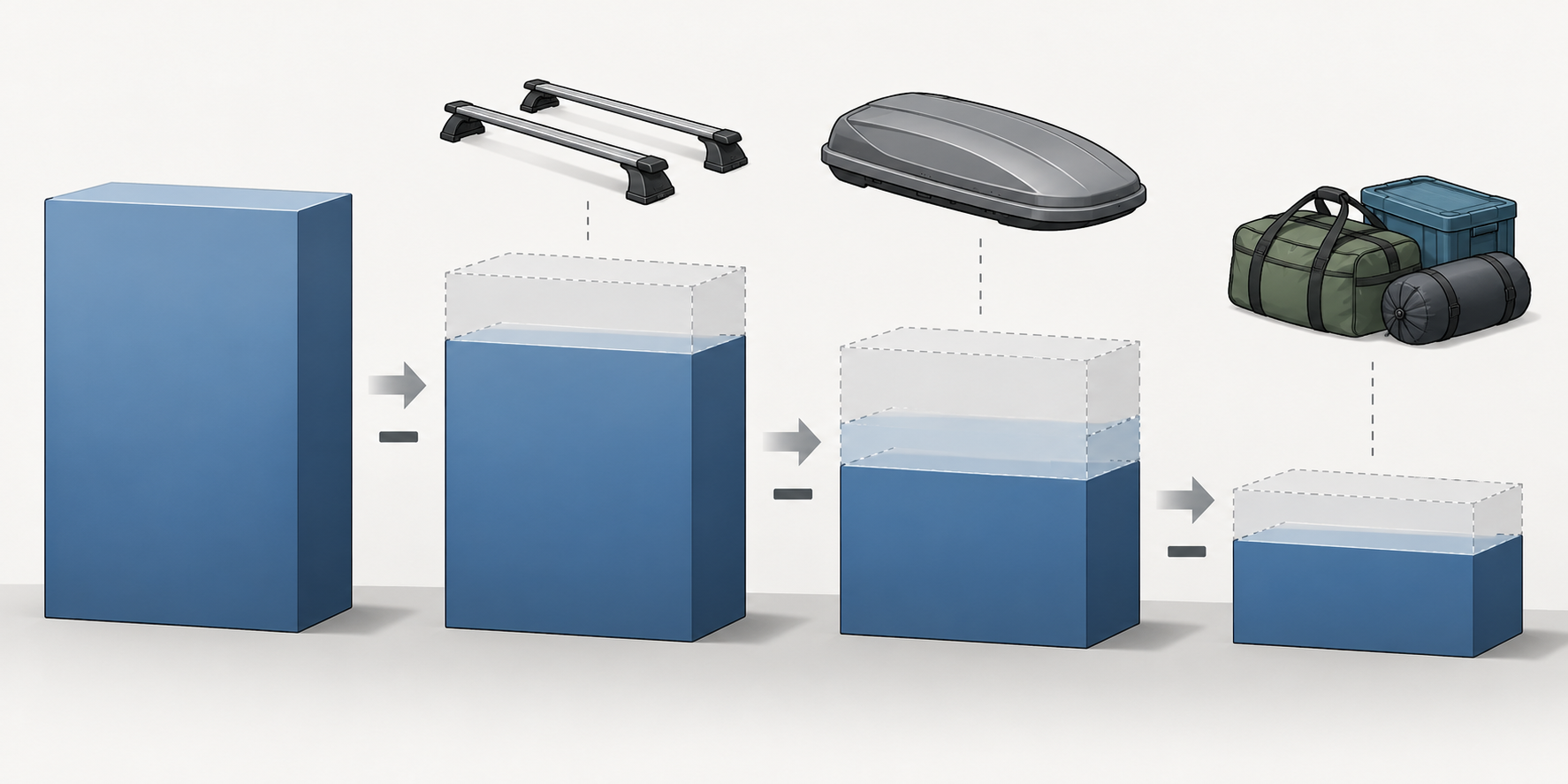
When the vehicle manual defines its maximum as the total roof-system load and directs you to subtract the rack, calculate the remaining vehicle allowance using that definition. Then subtract any other components the same manual or accessory instructions require you to count. Compare the result with the rack and accessory limits, using the component definitions given by each maker. The lowest applicable allowance controls.
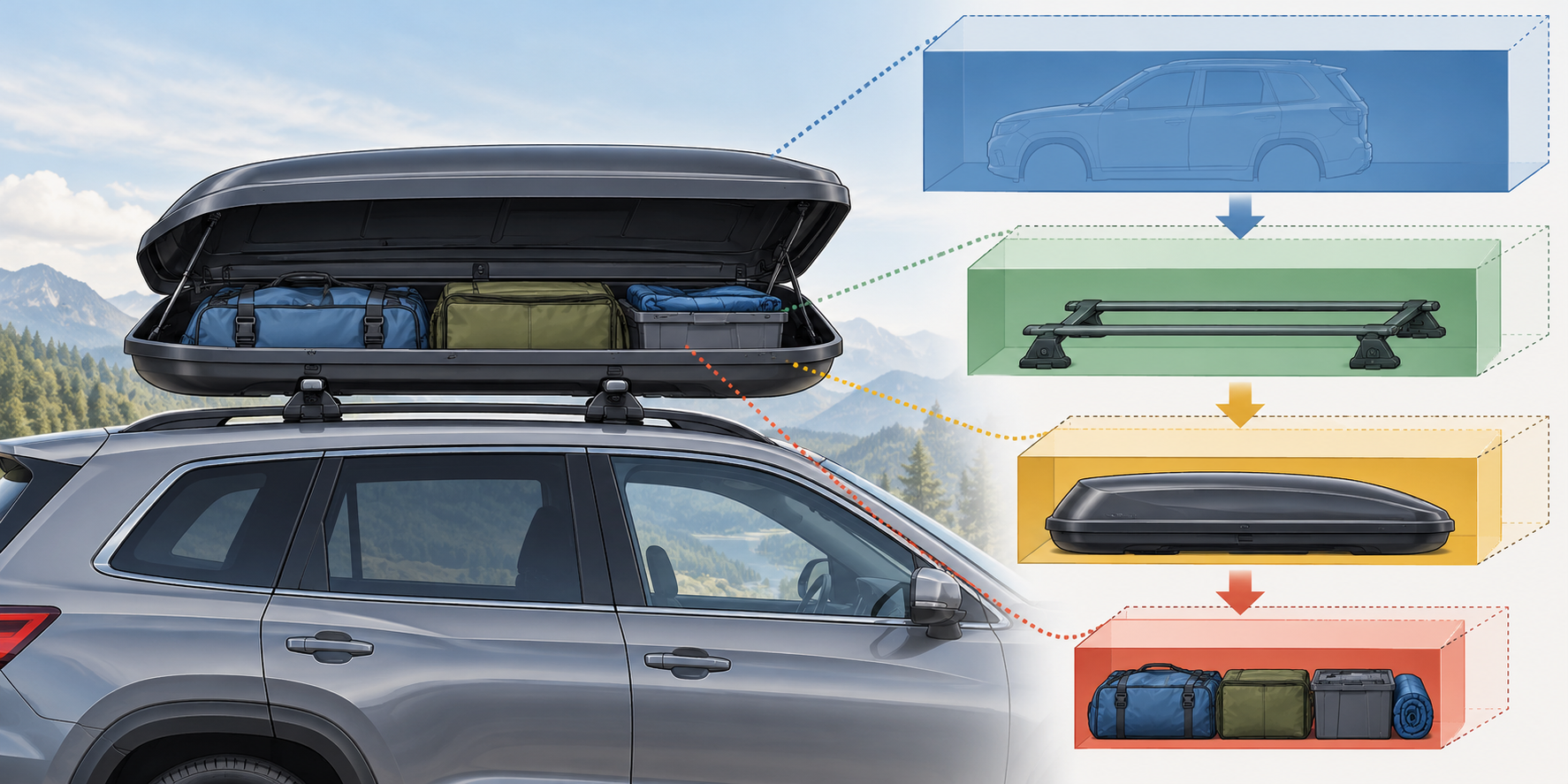
Illustration only, not a fitment result: Ford’s 2026 Bronco Sport manual lists 100 lb for the stated glass-roof configuration and 150 lb without a glass roof. If an applicable setup’s instructions count a 20 lb rack and a 40 lb empty box against the 100 lb vehicle limit, only 40 lb remains for box cargo under that calculation: 100 − 20 − 40 = 40 lb. Those sample equipment weights are hypothetical. They do not establish that a particular rack or box fits the Bronco Sport, and the product instructions may impose a lower limit.
If a table gives a configuration-specific stop value, respect it. For example, Ford’s 2026 Explorer manual lists 0 kg for vehicles without roof-rack side rails, 35 kg for vehicles with a glass roof, and 75 kg without a glass roof. The 0 kg entry applies to that named Explorer configuration; it is not a universal bare-roof value. Do not load a configuration whose applicable manual gives it no roof-load capacity.
Keep driving and parked limits separate
A parked or static rating is not automatically a driving rating. Use the manual’s in-motion limit when the vehicle will travel with cargo on the roof. Static capacity may be relevant to a product used while parked, but only when the vehicle and product instructions permit that use.
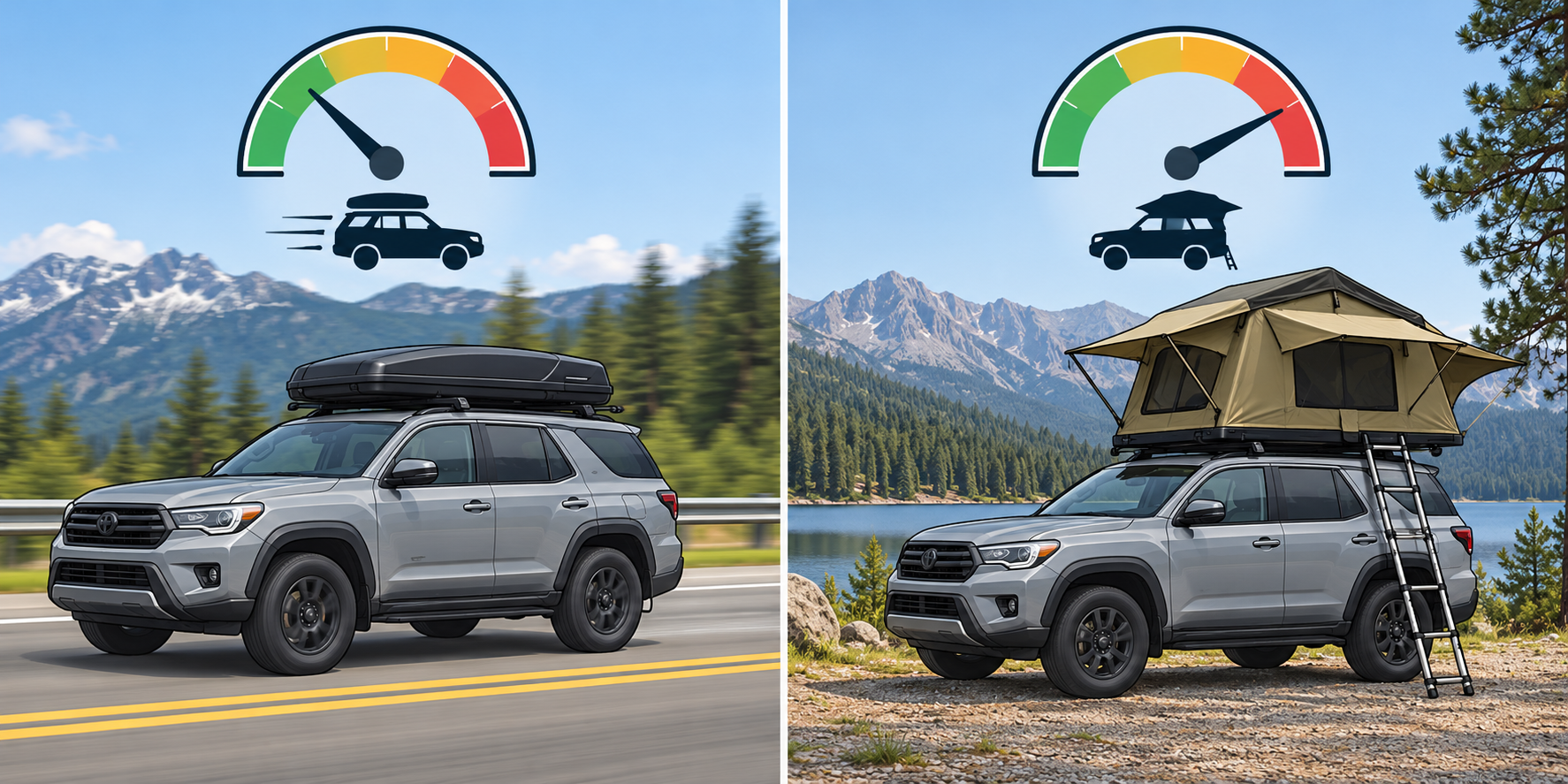
The difference can be large. The Canadian 2025 Kia Sorento manual states 100 kg for cargo and accessories while driving and 400 kg while parked. Ford’s UK 2026 Capri manual gives 75 kg in motion and 300 kg stationary. These are vehicle- and manual-specific examples, not values to transfer to another Kia, Ford, roof rack, or market.
Also keep roof capacity separate from the vehicle’s overall payload. Occupants and all other cargo still count toward GVWR and axle ratings. A placard-based passenger-and-cargo calculation does not establish a roof-rack limit.
Recalculate when the setup changes
Recheck the figures if you change bars, towers, a fit kit, a box, a carrier, or cargo. Include installed parts that the applicable limit counts, and weigh items rather than guessing when the difference could matter. Distribute the load as the product instructions direct.
If the manual is missing, two current documents conflict, the roof configuration is uncertain, or a needed component weight or rating cannot be confirmed, do not estimate a safe allowance. Ask the vehicle or rack manufacturer or a qualified fitter to resolve it before travel.
Sources and product references
Use these references to check the current instructions and fit information for your market and exact setup.