Distribute and secure roof cargo using the vehicle and product instructions, then account for changes in height, handling, wind exposure, and recheck needs.
On this page
How to Secure a Roof Load and Adjust Your Driving
Secure the rack first, then the accessory and cargo. A roof load raises the vehicle’s center of gravity and changes its height and response to braking, cornering, and crosswinds. Use the instructions for the exact vehicle and carrier, and do not travel while any part of the setup is loose or uncertain.
Prepare the rack and cargo
Check that the installed rack is locked in its documented position and that its fasteners, feet, and attachment points have no visible damage. Confirm the load is within every vehicle, rack, and accessory limit; see how to calculate the effective roof load. Remove loose accessory parts and put the heaviest items low when the product permits it.
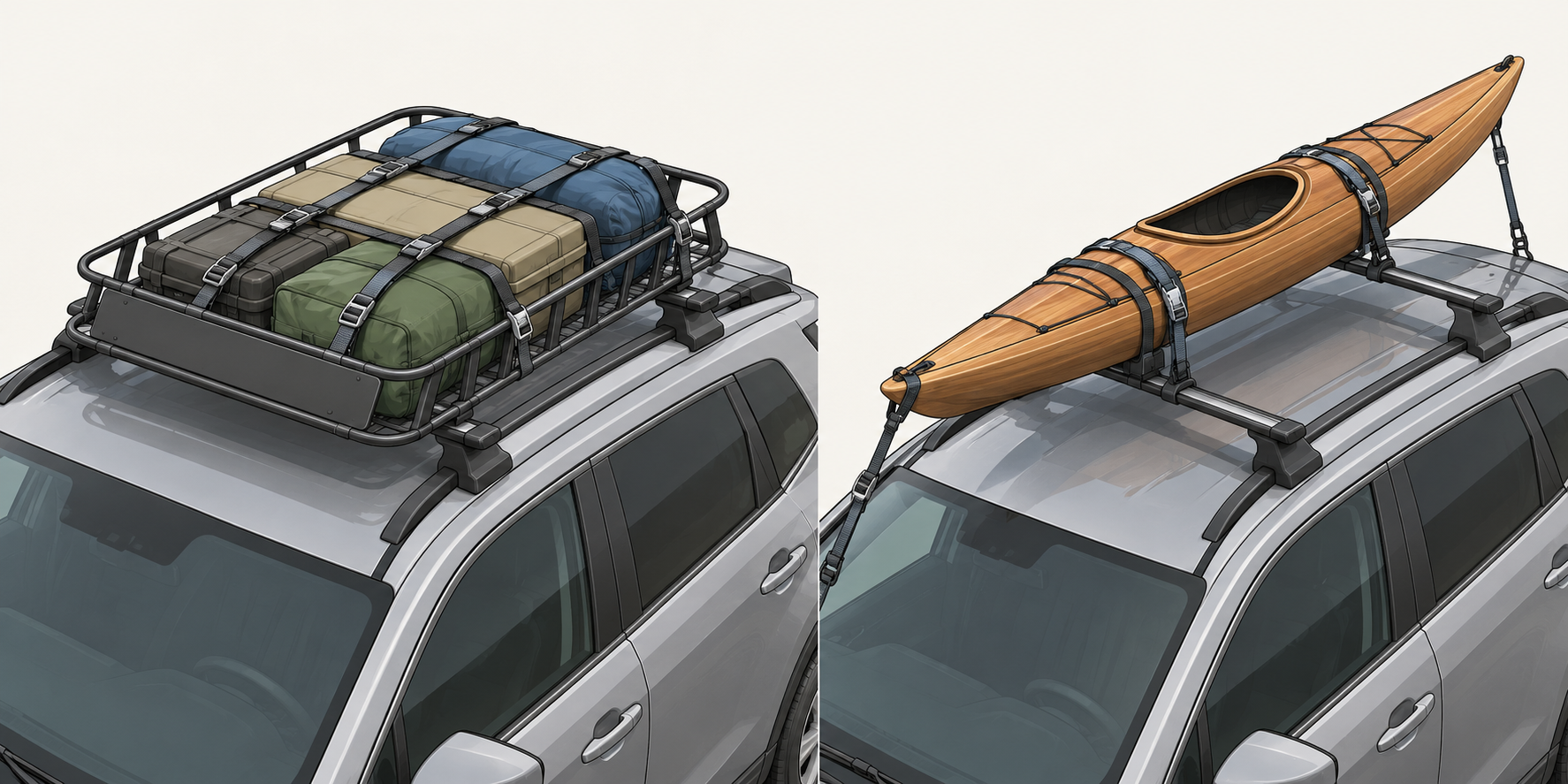
Keep cargo within the rack’s supported area and distribute it as the vehicle and product instructions specify. Use a purpose-made carrier for bikes, skis, kayaks, or other shaped loads when required. Secure every item so it cannot slide, lift, rotate, or detach during braking or in wind. Long loads may need both front and rear securement, as the applicable rack and local guidance direct.
Do not treat a roof as a load-bearing surface. The supported bars or platform and the rack’s attachment points carry the system. Do not exceed a component’s width, spread, or overhang rule to make a load fit.
Use the right securement method
Use straps, clamps, or other equipment specified for the rack and cargo. Thule’s general roof-rack safety instructions say not to use elastic bungee cords as the securing method. UK government guidance for cars says to secure roof-rack loads with cargo ratchet straps or effective clamping; it says rope, bungees, and other cords must not be the main method, though strong rope may tie down the front of a long load as that guidance describes. Keep that UK guidance within its jurisdiction and follow the exact product instructions as well.
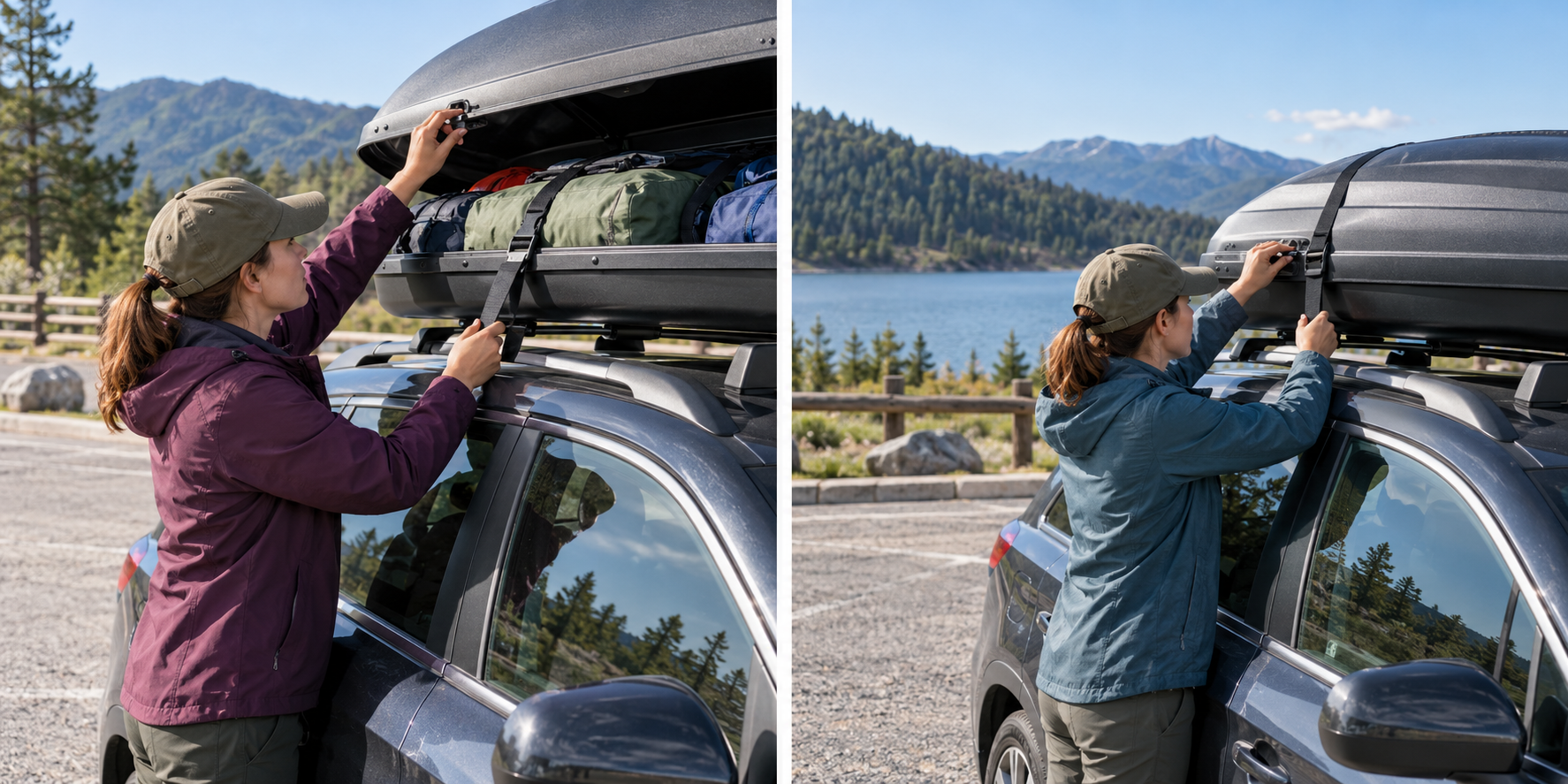
Close a cargo box or carrier using its own instructions, and check every latch, strap, lock, and loose part. For a roof box, use the product’s packing and mounting directions; the roof-box packing guide explains weight placement and height checks.
Adapt the trip
Drive for the actual load and conditions. Allow for the added height at garages, branches, and barriers. Leave room to brake, take bends smoothly, and reduce speed when wind, road surface, traffic, or cargo shape makes the vehicle less stable. Do not rely on a universal speed number: a manufacturer’s product limit is only one limit, and local law and conditions may be stricter.
Ford’s 2026 UK Capri manual adds a vehicle-specific restriction: do not switch off stability control or use Sport mode while carrying a roof load. Ford warns that doing so can increase the risk of losing control or rollover. This instruction belongs to that Capri manual and should not be generalized to other vehicles; check the current manual for the vehicle you drive.

Recheck the system
Before leaving, push or pull the rack if its maker instructs you to do so. Check straps, clamps, box closure, and cargo position. Follow the exact interval in the vehicle or product manual after installation or loading, then repeat checks on long trips, rough roads, and after an unattended stop. One Yakima BaseLine procedure, for example, specifies an early check after 30 miles or 30 minutes; that interval belongs to BaseLine and should not be applied to another system without its instructions.
Ford’s 2026 UK Capri manual also says to check load tightness before driving and at each charge stop. Keep that interval with the Capri manual; it is not a universal schedule.
If anything shifts, a strap loosens, a fastener moves, or the cargo can contact a roof panel, hatch, door, antenna, or sensor, stop somewhere safe and correct the problem before continuing. If the right attachment method or local rule is unclear, check it before departure rather than relying on a knot or improvised tie-down.
Sources and product references
Use these references to check the current instructions and fit information for your market and exact setup.
- 2024 Bronco Sport Owner's Manual — Roof Racks and Load Carriersprimary
- 2026 Ford Capri Owner's Manualprimary
- Drive Safe: Secure Your Loadprimary
- Securing loads on HGVs and goods vehicles — How to load cars and roof racksprimary
- Roof rack and roof accessories — Safety, document 501-8420-03primary
- BaseLine (4X) Installation Instructions, document 1035619Eprimary