Check bar dimensions, spacing, accessory clearance, and total height against the exact vehicle and product instructions before installation.
On this page
How to Measure Crossbars, Spread, Roof Clearance, and Vehicle Height
A rack can look right and still miss a required spacing, contact point, or opening clearance. Measure the actual vehicle and compare it with the current vehicle, rack, and accessory instructions before loading. A measurement from another car or product is not a substitute for the specified fit.
Start with the instructions
Identify the vehicle’s exact year, body, roof type, mounting points, and market. Confirm the rack and accessory part numbers. The vehicle fit guide and product assembly instructions should provide the required bar positions, front-to-rear spacing, supported bar profile, and any limits on width or overhang.
Use a tape measure and record the measurements the instructions call for. Measure from the same reference points shown in the diagrams. Do not move a rack foot, hook, rail, or attachment point to make an accessory fit if its instructions do not allow that change.
Check the complete geometry
| Check | What to compare |
|---|---|
| Bar position and spread | Front-to-rear distance and the specified attachment locations for this vehicle and rack. |
| Bar shape and size | Profile, width, height, track, clamp range, and accessory interface. |
| Accessory position | Support points, mounting direction, width, and any minimum or maximum spacing. |
| Overhang and load size | Whether the rack and vehicle instructions permit the planned length, width, and support arrangement. |
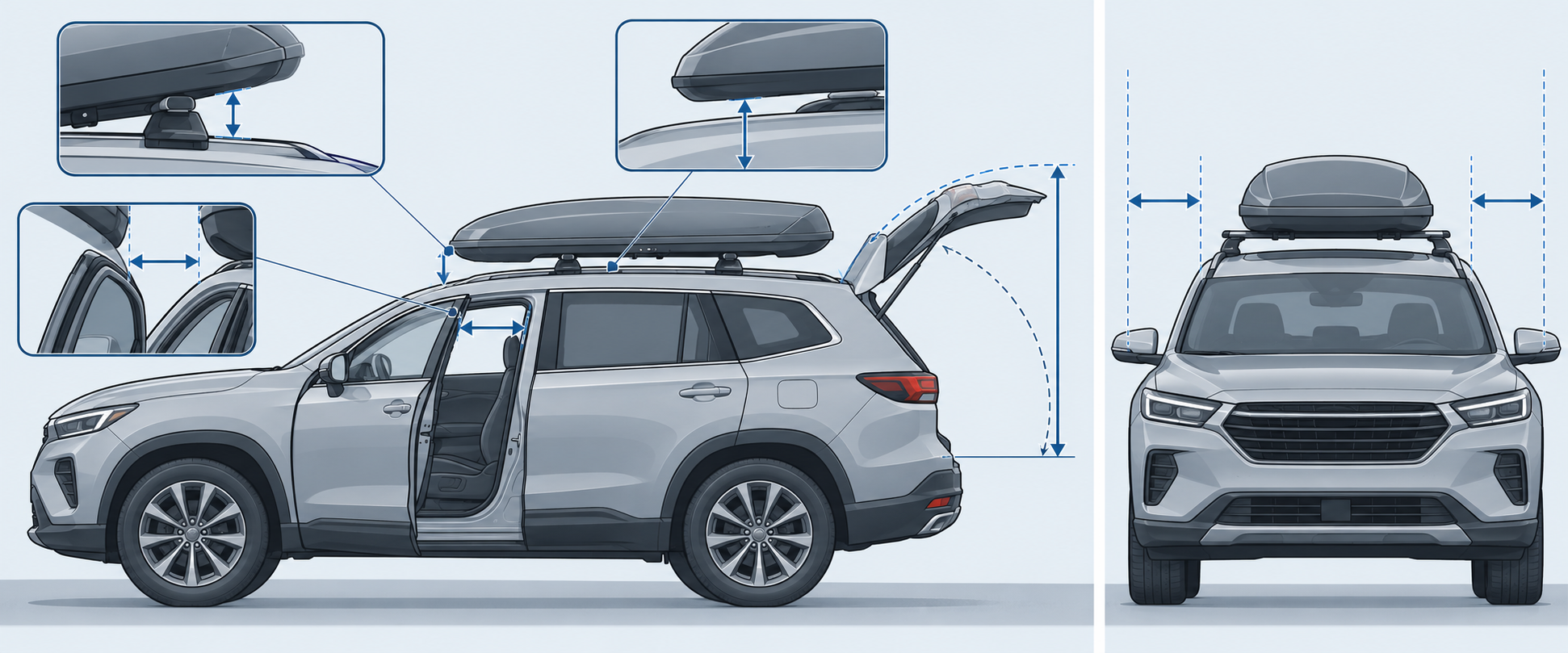
| Moving parts | Clearance for doors, hatch, liftgate, spoiler, windows, antenna, and any opening roof panel. |
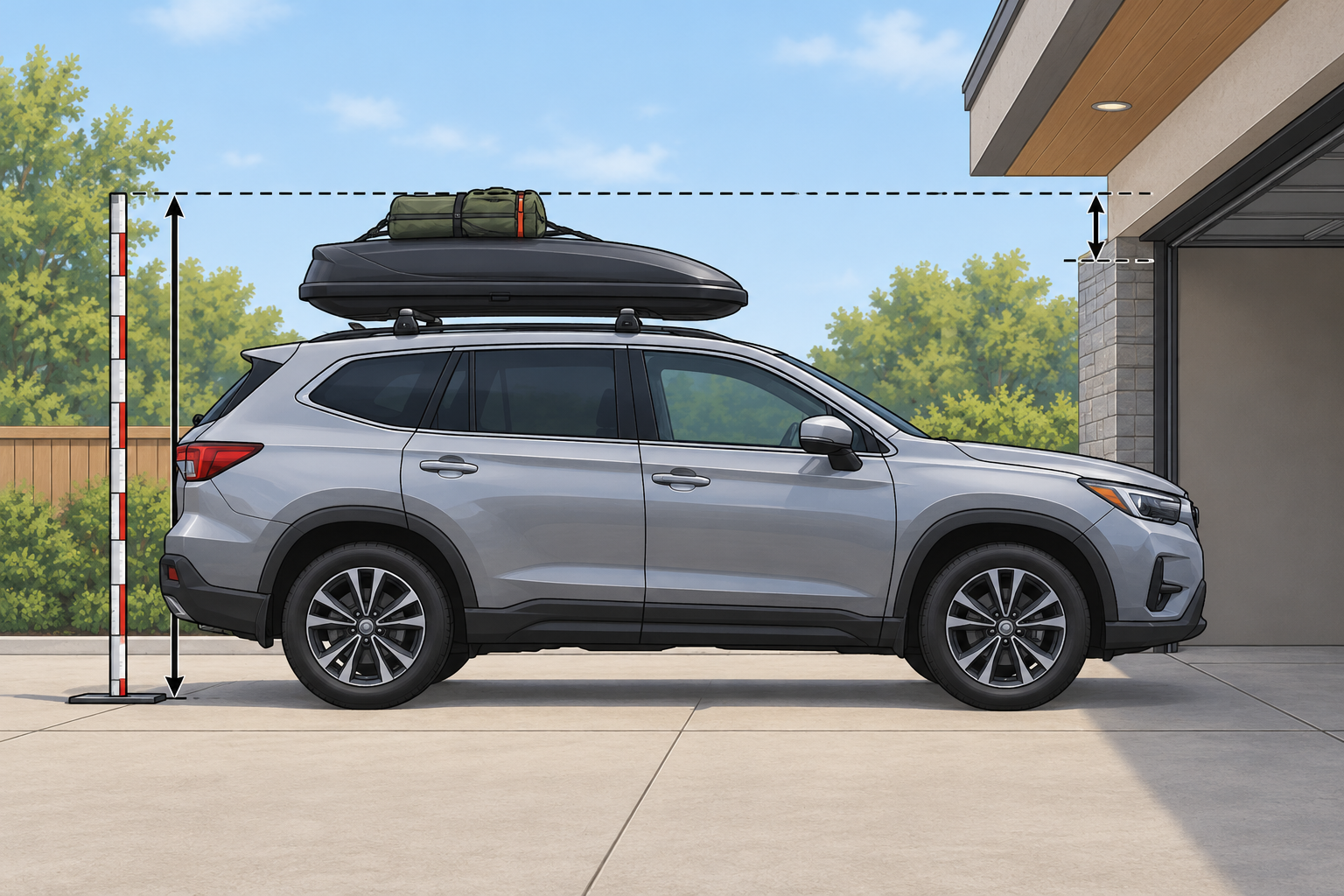
| Vehicle height | The installed height with the intended accessory and load, checked against the places you will enter or pass under. |
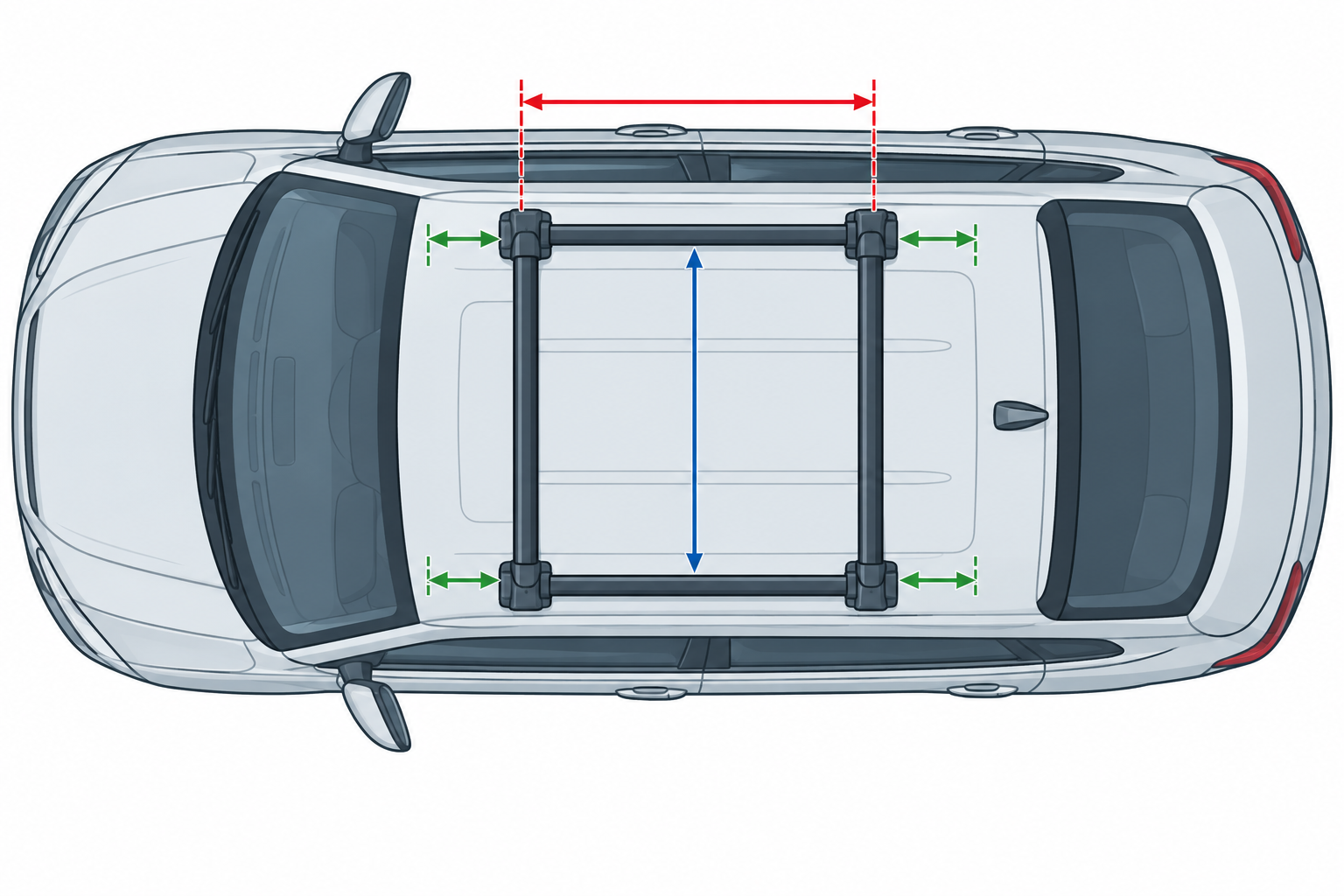
Some numbers are product-specific fallbacks, not universal dimensions. If a Thule assembly instruction gives no special bar positions, its current safety sheet gives a 700 mm spacing fallback, or 600 mm for long loads. Yakima’s BaseLine instructions give a different 610 mm fallback when no front-to-rear position is specified, or say to set the bars as far apart as possible. Use the exact system’s rule only when its stated fallback condition applies; do not average values from two brands.
Tesla’s Model Y rack instructions give exact front and rear placement marks for that vehicle and Tesla rack. Those measurements do not establish placement for another Model Y rack or any other vehicle. Use the Model Y installation guide only for the named Tesla system and applicable procedure.
Check the roof, openings, and load path
With the rack fitted but unloaded, check all specified roof and body clearances. Confirm that the accessory’s clamps, feet, or straps contact only the surfaces and attachment points its instructions allow. Make sure an empty box or carrier clears the hatch and doors through their full movement. If an opening roof is present, follow its exact operating restriction; some vehicle manuals prohibit opening it with bars or luggage in place.
For example, Hyundai’s 2025 Tucson manual says not to operate its panoramic sunroof when roof bars are installed or when luggage is on the roof. That is a Tucson-specific operating restriction, not a general rule for other sunroofs.
Glass and panoramic roofs need the same exact-vehicle check. A generic statement that some glass roofs can take a rack is not approval for your roof. The applicable vehicle may restrict the rack type, contact points, roof-panel operation, or placement. If the vehicle or rack maker does not clearly approve the setup, pause and confirm it before fitting or loading.
Vehicle features can affect clearance too. Volvo’s 2023 XC60 manual warns that a roof load extending above the windshield can interfere with sensors. That is an XC60-specific boundary, not a safe height rule for other vehicles.
Measure the loaded height and recheck
Record the vehicle’s height with the installed rack and accessory, including anything that stands upright. Recheck it after loading if cargo changes the height. Thule’s roof-box guidance calls out garages, car washes, and low branches as places to check; use the actual clearance posted at each location.
Do not travel if a required dimension is unknown, a bar or accessory sits outside its instructed position, a hatch or roof panel touches the load, or the system moves during the maker’s security check. Ask the product maker or a qualified fitter to resolve a missing measurement rather than treating a visual fit as a measured fit.
Sources and product references
Use these references to check the current instructions and fit information for your market and exact setup.
- BaseLine (4X) Installation Instructions, document 1035619Eprimary
- Roof rack and roof accessories — Safety, document 501-8420-03primary
- Roof Rack (Install) — Model Y 2025+ Service Manualprimary
- How to pack safely with a roof boxprimary
- 2023 XC60 User Manualprimary
- Panorama Sunroof Operation — 2025 Hyundai Tucson Owner's Manualprimary