Check the vehicle, rack, bracket, and accessory as one setup, including total mass, deployed clearance, securement, and manufacturer weather instructions.
On this page
Awning and Rack-Accessory Load, Wind, and Clearance Checks
An accessory fit has more than one limit. The vehicle, installed rack or platform, bracket, accessory, and carried load each have their own instructions. A part that fits a rack family does not establish vehicle approval, a safe combined load, or permission to operate an awning in any weather.
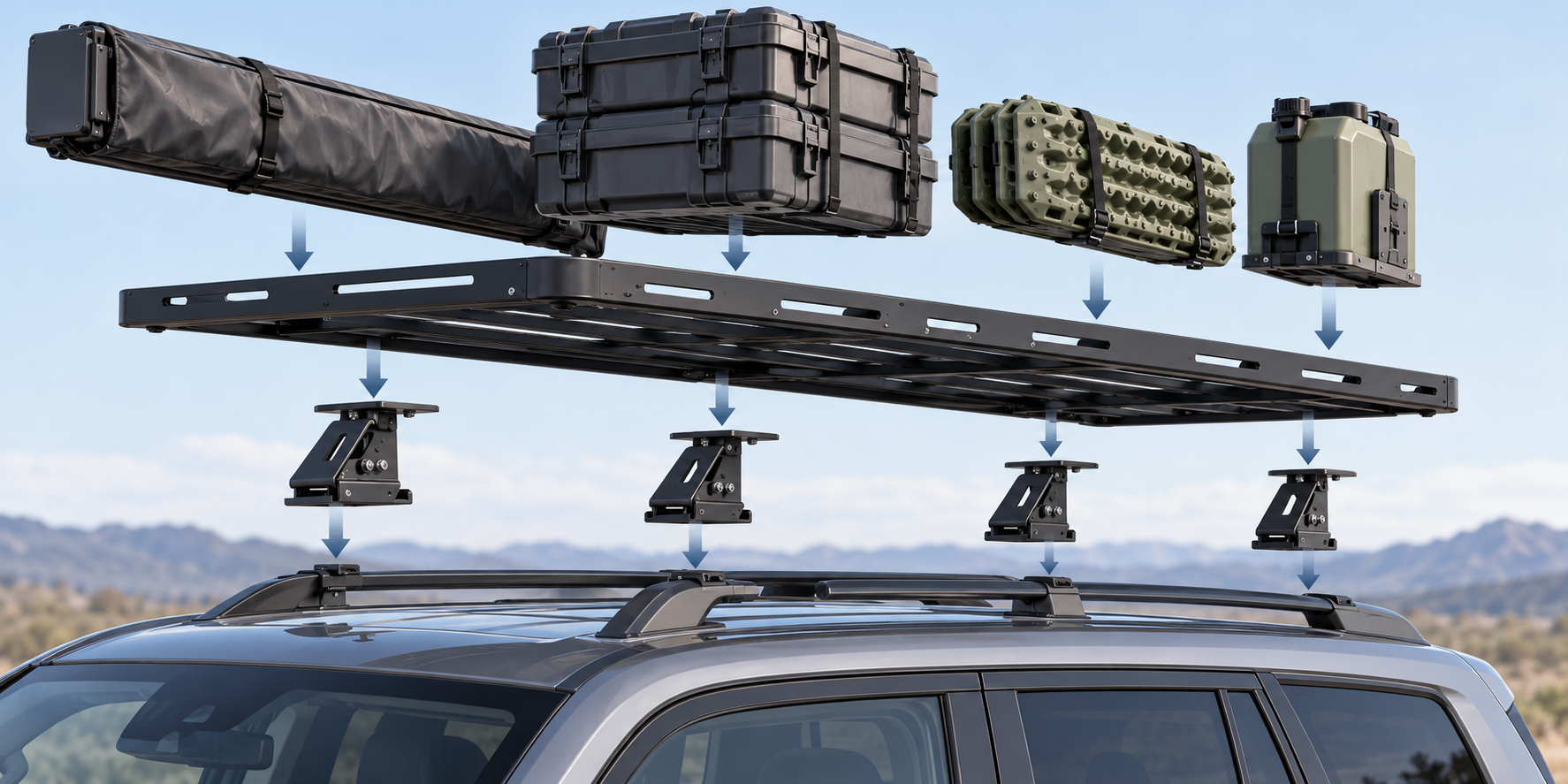
Count the complete installed load
Start with the vehicle maker’s roof allowance for the specific vehicle, then check the rack or platform and accessory instructions. Include the mass of the bars or platform, mounts, brackets, awning or accessory, straps or hardware where applicable, and everything carried on it. Each limit describes a particular component or setup; a product maximum does not increase a lower vehicle or rack limit. If the relevant manuals do not define the complete combination, the fit remains unverified.
Keep product ratings separate from system approval. For example, Rhino-Rack’s LR1020 ladder roller lists a 42 kg (93 lb) maximum load, but that is a limit for that accessory, not a vehicle roof rating. Thule’s 301925 awning-adapter instructions show bar dimensions and a 130 km/h (80 mph) maximum-speed warning for that adapter. That speed warning is not a wind rating for a deployed awning. Use the exact product instructions and do not transfer either figure to another model.
Measure the real clearance
Check the accessory when stowed and in each position used. Measure against the actual vehicle’s doors, tailgate, hatch, roof features, and adjacent equipment. Allow for how a bracket raises or angles the accessory, and how the accessory moves when opened. A bracket dimension or product projection is only a starting point; it cannot promise clearance on a different vehicle or rack placement.
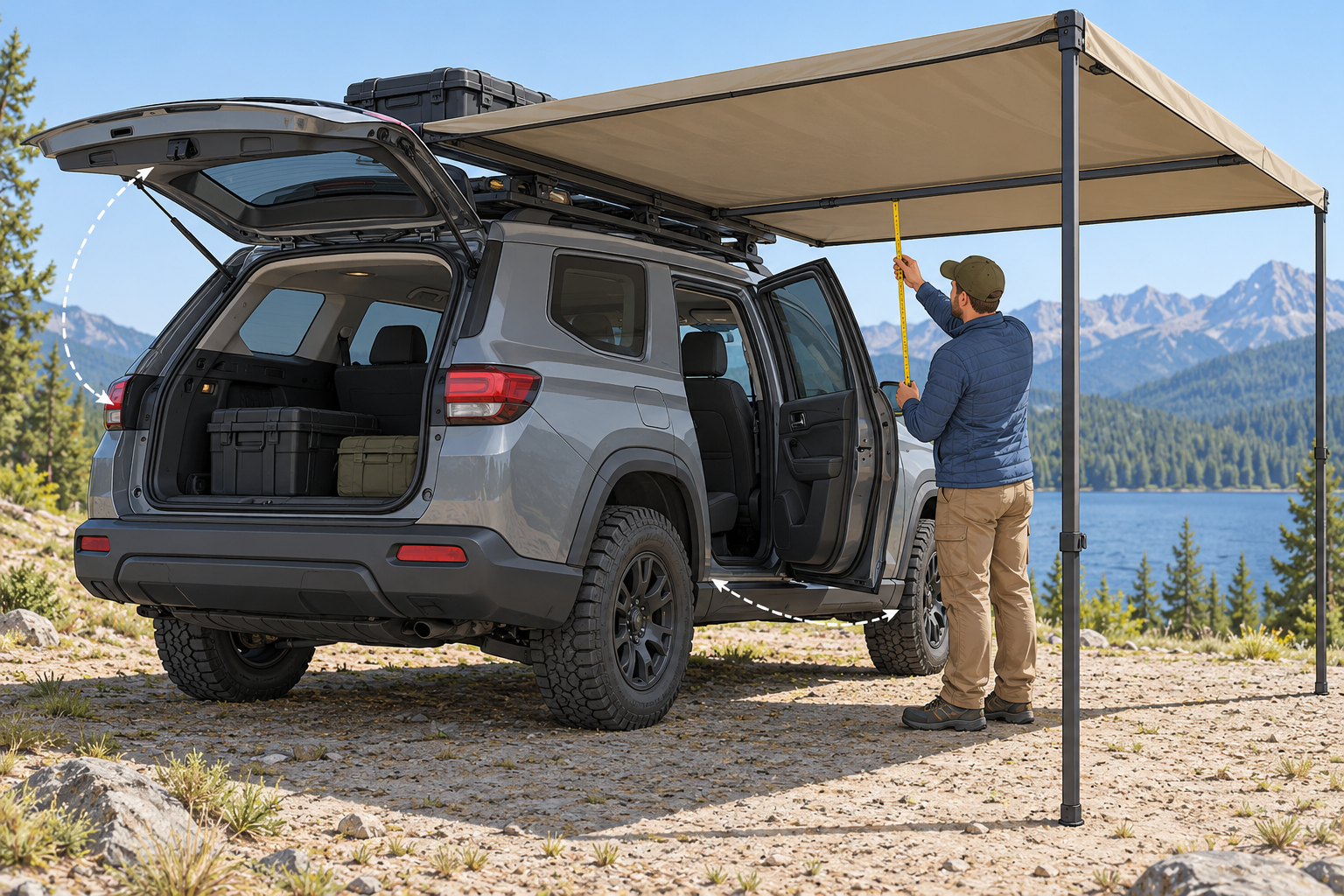
For the Rhino-Rack 32149 Shower Tent, the product page lists a 1 m (39 in) projection from the vehicle when deployed. Its 2025 instructions also say to account for the tailgate position and adjust the tent accordingly. Those facts help identify what to measure; they do not tell you whether the tent clears a particular tailgate or accessory. See the 32149 fit guide for its named rack paths and setup details.
Use the manufacturer’s weather and securement instructions
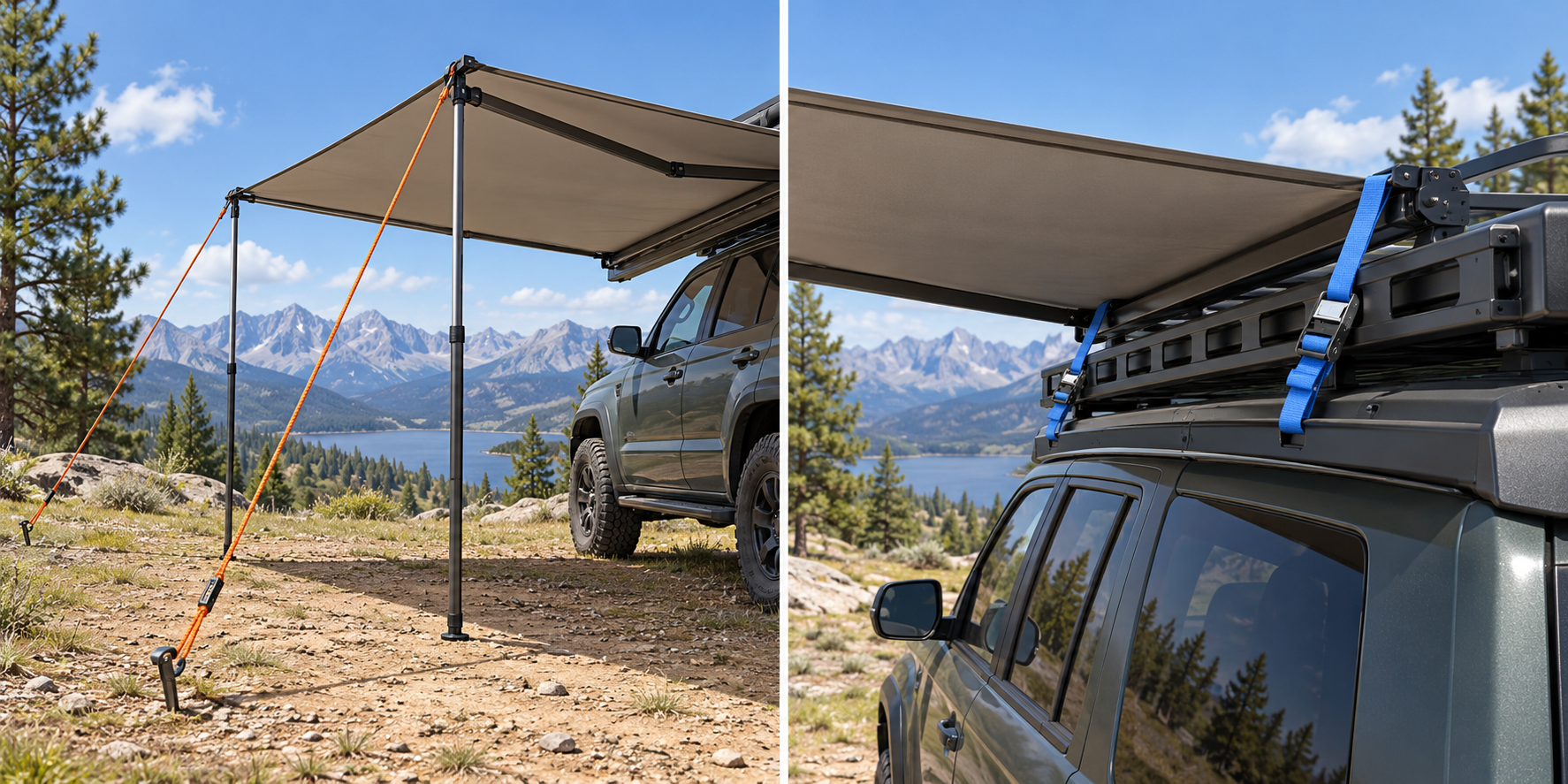
Use the current manual for the exact awning, bracket, and installed system. Rhino-Rack’s 31128 and 32149 instructions say to use guy ropes when deployed, avoid setting up in windy conditions, and stow the awning in strong winds. They give no universal wind-speed threshold. The Rhino-Rack 32159 rope kit is listed for named Batwing freestanding awnings and supplies four ropes and four pegs; that product relationship is not a numeric wind rating. Check its current product information and the awning manual for your model.
Rhino-Rack also warns not to sit or place weight on the awning and not to strap cargo to it; its 31128 instructions direct users to secure straps to the platform or overlanding system. Do not use the fabric or awning arms as a cargo tie point unless the exact product instructions expressly allow it. For general cargo securement in the US, NHTSA recommends tying down the load and double-checking it. Drivers in Canada and the UK should also follow the rules in the country where they travel.
Do not guess a bracket count or fit
Rhino-Rack’s 31129 page recommends the freestanding bracket pair for awnings over 20 kg and says two or three brackets are needed depending on the awning’s weight. The page does not define the threshold between two and three, so do not derive a count from weight alone. Check the awning and bracket instructions or ask the manufacturer or a qualified fitter.
Likewise, a product page may name compatible rack families without listing supported vehicle years, trims, roof attachments, or combined accessories. Stop before installation if the exact vehicle application, mounting hardware, clearance, or load path is unresolved. The awning fit guide and overland add-on guide show how to record those dependencies without turning a component listing into a universal fit claim.
Sources and product references
Use these references to check the current instructions and fit information for your market and exact setup.
- Rhino-Rack 31128 Universal Awning Bracket instructionsprimary
- Rhino-Rack 32149 Shower Tent instructionsprimary
- Rhino-Rack Shower Tent 32149primary
- Rhino-Rack Ladder Roller LR1020primary
- Rhino-Rack Universal Freestanding Awning Bracket Pair 31129primary
- Thule Awning Adapter 301925 instructionsprimary
- Rhino-Rack Guy Ropes Kit 32159primary
- NHTSA: Drive Safe, Secure Your Loadprimary