The current JayLow product page separates ratings by manufacture date; identify the exact unit and follow its current instructions before using either limit.
On this page
Yakima JayLow Load Ratings: Check the Unit Date and Crossbar Spread
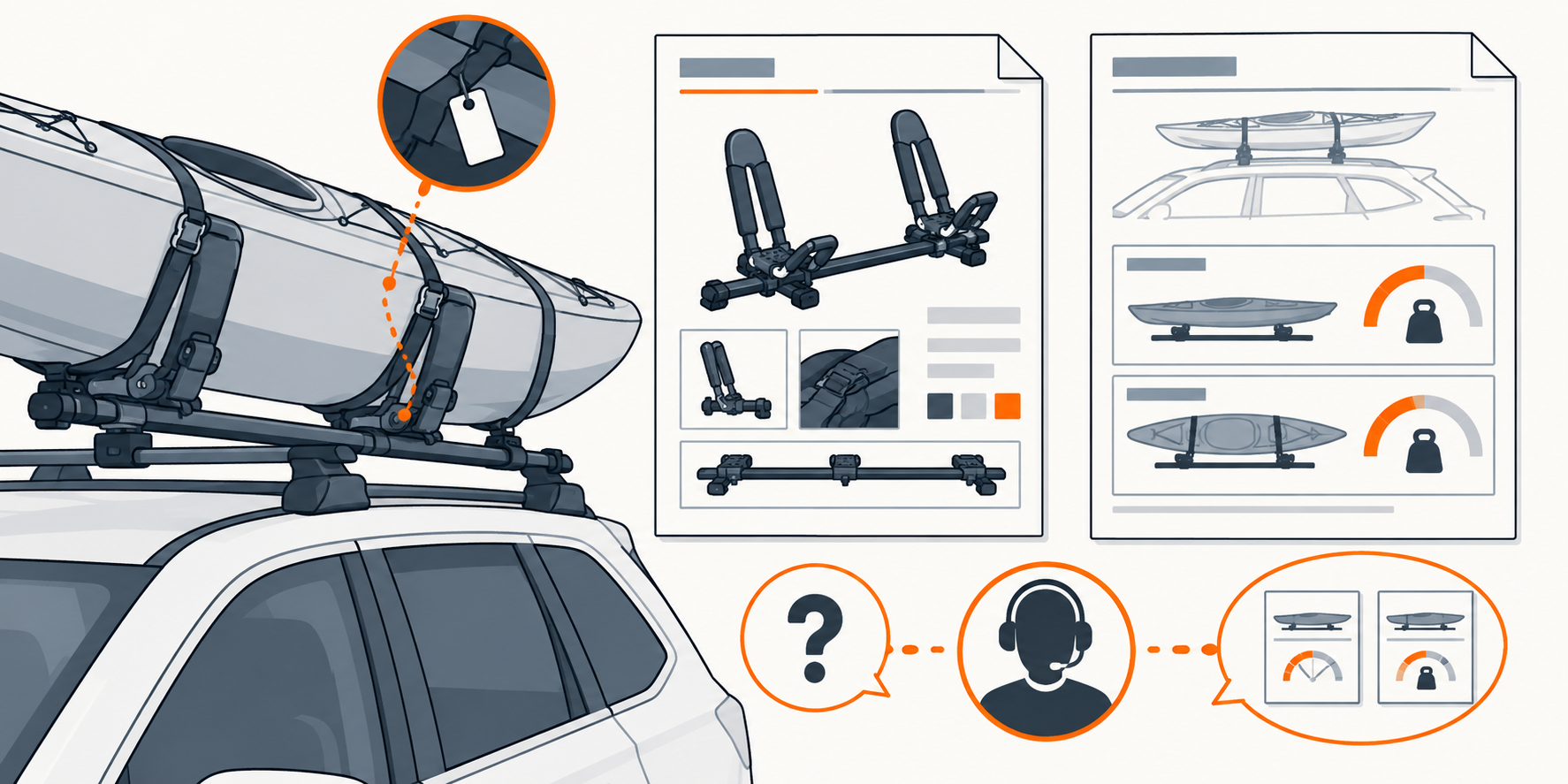
The current US product page for Yakima JayLow SKU 8004073 distinguishes units by manufacture date. Do not apply one number to every JayLow just because the product name is the same. The exact vehicle, base rack, craft, and current instructions still control whether a complete setup is acceptable.
Ratings shown on the current product page
| JayLow unit identified by manufacture date | One-boat rating shown | Two-boat combined rating shown | Minimum crossbar spread shown |
|---|---|---|---|
| Manufactured before February 1, 2026 | Up to 80 lb | Up to 110 lb combined | 24 in (61 cm) |
| Manufactured on or after February 1, 2026 (current product-page listing) | Up to 100 lb | Up to 130 lb combined | 27.5 in (69.85 cm) |
These are product-page values for the listed SKU. They do not establish a vehicle fit, a maximum for a different model, or the usable load after the vehicle and base-rack rules are applied. The two-boat number is a combined limit, not a per-boat allowance.
Identify the actual unit before using a rating
Yakima provides a date-code locator graphic for the JayLow assembly. The graphic points to where the code is located; it does not decode the code into a manufacture date. Do not estimate the date from when the carrier was bought, first installed, or first used. If the code is missing, damaged, or unclear, ask Yakima to identify the unit before relying on a date-specific rating.
The linked instruction PDF also displays capacity figures in more than one place: its opening capacity panel shows 100 lb and 130 lb, while its two-boat section shows 110 lb maximum. Because those displays are not consistently mapped to production-date groups in the document itself, do not resolve the mismatch by guessing. Match the physical unit to Yakima’s current product information and ask the manufacturer if its instructions remain unclear.
Check the bars and complete system
The current page lists a 27.5 inch minimum crossbar spread and notes 24 inches for units made before February 1, 2026. Measure the installed crossbar positions as the instructions define them and confirm that the vehicle’s approved bars can meet the requirement. Bar shape and width matter too; “most factory bars” does not certify a particular vehicle or roof configuration.
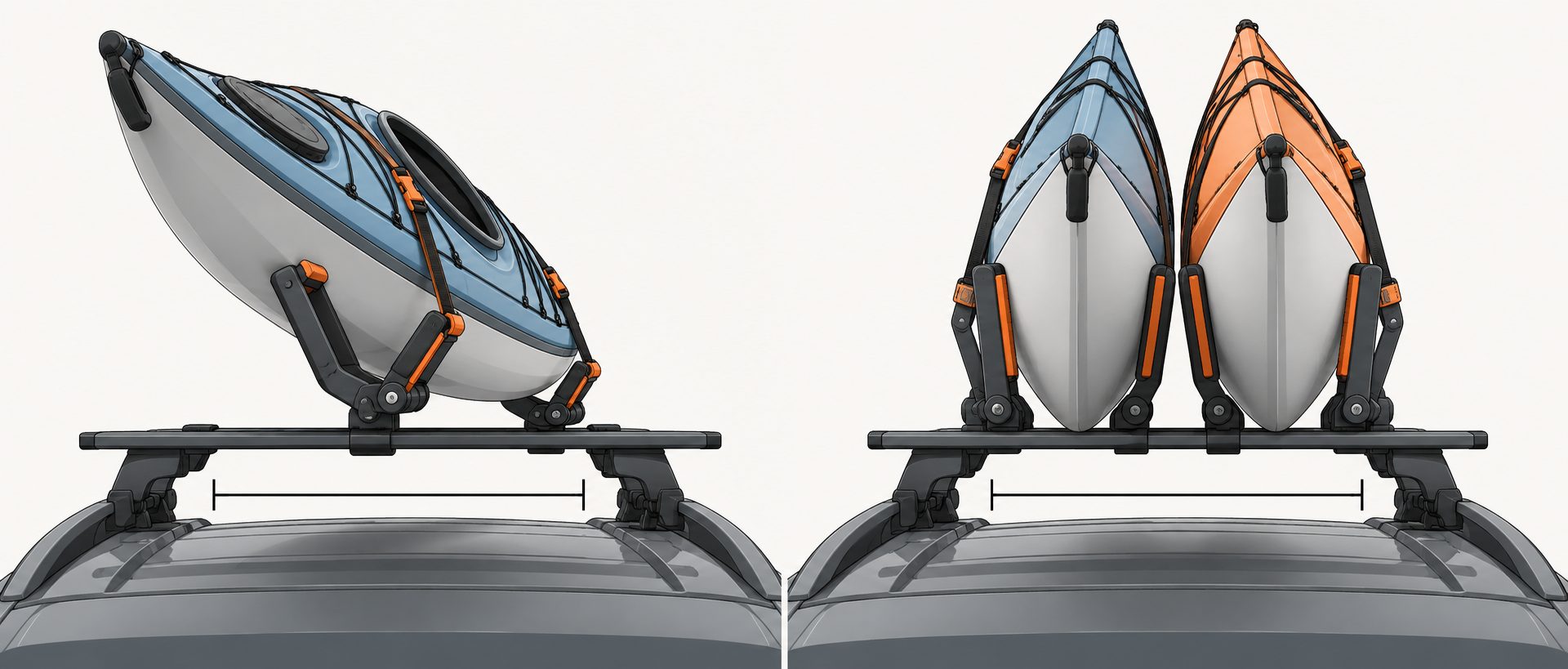
Follow the vehicle and base-rack manuals to determine how their load limits are calculated. Yakima’s JayLow instructions express maximum roof load as the weight of the roof rack plus accessory rack plus load. Apply that rule with the exact vehicle’s own limit and any lower component rating; do not treat the JayLow maximum as extra capacity beyond the vehicle or bars. Check craft weight, the one- or two-boat mode, and all required attachment hardware.
Secure the boat and verify fit
JayLow instructions require bow and stern tie-downs. They call for a Yakima Hood Anchor when the vehicle has no suitable tie-off point or a line could damage the vehicle; if that option does not work, the instructions direct users to contact Yakima. Use the current instructions for the actual carrier and vehicle rather than copying a tie-down point from another model.
Before carrying a boat, verify the exact vehicle and bar fit in the manufacturer guide, inspect all attachment hardware, and confirm that the craft fits the selected mode. Recheck the load after the first short drive and at the intervals in the instructions. For broader carrier choices, see carrier types; for the full trip check, use the pre-trip checklist.
This guide summarizes US Yakima product information. Use the current regional product page and instructions for the market where the carrier is installed.
Sources and product references
Use these references to check the current instructions and fit information for your market and exact setup.