Compare a channel-based roof platform with a two-bar system by gear, mounting route, accessory interface, vehicle fit, space, and load documentation.
On this page
Roof Platform or Crossbars: Choosing the Right Base Ecosystem
A roof platform is not simply a wider crossbar. It is a deck with a product-specific attachment system and accessory interfaces. A conventional two-bar rack has a narrower base structure and can be a direct match for gear whose instructions specify crossbars. Choose by starting with the equipment, vehicle, and complete documented mounting path rather than by assuming one base is universally more capable.
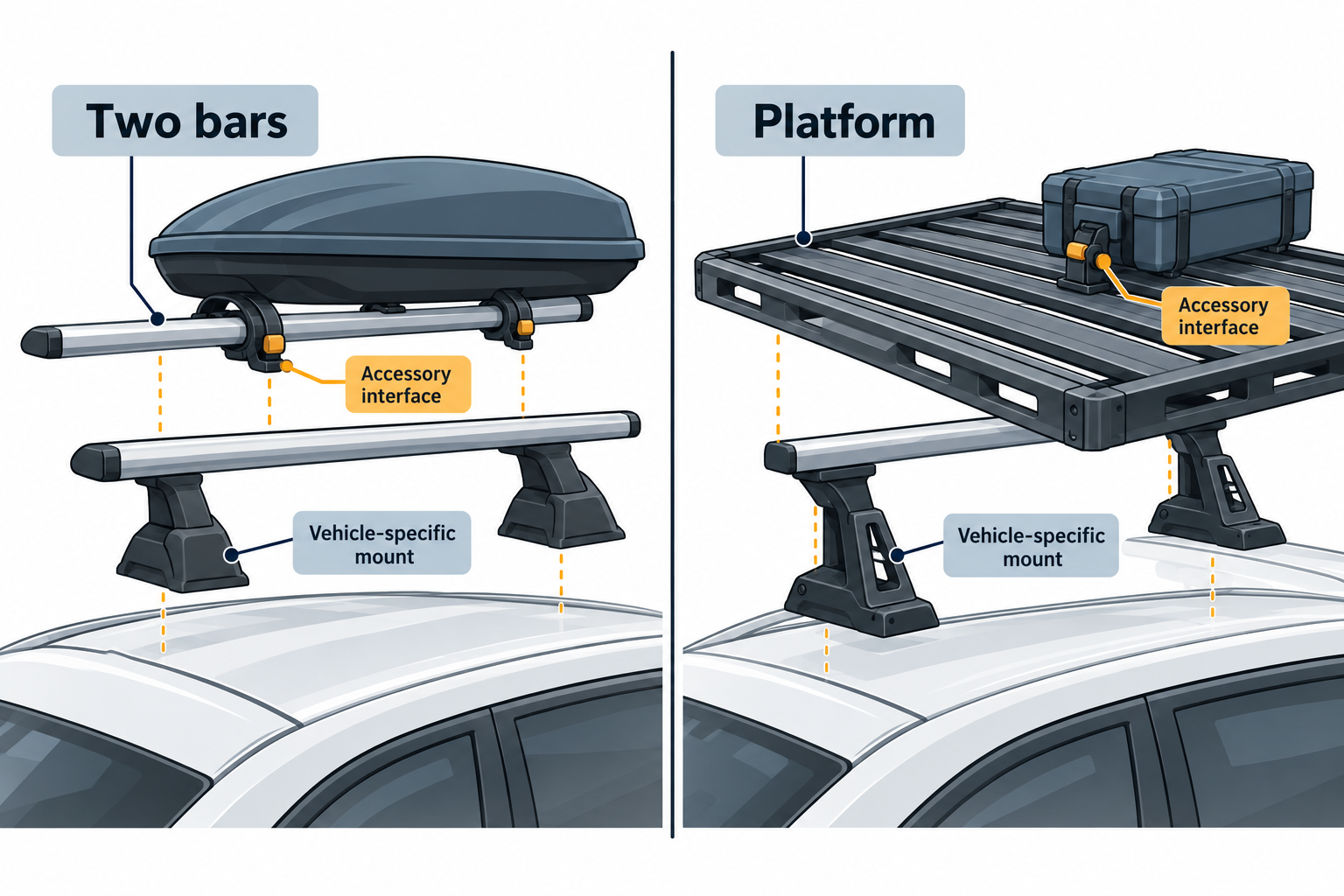
Match the base to the gear
List each item you expect to carry: a box, kayak or bike carrier, tent, awning, work equipment, or loose cargo. Check how its manufacturer expects it to attach. A carrier may clamp around bars, use a T-track fitting, require a particular spacing, or list a compatible platform model. A platform may have several channels or attachment locations, but that does not make every clamp or bolt compatible.
If every planned accessory is designed for two bars and the selected vehicle has a documented bar setup, adding a platform may add an unnecessary layer of parts and mass. If several accessories need independent positions or use platform-specific channels, a platform may make layout easier. Confirm that the exact platform and brackets support the intended placement. For a closer look at channels and dimensions, see how to match platform size and accessory interfaces.
Compare the whole attachment path
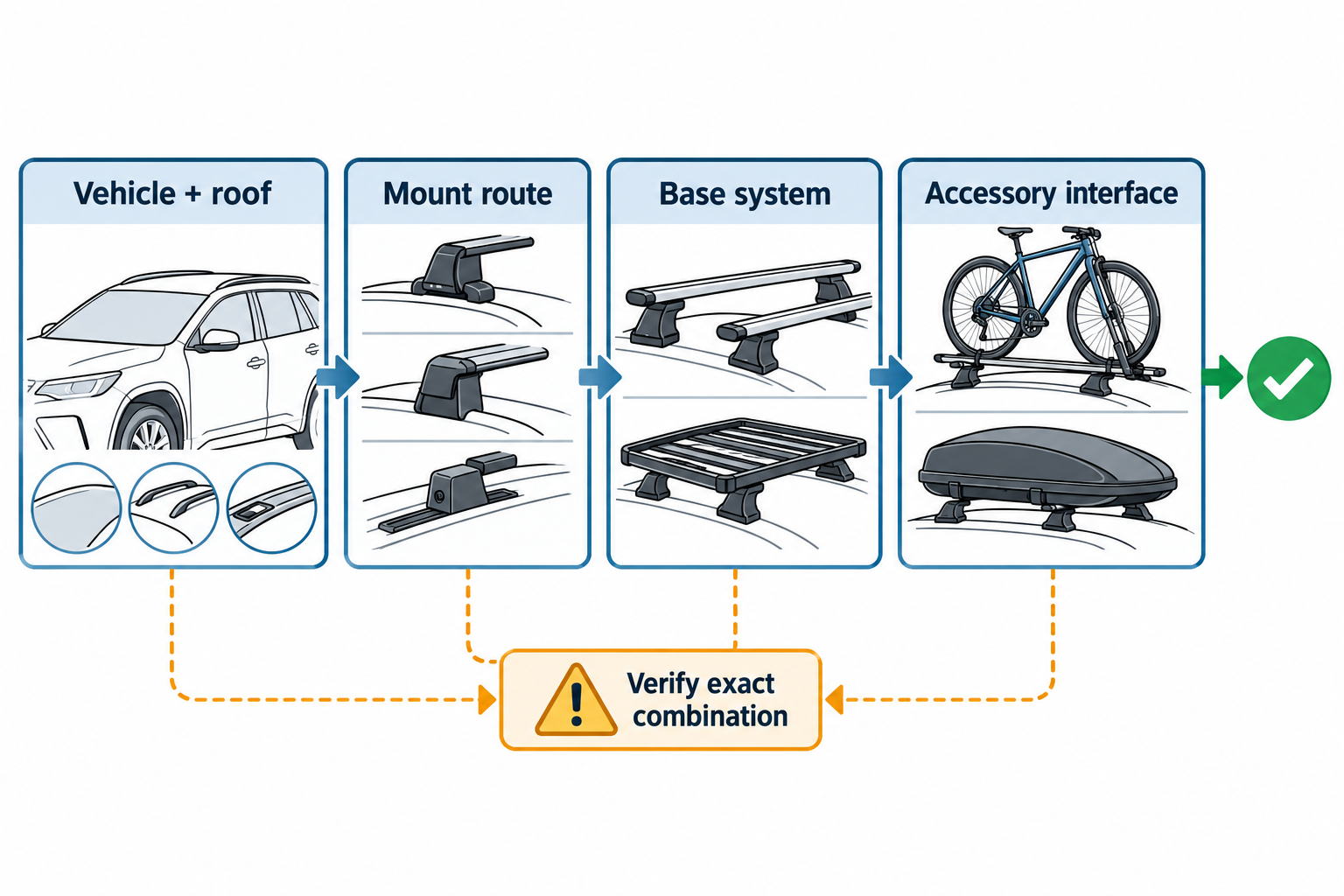
Either base still needs an approved route from the vehicle roof to the rack. Depending on the vehicle and product, that may involve feet on raised rails, a fit kit at fixed points, a rail mount, legs on a track, existing crossbars, or a backbone. A platform can itself be attached to bars rather than directly to the vehicle. That adds interfaces whose fit, position, and instructions must all agree.
Manufacturer catalogs illustrate that the product families and routes differ. Thule lists both bars and platforms in its roof-rack catalog. Yakima’s LockNLoad listing describes vehicle-dependent fit and attachment options. Front Runner describes a modular Slimline II platform and separate mounting families. Rhino-Rack’s Pioneer 6 product listings identify distinct platform sizes and fitting applications. These examples describe product ecosystems; none approves an arbitrary vehicle or mixed-brand combination.
Write down the vehicle year, trim, market, roof type, current rails or bars, and every product number. Then follow the vehicle-specific selector until it names the full set of feet, rails, adapters, platform, and accessory hardware. See vehicle-specific mounts, rails, legs, and backbones for the attachment sequence.
Consider footprint, access, and mass
A platform may cover more roof area and offer more positions, but check its external dimensions against the hatch, doors, sunroof, antennas, lighting, and other roof features. Account for platform height and any equipment that extends beyond the deck. A large surface does not guarantee space for every accessory: brackets, channel ends, supports, and moving parts can occupy the area needed by another item.
Compare the installed system mass as well as its footprint. The vehicle’s permitted roof load may include the base rack and platform, so a heavier platform can leave less allowance for cargo under the vehicle manufacturer’s definition. A product rating does not describe the roof of every vehicle or the capacity of every mount route.
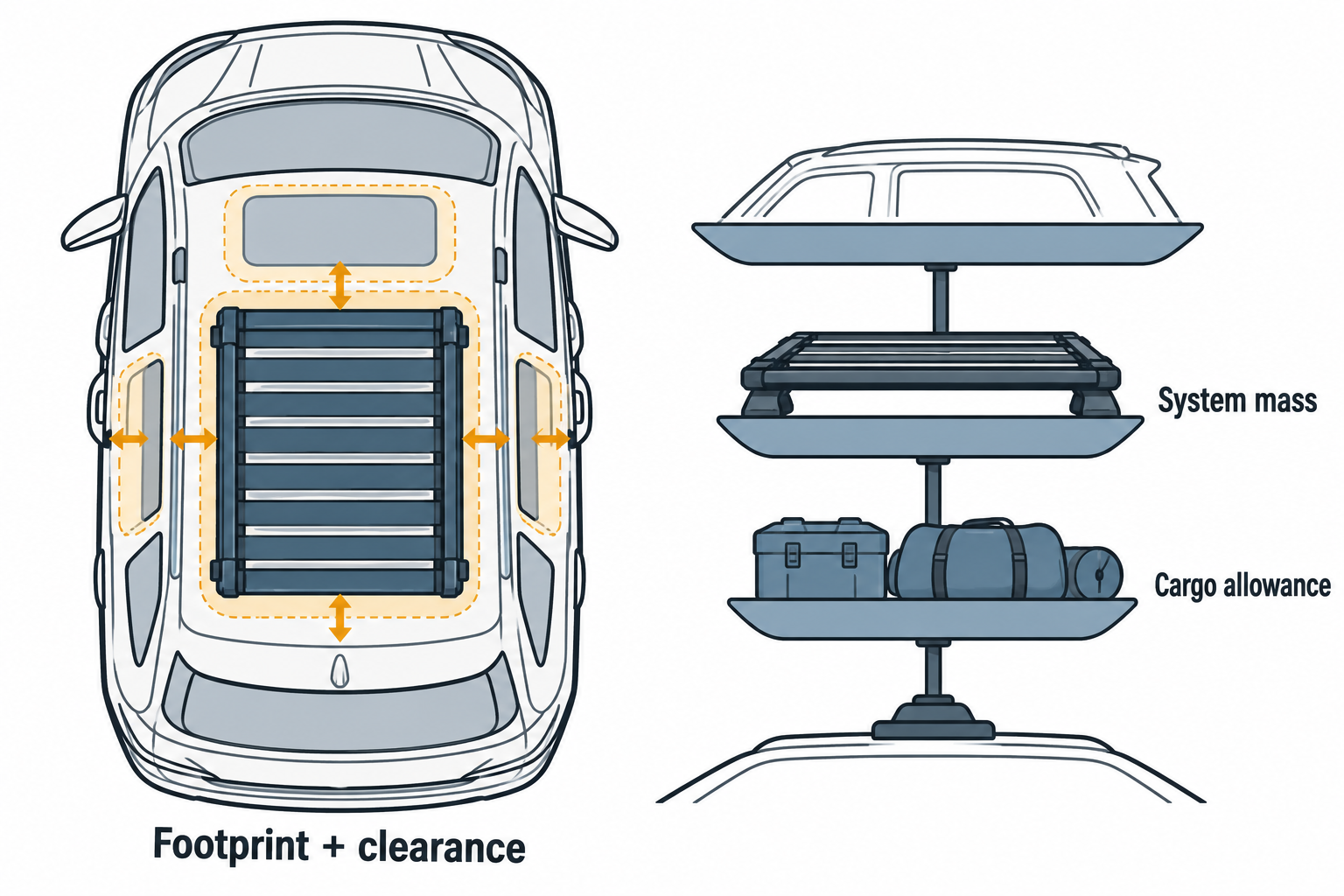 Read how to load a platform with cargo, tents, or work gear before using a platform limit as a shopping shortcut.
Make a decision with a parts list
Before buying, assemble a short list with the intended gear, the exact vehicle and market, the complete rack parts, the accessory adapters, and the relevant current instructions. Compare the documented rack and accessory limits with the vehicle instructions. If a guide has no result for the selected vehicle or does not resolve a product generation, mount, or interface, ask the manufacturers for that exact combination.
Choose a platform when its documented surface and interface solve a real layout need and a complete mounting path is available. Choose two bars when the gear is designed for that base and the vehicle fit is documented. Either setup still depends on correct installation, clearance, and secure loading. A brand name, visual similarity, or platform size alone does not establish fit or a safe load.
Sources and product references
Use these references to check the current instructions and fit information for your market and exact setup.
- Roof platformsprimary
- What can I use my Thule roof rack for?primary
- LockNLoad Systemprimary
- Slimline II Rack Systemprimary
- Pioneer 6 platform 51 x 49primary
- Pioneer 6 platform 43 x 56primary