Check LockNLoad platform generation, vehicle attachment route, fit-guide coverage, and accessory hardware before selecting or loading a system.
On this page
Yakima LockNLoad Platform Fit, Mounting, and Gear
LockNLoad fit is a combination of platform size, product generation, vehicle attachment route, and accessory interface. Identify the model or SKU rather than relying on the LockNLoad family name. Then check that the current vehicle fit guide covers the same vehicle, roof, platform, and mounting parts.
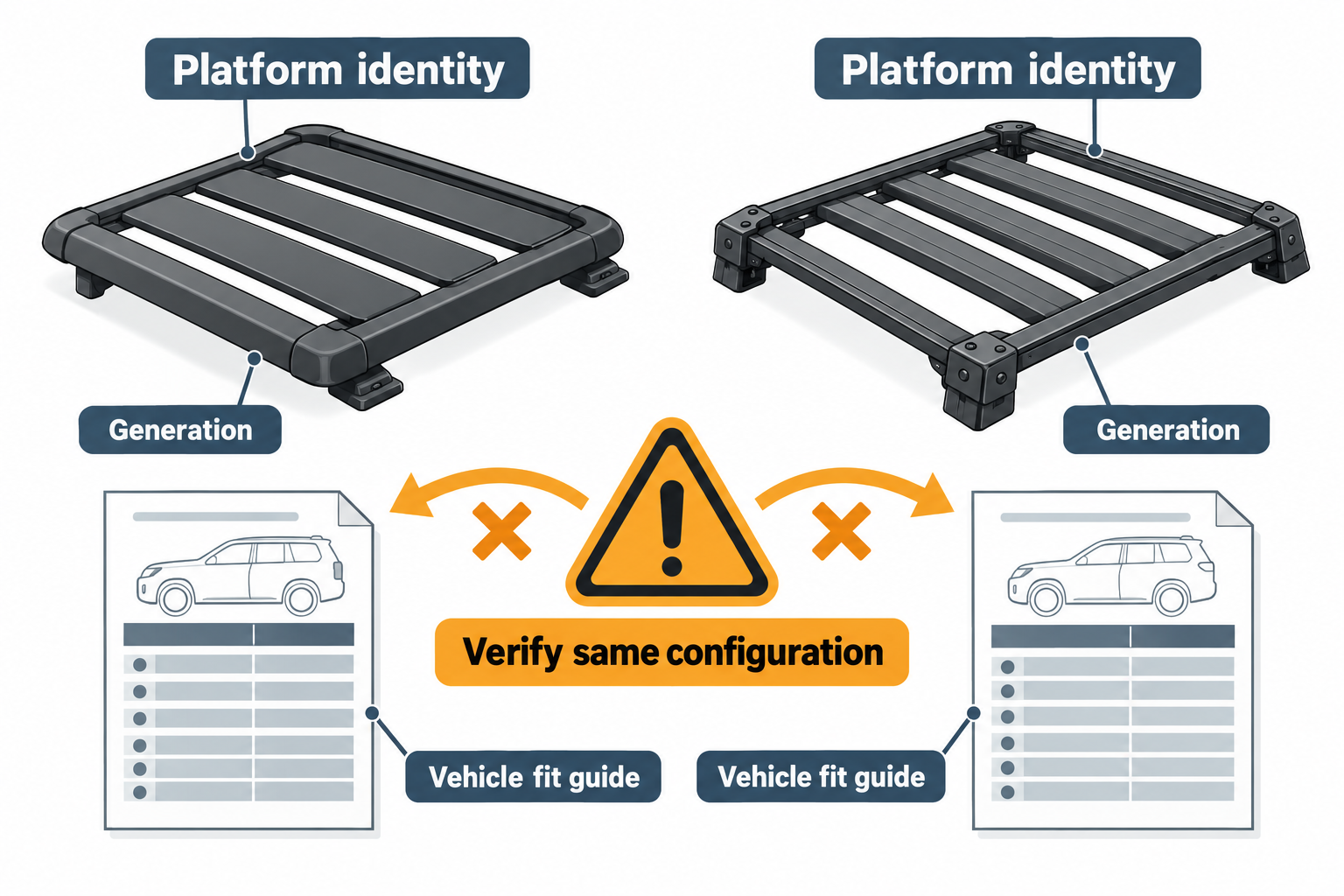
Select a documented platform and route
Yakima’s US LockNLoad listing distinguishes platform sizes and system options. As one example, Platform C is listed as SKU 8005063 at 76 by 54 inches. The listing gives a range of off-road ratings that depends on vehicle fit and roof type; it does not assign a number to every possible C and vehicle combination. Treat the selected vehicle result and current instructions as essential.
The attachment route also changes what parts are needed. Yakima documents LockNLoad attachment to supported existing crossbars with clamps and direct attachment through named SkyLine or TimberLine towers and SL adapters. These routes are not interchangeable. Record the exact crossbar or tower, adapter, platform, and hardware numbers, and check each one in Yakima’s LockNLoad fit guide.
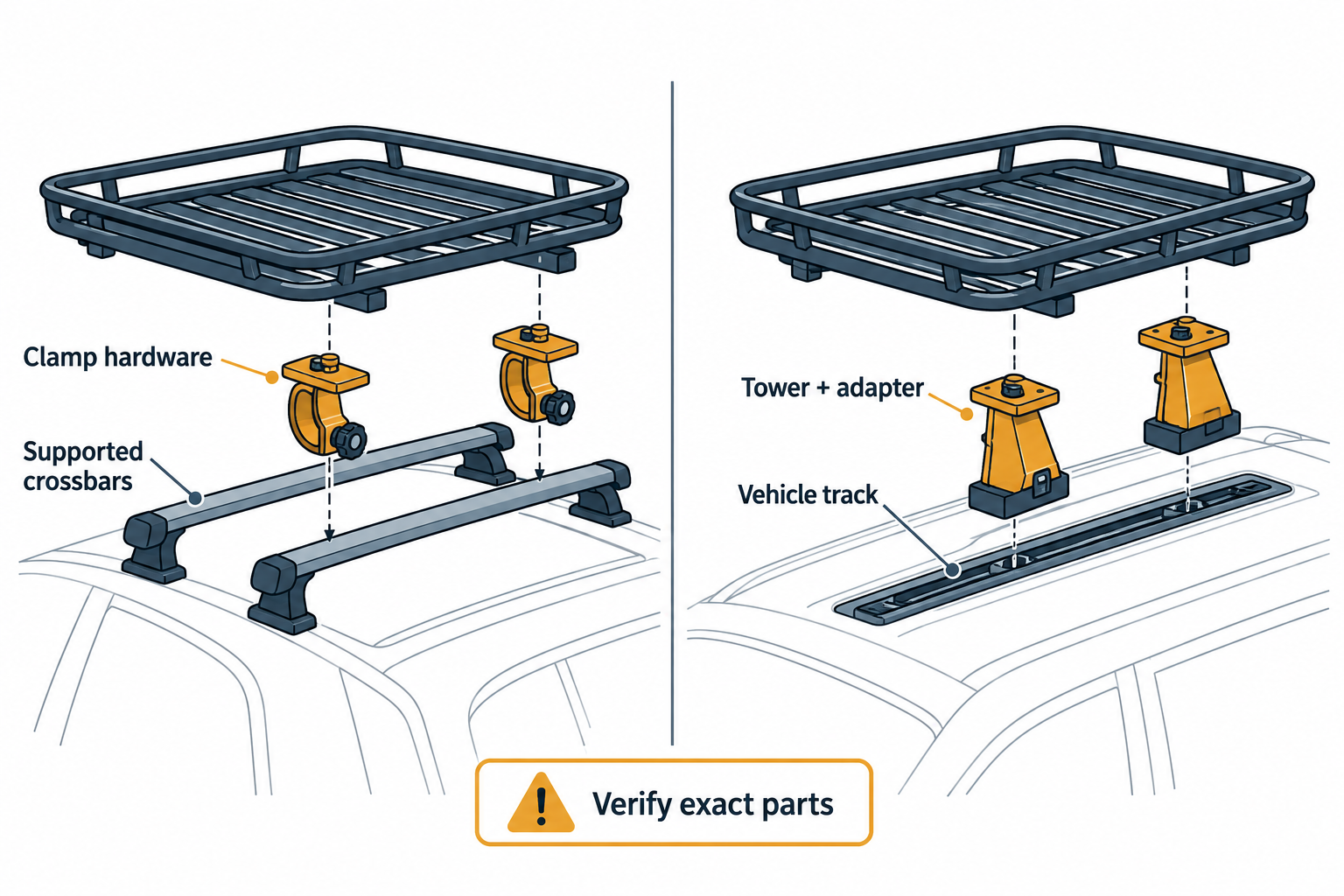
Do not borrow a fit-guide row from a similar model. The published LockNLoad measurement guide has entries for several named platform and attachment combinations, but does not provide a C-specific row. Its measurements cannot be transferred from another platform size. If the guide does not resolve the exact C configuration, ask Yakima for a current vehicle-specific result.
Confirm attachment points and loading
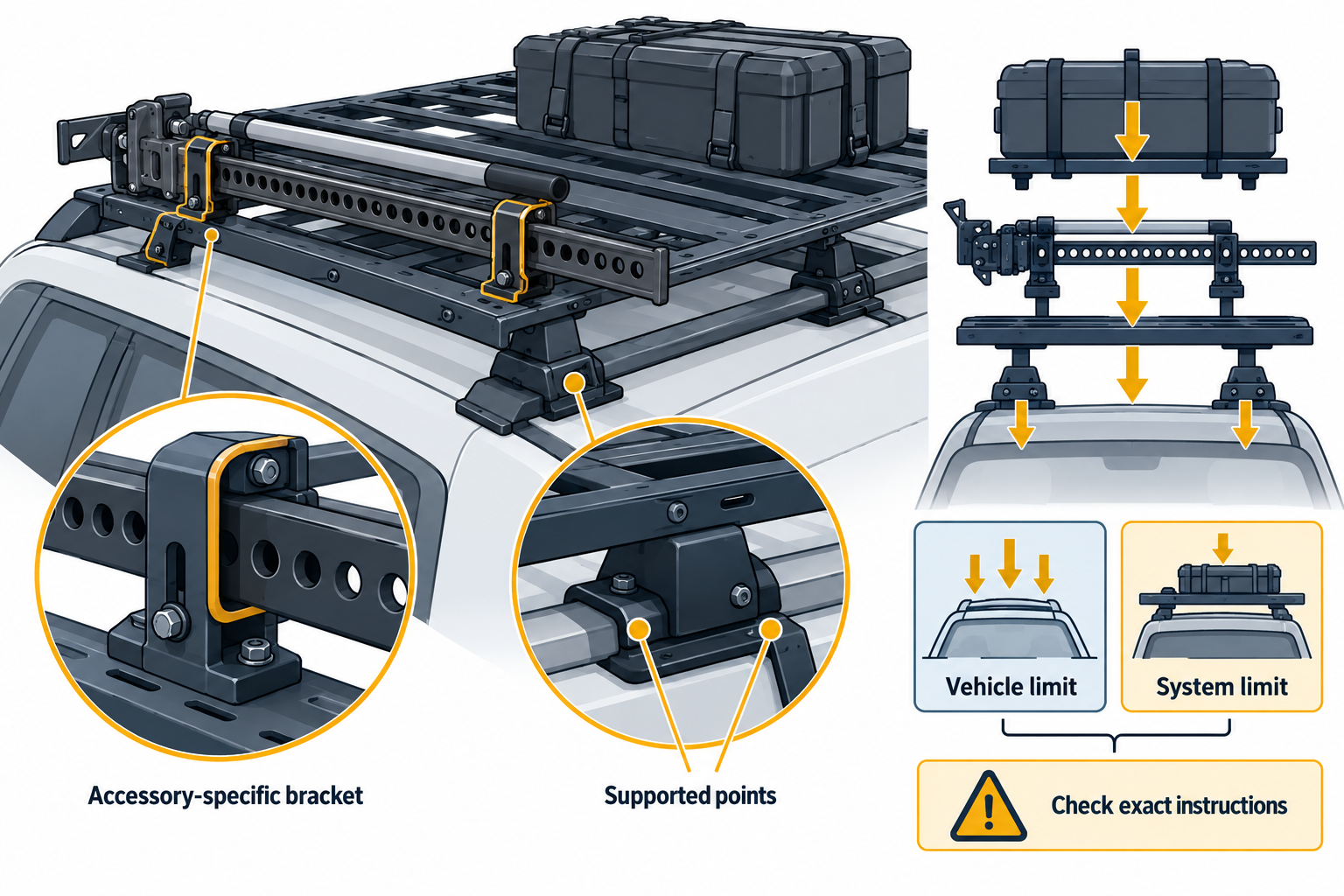
Yakima’s setup guidance lists minimum attachment arrangements for named platform sizes and routes, and notes that additional attachment points may affect capacity. It does not give a resulting load number for every vehicle and mount count. Use the current instructions for the specific system and the vehicle manufacturer’s roof limit; do not calculate a new rating from a general attachment statement.
Platform ratings, vehicle roof limits, accessory ratings, and cargo weights describe different parts of the setup. Check how the vehicle defines roof load and include the installed rack parts when its instructions require them. Keep the load within the lowest applicable documented limit for the exact configuration. For mixed equipment or off-road use, confirm that the instructions cover that use and mounting arrangement.
Match accessories to the LockNLoad interface
Check each accessory’s listed compatibility, required brackets, support positions, and fasteners. Do not assume that another maker’s T-slot nut or clamp fits because it appears similar. Yakima’s High Lift Jack Holder, for example, describes one steel bar jack up to 35 pounds and provides its own platform attachment details. That is a product-specific example, not general permission to mount any jack or exceed a roof-system limit.
Yakima’s TrackTower is another named track system in the attachment ecosystem. Its track fit does not approve the vehicle structure, platform, or another brand’s track. Confirm the underlying track application and complete vehicle mounting path separately.
Before installation, check channel access, overhang, clearance to vehicle features, and whether two accessories compete for the same support positions. Secure equipment exactly as the accessory instructions specify, and use Yakima’s fastener checks and vehicle limits. If the selected platform, generation, fit-guide result, or adapter is not explicitly resolved, pause and request confirmation rather than extrapolating from an adjacent model.
For measurement principles that apply across platforms, see size, channels, and accessory interfaces. For the vehicle-side parts chain, see mounts, rails, legs, and backbones.
Sources and product references
Use these references to check the current instructions and fit information for your market and exact setup.
- LockNLoad Systemprimary
- LockNLoad Fit Guideprimary
- LockNLoad weight rating and setup instructionsprimary
- TrackTower Systemprimary
- High Lift Jack Holderprimary