Choose a documented van or utility rack by body, roof, mount, work load, dimensions, installation path, and the vehicle’s own limits.
On this page
Van and Utility Work Racks for Ladders, Materials, and Cargo
A van rack must match both the vehicle body and the point where the rack attaches. Model year, wheelbase, roof height, roof curve, gutters, factory mounting points, and installed equipment can change the bracket or kit required. A rack advertised for vans is not proof that it fits every van in that model family.
Confirm the van and roof configuration
Record the market, model year, make, model, wheelbase, body length, roof height, and any conversion or upfit. Identify whether the rack uses rain gutters, factory points, tracks, rails, or a vehicle-specific bracket system. Check whether the roof is curved and whether the product instructions call for shims, spans, clips, or another kit. Do not infer that a roof is structurally suitable from its appearance.
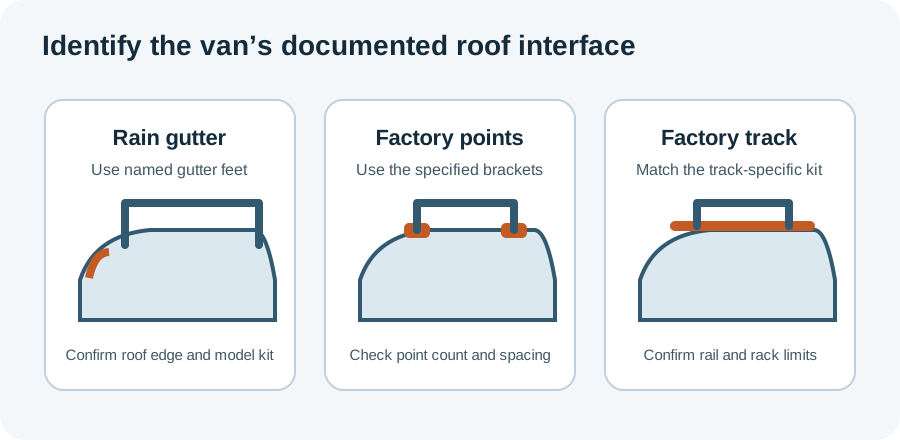
Product families often have separate instructions for different vans. For example, Thule’s TracRac Van page describes a rain-gutter mount and a separate shim set for curved roofs. Thule’s installation documents also separate several van model families into distinct fitting-kit instructions. Use the exact current product and vehicle instructions to confirm the model year, body, mount position, hardware, and installation method.
Upfit instructions can also restrict what a rail may carry. In its 2025-6 BM907 body and equipment guideline, Mercedes-Benz limits retrofitted Sprinter roof load rails to load-securing equipment that does not exert high tensile or compressive forces when attached to both roof and floor. It says not to lash loads directly to those rails with tension belts and limits rail attachment to roof bows in the load compartment, excluding the B-pillar and rear-portal roof structure. These are specific retrofit-rail instructions, not a rack model or load rating for every Sprinter. Identify the rail and vehicle generation before using it.
Keep vehicle limits separate from rack ratings
Vehicle manuals may set different limits by roof height or body. The 2025 U.S. Ford Transit owner’s manual lists these maximum roof loads:
| 2025 Transit roof variant | Maximum roof load in the owner’s manual |
|---|---|
| Low roof | 419 lb / 190 kg |
| Medium roof | 331 lb / 150 kg |
| High roof | 220 lb / 100 kg |
These are values in that specific Ford manual, not a fitment approval for an aftermarket rack or another model year. The cited section does not state whether a particular aftermarket rack’s mass is included. Confirm the exact vehicle manual and full system instructions before working out a cargo allowance.
The product listing for Thule TracRac Van 29055XT states up to 500 lb when the rack is installed properly and the load is evenly distributed; it also says vehicle limits may vary. That product maximum is not a universal van roof limit or extra payload. Compare it with the vehicle, roof structure, attachment, rack, accessory, and cargo requirements, then follow the lowest applicable limit. If a document does not explain whether its figure includes rack weight, ask before calculating.
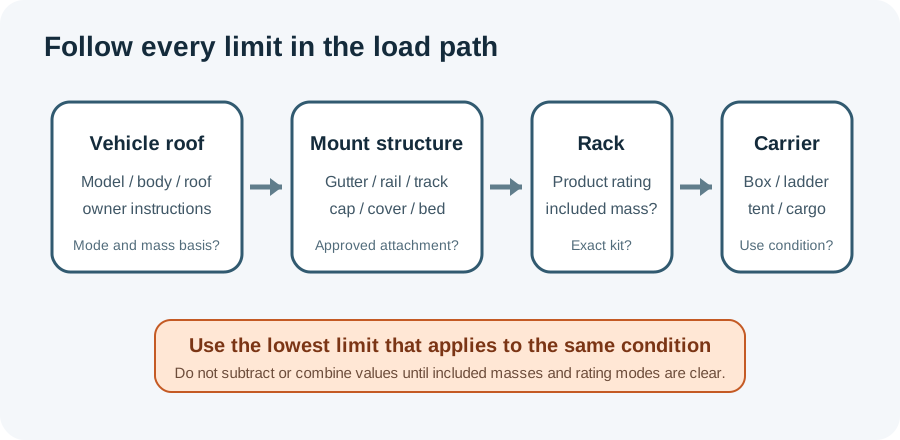
Ram’s 2027 ProMaster capability page displays a 330 lb maximum dynamic roof load, without identifying the exact body configuration or rack-mass treatment in that field. A separate 2018 Ram body-builder document gives a 150 kg roof-load maximum and a 25 kg maximum per attachment point for its named wheelbase range. These differently dated documents have different contexts; do not combine or transfer their values to another model year or treat either as available cargo. Check the current manual or body-builder guidance for the exact van and follow the rack maker’s instructions for its approved roof points.
Static, driving, and off-road figures are not interchangeable. For example, a roof-rack manufacturer may state an operating condition or load distribution requirement that changes how its own product rating applies. Keep the exact units, roof variant, document date, and rating label together when using a specification.
Match the rack to the work
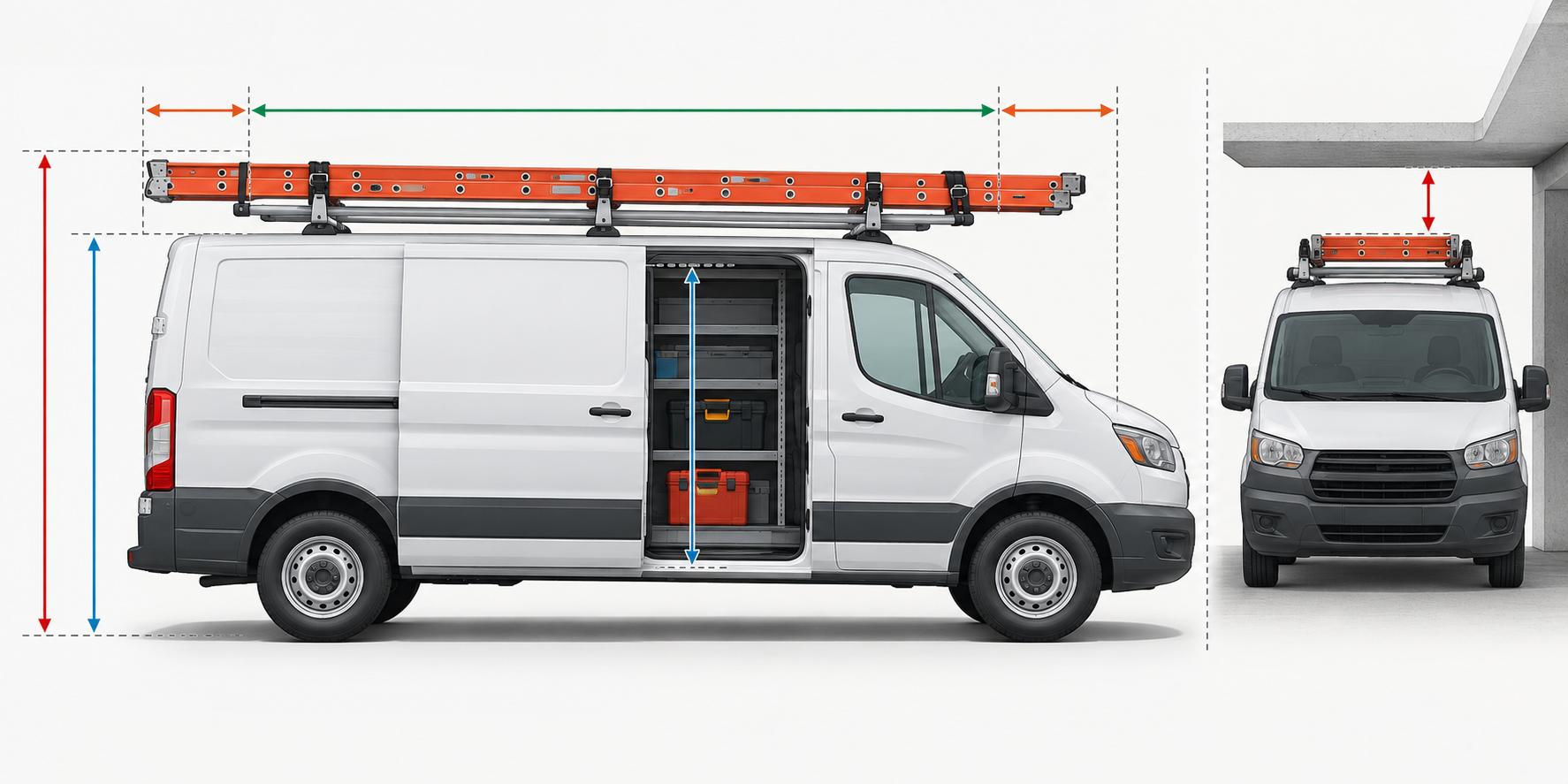
Measure the ladder, conduit, lumber, or other cargo and note where it will sit on the bars or platform. Confirm rack span, bar spacing, support points, load-stop position, door access, roof clearance, overall vehicle height, and any front or rear overhang. For heavy, long, or wind-sensitive loads, use the vehicle and rack maker’s instructions to select the correct support and restraint method. A roller, load stop, or strap accessory improves handling or restraint only within its own approved use; it does not raise a roof or rack rating.
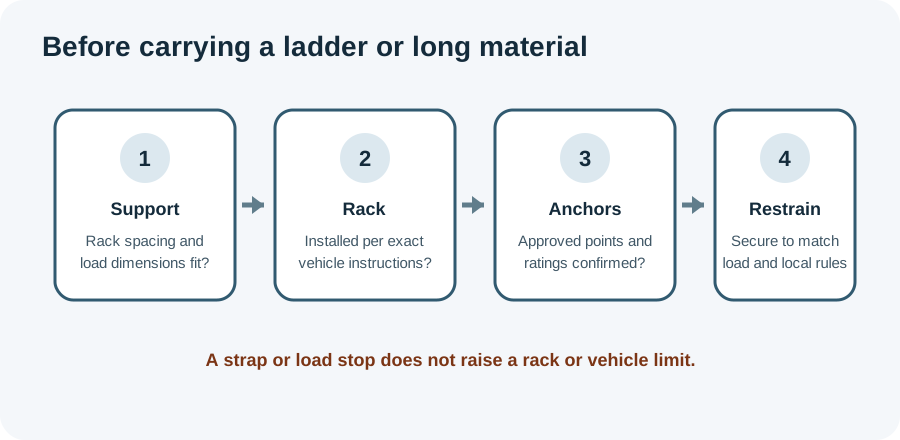
Use the correct vehicle-specific kit and fastener instructions. Some systems call for a professional installer or have special roof-shape hardware. Do not substitute a generic gutter mount, drill into a roof, or combine attachments across different roof sections unless the exact instructions authorize it. Recheck bolts and fixtures as often as the selected manual requires, including after a refit where instructed.
Secure cargo for the market and the load
Securement rules vary by jurisdiction and vehicle class. U.S. NHTSA guidance discusses rope, netting, or straps and tells drivers to double-check that cargo is secure. UK Driver and Vehicle Standards Agency guidance for roof-carried van work gear calls for cargo ratchet straps or effective clamping and says not to use rope as the main method of restraint.
Canadian requirements also differ by province. In Nova Scotia, vehicles with a registered gross vehicle weight of 4,500 kg or less must secure a highway load using adequate vehicle structure, compliant tiedowns, or another method at least as effective; the regulation specifies tiedown spacing and additional restraint for each part of the load. In British Columbia, Division 35 of the Motor Vehicle Act Regulations includes non-commercial vehicles. Section 35.04 requires cargo to be contained, immobilized, or secured so it cannot be dislodged or shift in a way that affects vehicle stability or manoeuvrability. National Safety Code Standard 10 applies only to highway cargo transport by vehicles with a licensed gross vehicle weight over 5,000 kg; that threshold is separate from Division 35’s general securement outcome. Neither rule approves a rack or anchor. Check the current requirements for your province, vehicle, and load.
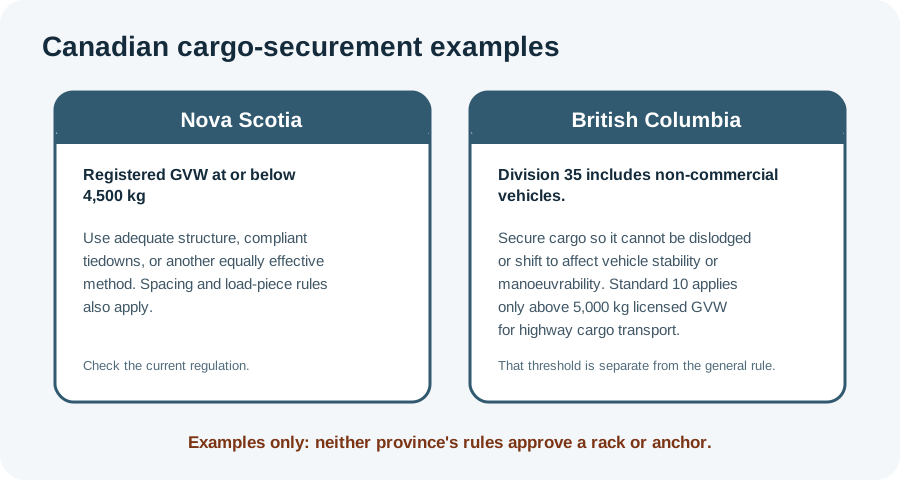
These regional rules are not substitutes for the chosen rack’s instructions or a load-specific securement plan. Follow the requirements that apply where the vehicle is used and the restraint method specified for the rack and cargo.
Before loading, confirm the exact vehicle and roof, fitting kit, rack and accessory, maximum height, all applicable ratings and their conditions, and the cargo restraint method. If any part of the load path or rating is undocumented, get confirmation from the vehicle or rack maker or a qualified fitter. For a mount-location comparison, see Start With the Mount; for pickup beds and covers, see Pickup-Bed Rack Fitment.
Sources and product references
Use these references to check the current instructions and fit information for your market and exact setup.
- Thule TracRac Vanprimary
- Thule TracRac Van Installation Manualprimary
- 2025 Ford Transit Owner’s Manual, Roof Rack Load Capacitiesprimary
- NHTSA: How to Secure Your Loadprimary
- UK DVSA: Securing Loads on Light Goods Vehicles, Small Vans and Carsprimary
- British Columbia Motor Vehicle Act Regulations, Division 35: Cargo Securementprimary
- Nova Scotia Securing Loads on Vehicles Regulationsprimary
- Mercedes-Benz Sprinter BM907 Body and Equipment Guideline, Edition 2025-6primary
- 2027 Ram ProMaster Capabilityprimary
- Ram ProMaster Design Recommendations, 2018 Body Builder Instructionprimary